

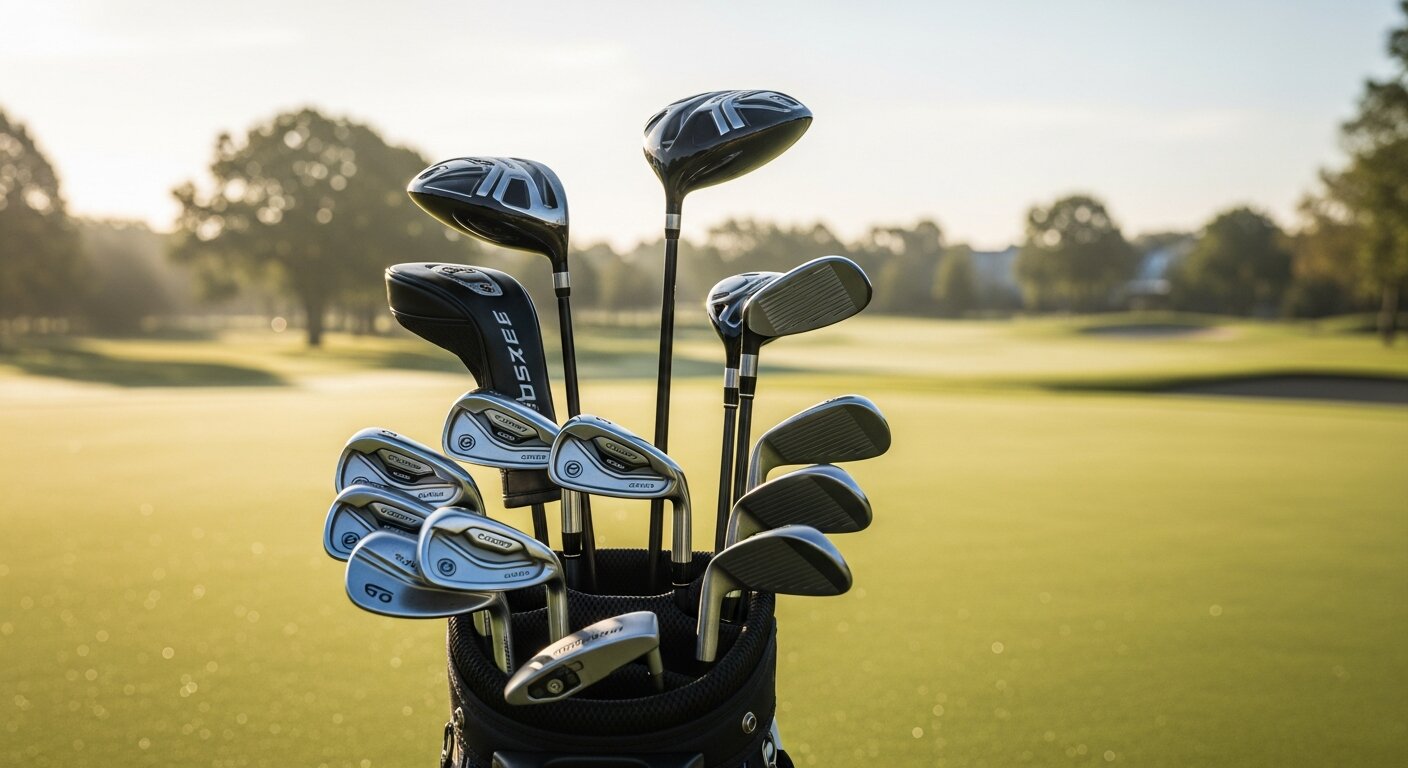
Walking onto a golf course for the first time can feel overwhelming. You have a bag full of oddly shaped metal sticks, and knowing exactly which one to pull out requires a basic understanding of the equipment. Choosing the wrong club can easily turn a great shot into a frustrating mistake.
The rules of golf allow you to carry up to 14 clubs in your bag during a round. How you mix and match them is entirely up to you. However, learning about the different golf clubs categories is the first step toward building a set that complements your playing style and skill level.
Understanding these categories helps you navigate the course effectively. Every club is engineered for a specific purpose, varying by loft angle, shaft length, and clubhead design. By the time you finish reading this guide, you will know exactly what each club does and when to use it.
Understanding the Main Golf Clubs Categories
Woods: Built for Maximum Distance
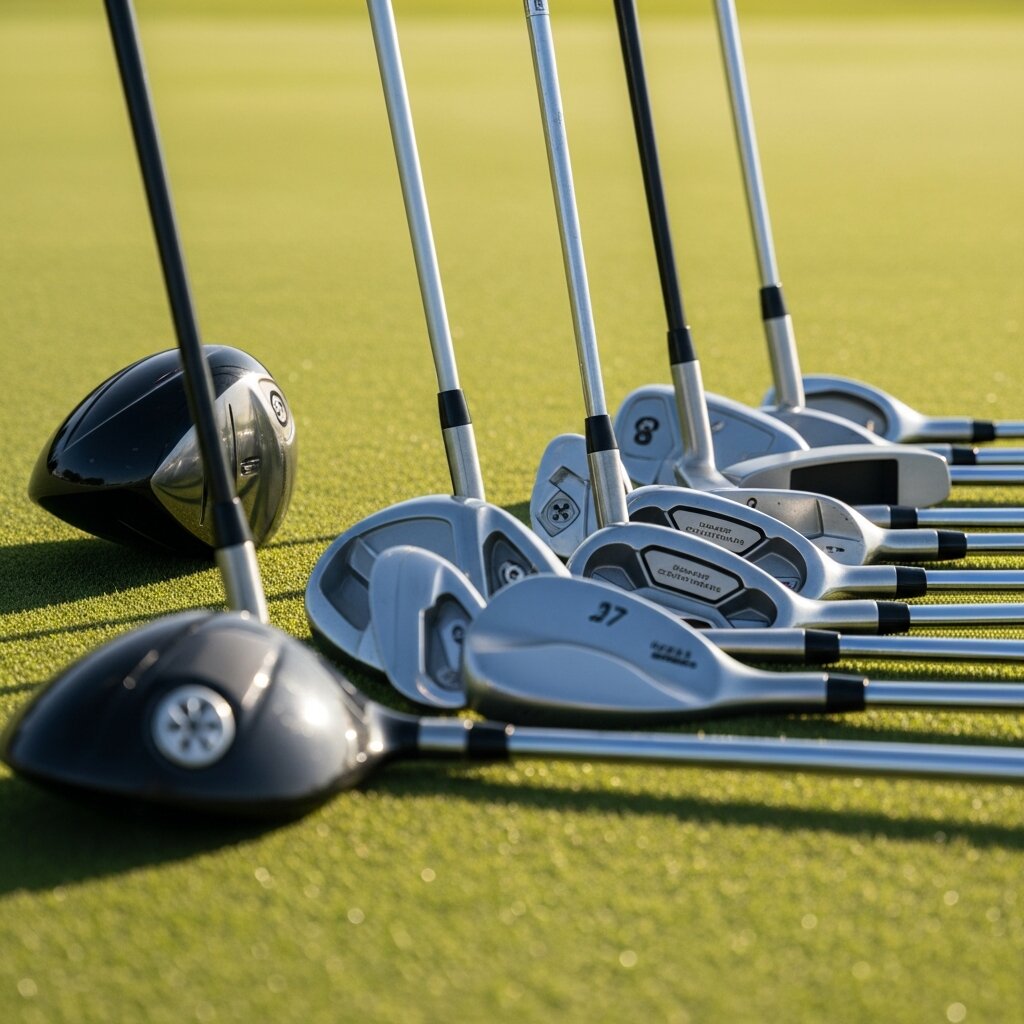
Despite the name, modern woods are made of metal, usually titanium or steel. They have the largest clubheads and the longest shafts of any club in your bag. This design helps you swing faster and hit the ball farther.
The most famous club in this category is the driver, also known as the 1-wood. You use the driver primarily off the tee on long par-4 and par-5 holes. It has the lowest loft of any club other than the putter, usually ranging between 8 and 12 degrees. Because of the long shaft and low loft, the driver can be difficult for beginners to control.
Fairway woods make up the rest of this category. The 3-wood and 5-wood are the most common options. They have slightly smaller heads and more loft than a driver, making them easier to hit off the grass. You might use a fairway wood for your second shot on a long hole or off the tee when accuracy is more important than pure distance.
Irons: The Versatile Core of Your Bag
Irons make up the bulk of most golf sets. They feature solid metal heads with a flat angled face scored with grooves. These grooves grip the golf ball to create spin, helping the ball stop quickly once it lands on the green.
A standard set of irons usually runs from a 3-iron down to a 9-iron. As the numbers get higher, the shaft gets shorter and the clubface gets more lofted. A 3-iron will hit the ball low and far. A 9-iron will pop the ball high into the air for a shorter distance.
Many beginners struggle to hit long irons (the 3 and 4 irons) because the lower loft provides less margin for error. Mid-irons (5, 6, and 7) and short irons (8 and 9) are generally easier to hit and are used for approaching the green from the fairway or rough.
Hybrids: Bridging the Gap
Hybrids represent the newest addition to the main golf clubs categories. They combine the best features of both woods and irons. The clubhead is smaller than a standard fairway wood but thicker and more forgiving than a traditional iron.
Many modern golfers swap out their difficult-to-hit long irons for hybrids. The weight distribution in a hybrid clubhead helps launch the ball into the air much easier than a standard 3-iron or 4-iron. They also glide smoothly through thick grass, making them an excellent choice for hitting out of the rough.
If you struggle to hit your longer irons consistently, adding a hybrid or two to your bag can quickly improve your scores.
Wedges: Precision for the Short Game
Wedges are technically a sub-category of irons, but they deserve their own spotlight because of their unique role. These clubs have the shortest shafts and the highest lofts. You use them when you are close to the green and need high, accurate shots.
The pitching wedge (PW) usually comes standard with an iron set. It has a loft around 44 to 48 degrees and is used for longer approach shots.
The gap wedge (GW) fills the distance gap between a pitching wedge and a sand wedge. It is perfect for full swings that are just a bit too short for a pitching wedge.
The sand wedge (SW) has a specially designed sole that helps the club bounce through the sand. As the name suggests, it is your best tool for escaping greenside bunkers.
The lob wedge (LW) has the highest loft, sometimes up to 64 degrees. You use this club when you need the ball to fly very high and stop immediately upon landing, such as when you need to hit over a hazard.
Putters: Sealing the Deal on the Green
The putter is arguably the most important club you will own. You will use it on almost every single hole. Designed exclusively for rolling the ball along the smooth grass of the putting green, putters come in countless shapes and sizes.
Blade putters feature a traditional, narrow head. They are generally preferred by players who have an arched putting stroke. Mallet putters have a larger, heavier head. The extra mass makes them more stable, which helps players who use a straight-back and straight-through putting stroke.
Finding a putter that feels comfortable in your hands and gives you confidence is crucial for lowering your scores.
The Importance of Club Fitting
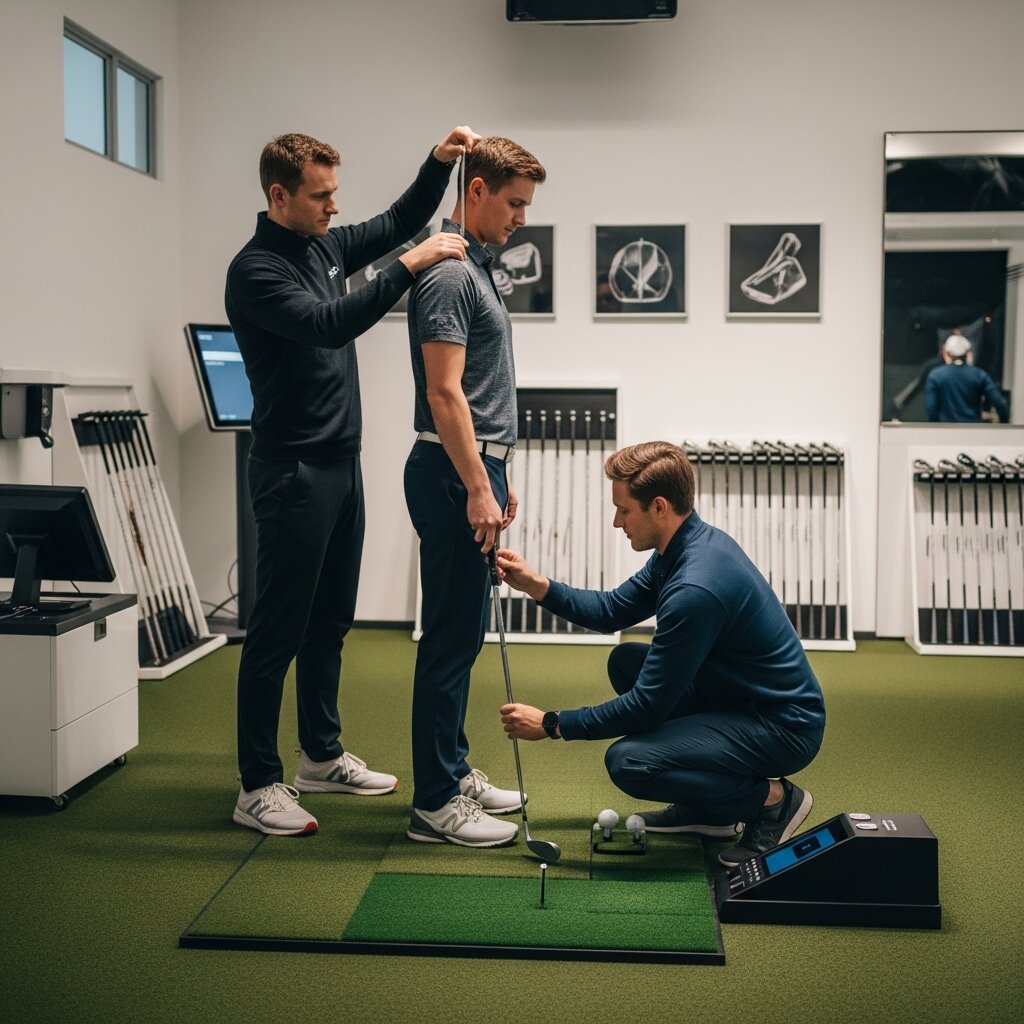
A properly fitted set of golf clubs can make a significant difference in your overall performance on the course. Club fitting involves customizing key aspects of your equipment—such as shaft length, grip size, loft, shaft flex, and lie angle—to match your unique swing style, height, and physical strength. When these elements are properly aligned, it becomes much easier to strike the ball consistently and with better control. Many golfers notice immediate improvements in both accuracy and distance after switching to fitted clubs, as the equipment works in harmony with their natural swing mechanics rather than against them.
Building Confidence Through Practice
Understanding your golf clubs is only the beginning—true confidence comes from consistent and focused practice. Regular sessions at the driving range allow you to experiment with each club and understand how far the ball travels with different swings and techniques. You also begin to learn how factors like wind, turf condition, and swing speed affect your shots in real situations. As you spend more time practicing, your muscle memory improves, making your swings more natural and controlled. This familiarity with your entire set helps you make quicker, smarter decisions on the course and reduces hesitation during gameplay, ultimately leading to better performance and lower scores.
How to Build Your Ideal Set
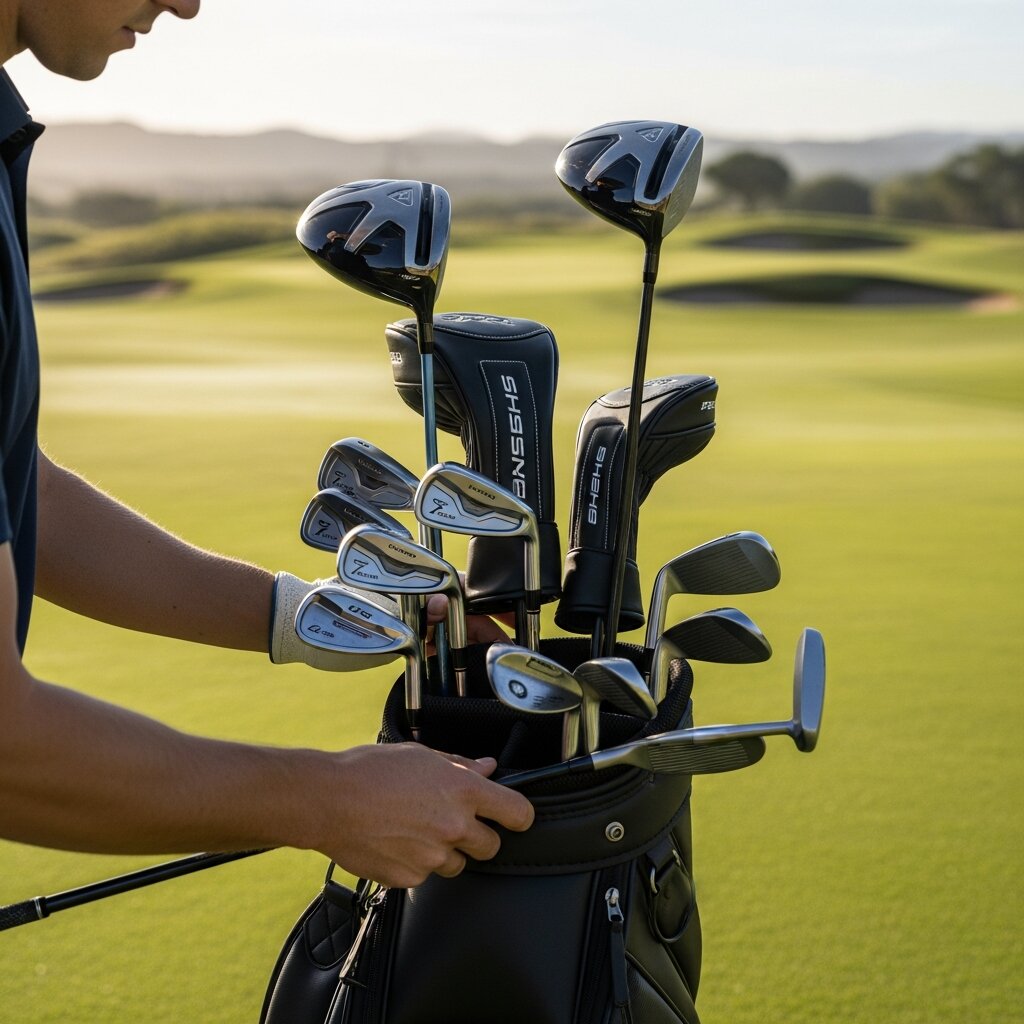
Once you understand the main golf clubs categories, the next step is building a set that matches your playing style and skill level. You do not need a full 14-club setup when you are just starting out, as a simpler selection can make learning easier and help you focus on consistency. A beginner-friendly set often includes a driver for long tee shots, a hybrid for versatility, a mid-iron like a 6-iron and 8-iron for approach shots, a pitching wedge and sand wedge for short-game control, and a putter for finishing on the green.
As your skills and confidence improve, you will begin to notice gaps in distance between certain clubs. This is a natural part of progression and signals it may be time to refine your setup. At that stage, you can gradually add fairway woods for longer fairway shots or additional wedges to better control shorter distances around the green, allowing you to build a more precise and well-balanced bag tailored to your game.
Frequently Asked Questions
What are the main golf clubs categories?
The five primary categories are woods, irons, hybrids, wedges, and putters. Each category serves a specific purpose regarding distance, trajectory, and accuracy.
How many clubs are allowed in a golf bag?
The official rules of golf allow a player to carry a maximum of 14 clubs during a competitive round. You can carry fewer if you prefer.
What is the difference between a wood and an iron?
Woods have large, rounded heads designed for maximum distance. Irons have thinner, flatter clubheads designed for accuracy and spin on approach shots.
Why are they called woods if they are made of metal?
Historically, the clubheads in this category were carved from persimmon wood. Manufacturers eventually switched to metal for better durability and performance, but the traditional name stuck.
Should a beginner use hybrids or long irons?
Most instructors recommend hybrids for beginners. They have a lower center of gravity and a wider sole, making it much easier to get the ball airborne compared to a standard long iron.
Do I need to carry all four types of wedges?
No. While advanced players often carry a pitching, gap, sand, and lob wedge to cover specific yardages, a beginner can play perfectly fine with just a pitching wedge and a sand wedge.
What does the number on the golf club mean?
The number indicates the club’s loft. A lower number means less loft, resulting in a lower ball flight and more distance. A higher number means more loft, producing a higher ball flight and less distance.
Which putter style is best for me?
The best putter style depends on your stroke. Players with a straight putting stroke usually prefer mallet putters for their stability. Players with an arched stroke often prefer blade putters.
Can I hit a fairway wood out of the rough?
You can, but it is often difficult because the thick grass wraps around the large clubhead. A hybrid or a mid-iron is usually a safer choice when playing from the rough.
How do I know which club to use?
Selecting a club comes down to knowing how far you hit each one. Once you learn your average distances for each of the golf clubs categories, you simply match the club to the yardage required for your next shot.
What are golf clubs categories and why are they important?
Golf clubs categories refer to the different groups of clubs such as woods, irons, hybrids, wedges, and putters. Understanding these golf clubs categories is important because each one is designed for specific distances and shot types, helping players choose the right club for better accuracy and control.
How do golf clubs categories help beginners improve their game?
Learning the basic golf clubs categories helps beginners understand which club to use in different situations. This reduces confusion on the course and builds confidence by making shot selection simpler and more consistent.
Do all players use the same golf clubs categories setup?
Yes, all players generally use the same golf clubs categories, but the number of clubs and combinations can vary. Beginners may use a simpler setup, while advanced players fine-tune their selection within each category to match their playing style.
Which golf clubs categories are most important for short game performance?
The wedges and putter are the most important golf clubs categories for the short game. They help with precision shots around the green and finishing holes efficiently with controlled putting.
Can understanding golf clubs categories lower your score?
Yes, knowing how each of the golf clubs categories works can significantly lower your score. It helps you select the right club for each distance, improve shot accuracy, and avoid common mistakes caused by poor club choice.
Ready to Hit the Links?
Learning the differences between the various golf clubs categories takes the guesswork out of your equipment. When you know exactly what your woods, irons, hybrids, wedges, and putter are designed to do, you can approach every shot with a clear plan.
Take some time to practice with every club in your bag at the driving range. Document how far you hit each one. This preparation will make your next round of golf much more enjoyable and help you shoot lower scores.
