

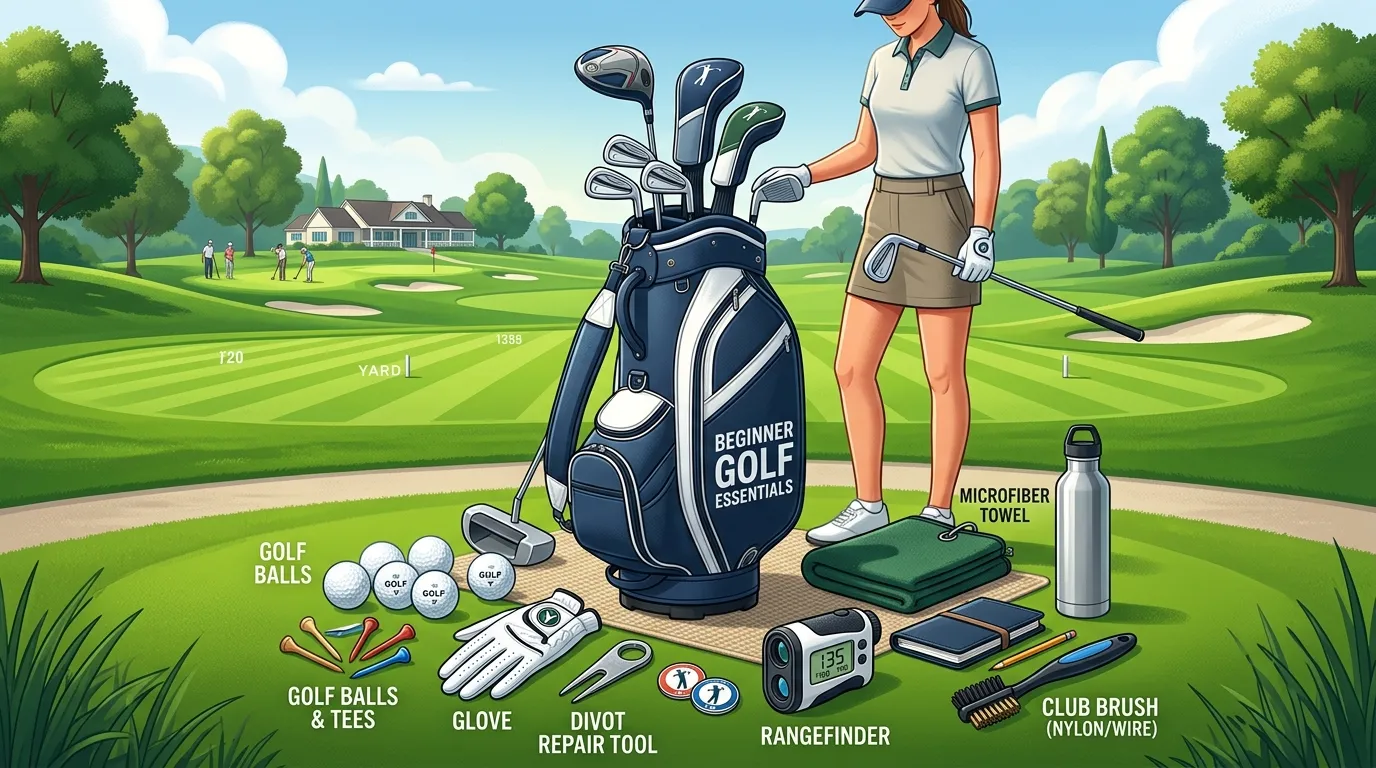
The right golf accessories for beginners can make learning the game easier, more comfortable, and more enjoyable. Essentials like golf gloves, tees, balls, towels, divot tools, and training aids help new players build good habits while improving performance on the course. By starting with these golf accessories for beginners, you can create a practical starter golf kit without spending a fortune.
The essential golf accessories for beginners include a glove, plenty of tees and balls, a divot repair tool, a rangefinder, a towel, an umbrella, and basic training aids like alignment sticks. These affordable items improve your comfort, protect your gear, and help you build solid habits from your very first round.
Stepping onto the course for the first time can feel a little overwhelming. You’ve got clubs, rules, etiquette, and a swing that may or may not cooperate. But here’s some good news: you don’t need to spend a fortune to get started. The right accessories can make golf more enjoyable, more comfortable, and a whole lot easier to learn.
This guide breaks down the must-have golf accessories for new players. Whether you’re putting together a starter golf kit or just filling the gaps in your bag, you’ll find practical recommendations that won’t break the bank. We’ll cover everything from gloves and tees to training aids that help you practice smarter.
By the end, you’ll have a clear beginner golf equipment checklist and a better idea of where to spend your money first.
Why the right golf accessories matter for beginners
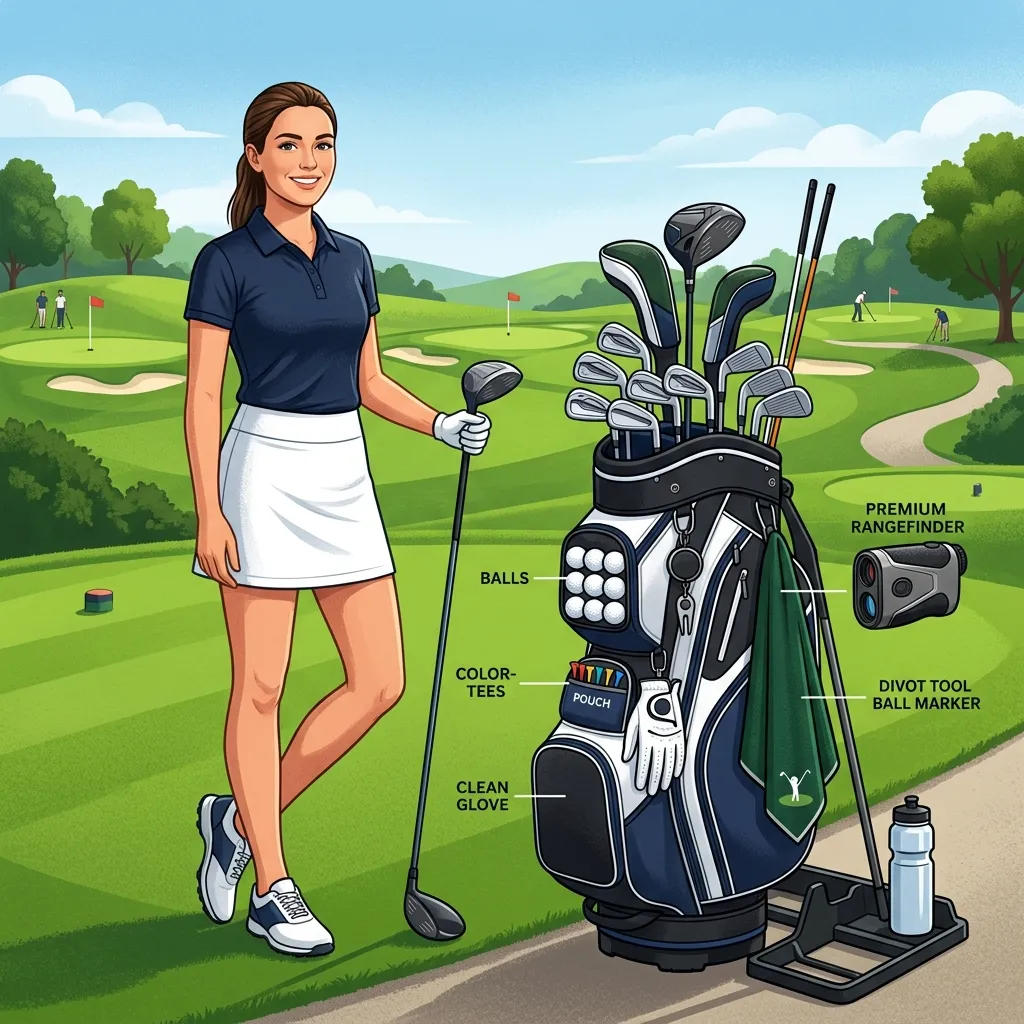
Clubs get all the attention, but accessories quietly shape your experience on the course. A good glove improves your grip and prevents blisters. The right ball can be more forgiving of off-center hits. Training aids help you correct mistakes before they become bad habits.
For new players, accessories also reduce frustration. Forgetting a towel on a rainy day or running out of tees mid-round can take the fun out of golf fast. Stocking your bag with the essentials means you can focus on what really matters—learning the game and enjoying your time outdoors.
The best part? Most beginner golf accessories are inexpensive. You can build a complete kit for a fraction of what you’d spend on a new set of clubs.
The essential beginner golf equipment checklist
Before we dig into the details, here’s a quick overview of the must-have golf accessories every new player should consider:
- Golf glove – for grip and comfort
- Golf balls – choose beginner-friendly, low-compression options
- Tees – a mix of lengths
- Divot repair tool – for course etiquette
- Ball markers – to mark your spot on the green
- Golf towel – to keep clubs and hands clean
- Rangefinder or GPS – for distance accuracy
- Umbrella and rain gear – for unpredictable weather
- Alignment sticks – a versatile training aid
- Putting mat – for practice at home
- Golf bag accessories – like a brush and extra storage
Now let’s look at each one in more detail.
What golf gloves and accessories do beginners need?
A golf glove is one of the cheapest and most useful accessories you can buy. It improves your grip, reduces the chance of the club slipping, and protects your hands from blisters during long practice sessions.
Most right-handed players wear a glove on their left hand, and vice versa. Look for a comfortable, well-fitting glove made from synthetic material or leather. Synthetic gloves tend to be more durable and budget-friendly, making them a smart pick for beginners.
It’s worth keeping a spare glove in your bag, too. Gloves wear out faster than you’d expect, especially if you practice often or play in wet conditions.
Which golf balls are best for new players?
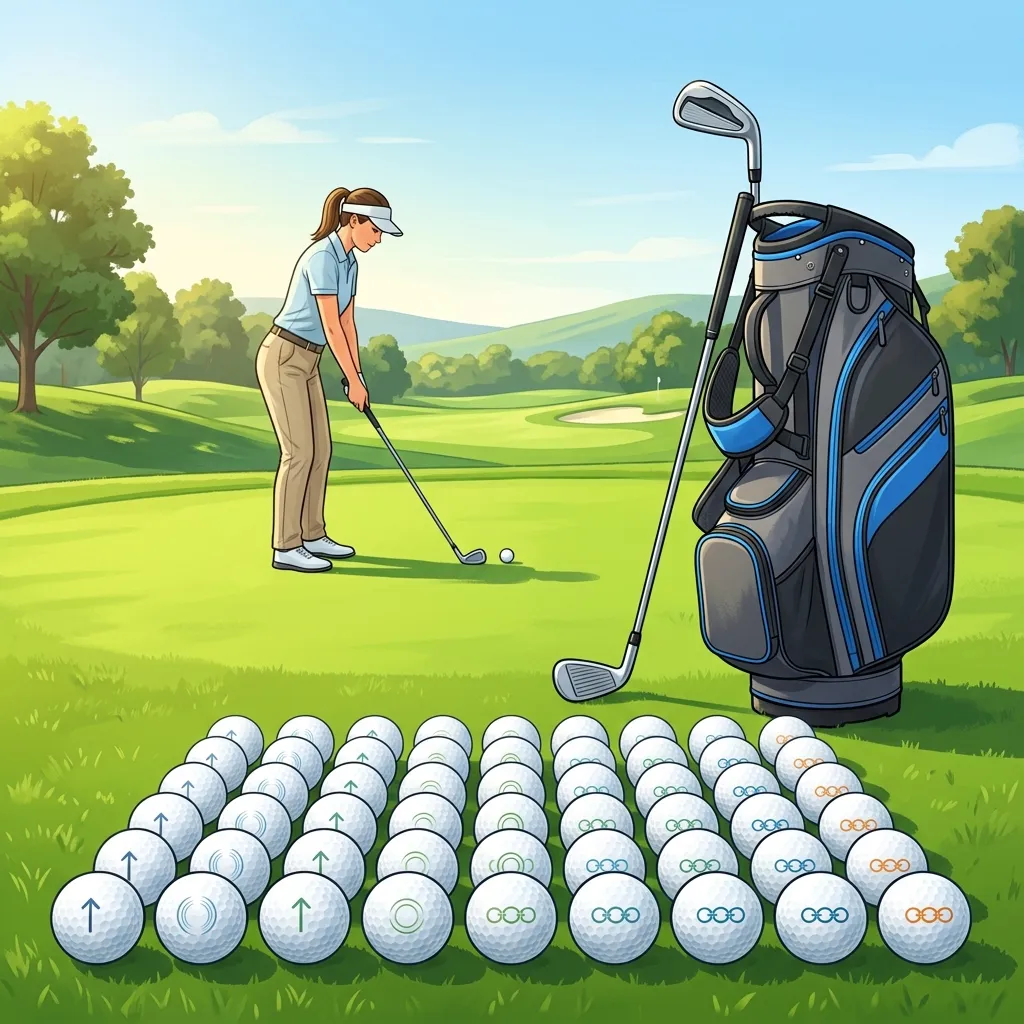
You’ll lose a few balls when you’re starting out—that’s just part of the learning curve. So buying expensive, tour-level balls isn’t necessary yet.
Instead, choose low-compression golf balls designed for beginners. These are softer, easier to compress, and often travel straighter, which helps when your swing isn’t fully dialed in. Brands offer plenty of affordable two-piece balls built for distance and forgiveness.
Buy them in bulk. A pack of a dozen (or more) means you won’t panic every time one sails into the trees.
Tees, markers, and divot tools: the small essentials
These items are small, cheap, and easy to overlook—but you’ll use them every round.
- Tees: Carry a variety of lengths. Longer tees suit drivers, while shorter ones work for irons. Wooden tees are affordable, while plastic ones last longer.
- Ball markers: A small coin or branded marker lets you lift your ball on the green without losing your spot. You can use a coin in a pinch.
- Divot repair tool: When your ball lands on the green, it can leave a dent. A divot tool fixes that, and repairing your marks is good golf etiquette.
Toss a handful of each into your bag and you’ll be covered for months.
Why a golf towel and brush belong in your bag
Dirt and grass build up on your clubs as you play. A golf towel lets you wipe down clubface grooves, which actually affects how the ball spins and flies. Clean grooves mean better contact and more control.
Clip a towel to your bag so it’s always within reach. A small club brush with stiff bristles is handy too, especially for clearing mud out of those grooves after a wet round. Keeping your equipment clean also helps it last longer.
Do beginners need a rangefinder or GPS device?
Knowing how far you are from the hole helps you choose the right club. While not strictly essential on day one, a rangefinder or GPS device becomes valuable as you start to improve.
Choose a laser rangefinder if you want precise, point-and-shoot distances to the flag. They tend to be more accurate but require a steady hand.
Choose a GPS device or app if you prefer simple yardages to the front, middle, and back of the green. Many golf GPS apps are free and run right on your phone, making them an easy entry point for beginners on a budget.
If money is tight, start with a free app and upgrade later once you know you’re hooked.
What golf training aids help beginners improve fastest?
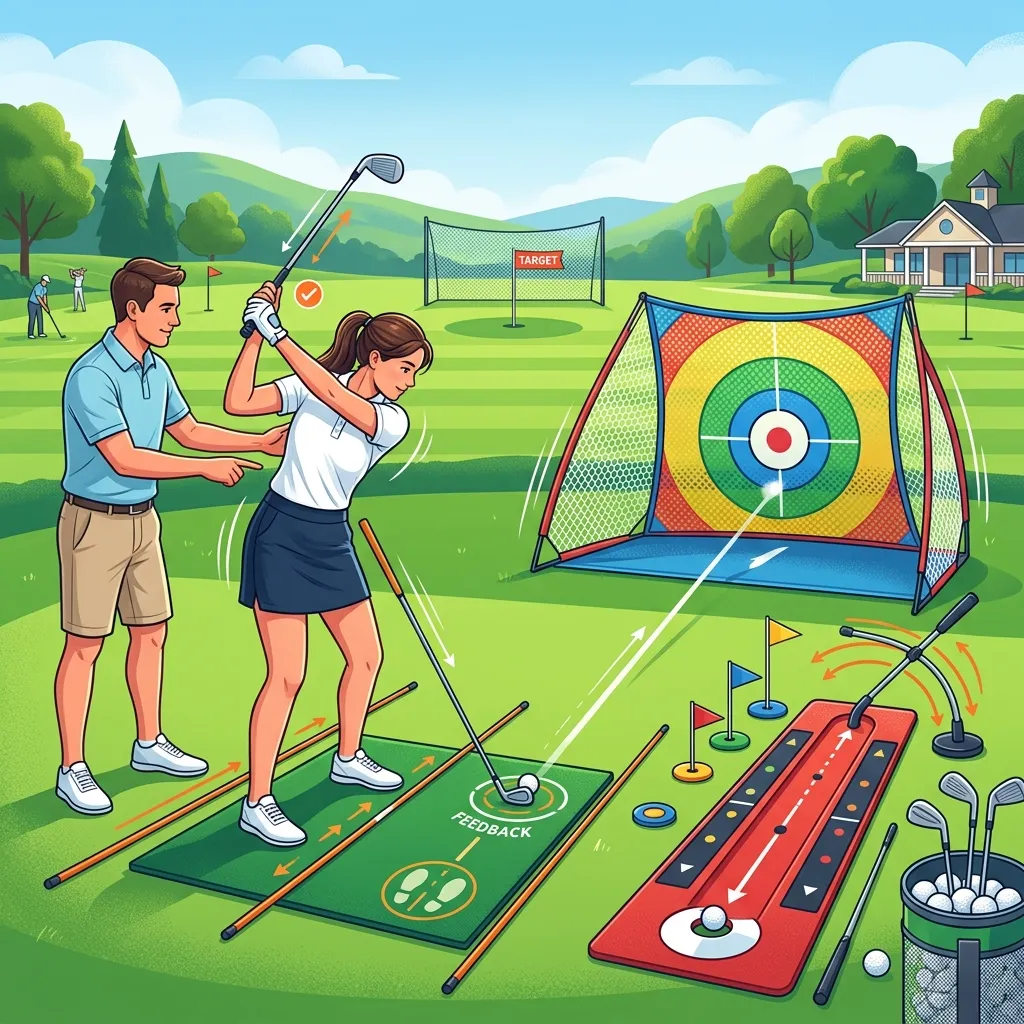
Training aids speed up your progress by helping you practice the right movements. For beginners, a few simple tools deliver the most value:
Alignment sticks
These thin rods are incredibly versatile. Lay them on the ground to check your aim, foot position, and swing path. Alignment is one of the most common problems for new golfers, and these sticks make it easy to fix.
Putting mat
Putting accounts for a huge chunk of your strokes, yet it’s often neglected. A putting mat lets you practice at home, building consistency and confidence on the greens. Even ten minutes a day makes a difference.
Impact spray or tape
Want to know exactly where the ball meets the clubface? Impact spray shows your contact point, helping you understand and correct mishits. It’s a cheap, eye-opening tool for any beginner.
Weighted training club or swing trainer
A swing trainer helps you feel the correct tempo and build muscle memory. These aren’t essential, but they’re useful if you want to practice your swing indoors or warm up before a round.
How to weatherproof your golf bag
Golf doesn’t stop for a little rain, and being prepared keeps you comfortable. A sturdy golf umbrella shields you and your gear during sudden showers. A waterproof bag cover and a pair of rain gloves are smart additions if you play in wet climates.
Sunscreen, a hat, and sunglasses matter just as much on hot days. Protecting yourself from the elements means you can focus on your game instead of the weather.
How much should beginners spend on golf accessories?
You can assemble a solid starter golf kit for around $100 to $150, not including clubs. Here’s a rough breakdown:
- Glove: $10–$20
- Balls (dozen): $15–$30
- Tees, markers, divot tool: $10–$15
- Towel and brush: $10–$20
- Alignment sticks: $15–$25
- Putting mat: $20–$40
- GPS app: free to $30
Start with the basics—glove, balls, tees, and a towel—then add training aids and tech as you get more serious. There’s no need to buy everything at once.
Building your golf bag the smart way
Golf is more fun when you’re prepared, comfortable, and learning the right habits early. The accessories in this guide won’t fix your slice overnight, but they’ll make every round smoother and every practice session more productive.
Start small. Grab a glove, a sleeve of beginner-friendly balls, and a handful of tees for your first outing. As your confidence grows, add training aids like alignment sticks and a putting mat to sharpen your skills. Before long, you’ll have a fully stocked bag and the know-how to use everything in it.
The most important accessory, though, is a willingness to learn and have fun. Everything else just helps you get there faster.
Frequently asked questions
What accessories do I need to start playing golf?
At a minimum, you need a golf glove, golf balls, tees, and a towel. These cover grip, gameplay, and basic course etiquette. As you progress, add a divot tool, ball markers, and training aids like alignment sticks to improve faster.
How much does a beginner golf accessory kit cost?
A complete beginner accessory kit typically costs between $100 and $150, excluding clubs. You can start cheaper by focusing on just the essentials—a glove, balls, tees, and a towel—for around $40 to $60.
Are golf training aids worth it for beginners?
Yes. Affordable training aids like alignment sticks, putting mats, and impact spray help beginners build good habits quickly. They let you practice the right movements at home, which speeds up improvement between rounds.
Do I need a rangefinder as a beginner?
Not right away. Many beginners start with a free golf GPS app to get basic yardages. A dedicated laser rangefinder is a worthwhile upgrade once you’re playing regularly and want more precise distances to the flag.
What kind of golf balls should beginners use?
Beginners should use low-compression, two-piece golf balls designed for distance and forgiveness. They’re softer, often fly straighter, and cost less than premium balls—ideal while you’re still losing a few each round.
