


A birdie in golf is a score of one stroke under par on a hole, making it one of the most rewarding achievements for golfers of all skill levels. This guide explains what a birdie in golf means, where the term originated, how it compares to par and eagle scores, and practical tips for scoring one. Whether you’re new to the game or looking to improve your scoring knowledge, understanding the birdie in golf is an essential step toward becoming a more confident golfer.
A birdie in golf means completing a hole in one stroke fewer than par. So if a hole has a par of 4, you’d score a birdie by sinking the ball in 3 strokes. It’s one of the most satisfying achievements for golfers of any skill level.
If you’ve ever watched a golf broadcast or stood near the first tee at your local course, you’ve probably heard the word “birdie” tossed around with a mix of excitement and pride. But what does it actually mean? And why are golfers so eager to score one?
Golf has its own colorful language, and scoring terms like birdie, eagle, and bogey can feel confusing when you’re just starting out. The good news is that once you understand the concept of “par,” the rest of the scoring system clicks into place quickly.
This guide breaks down exactly what a birdie is, how it fits into golf’s scoring system, and how it compares to other common terms. By the end, you’ll be able to read a scorecard with confidence and maybe even chase a few birdies of your own.
What Does Birdie Mean in Golf Scoring?
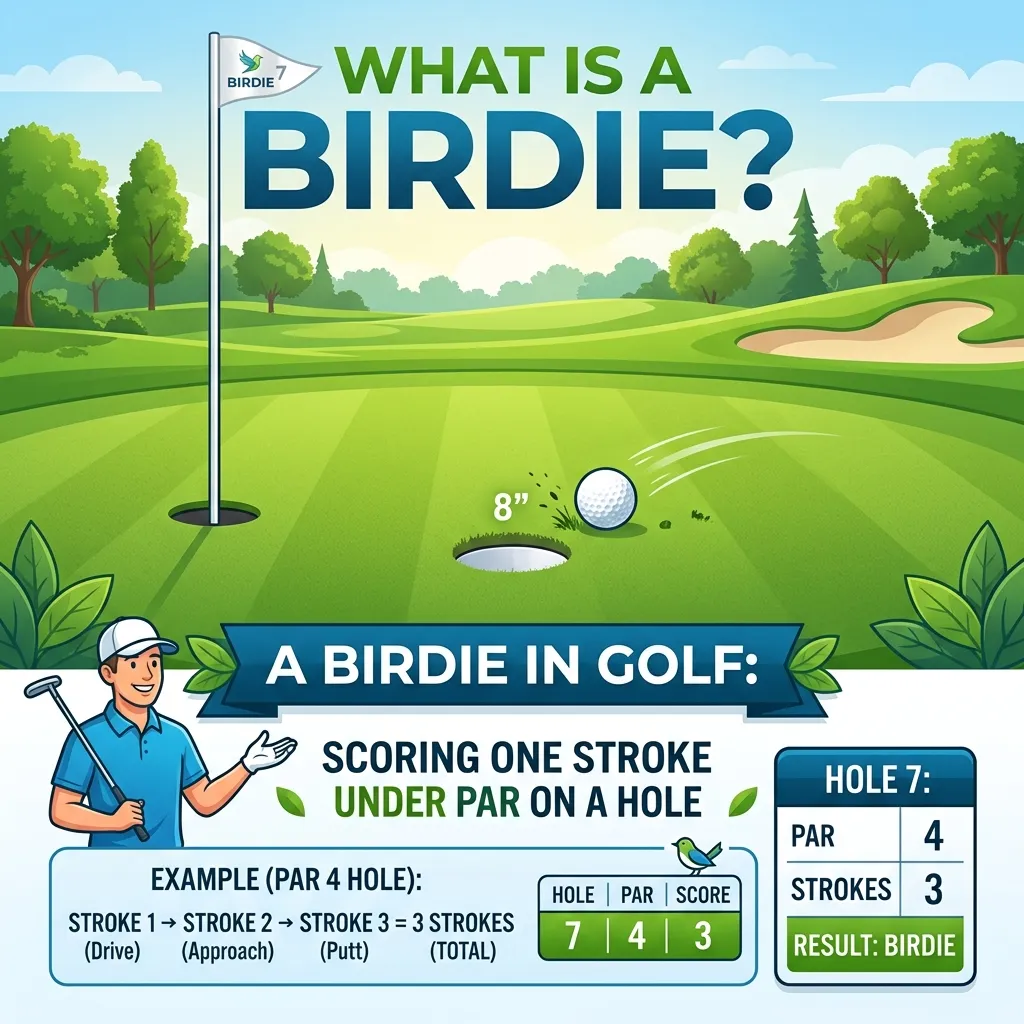
A birdie is a score of one stroke under par on a single hole. Par is the number of strokes an expert golfer is expected to take to complete a hole, including reaching the green and two putts.
Here’s how a birdie works in practice:
- On a par-3 hole, a birdie means finishing in 2 strokes.
- On a par-4 hole, a birdie means finishing in 3 strokes.
- On a par-5 hole, a birdie means finishing in 4 strokes.
The key thing to remember is that a birdie is always relative to par, not a fixed number. Scoring a birdie shows you played that hole better than the standard a skilled golfer would aim for.
Where Did the Term “Birdie” Come From?
The word “birdie” traces back to early 20th-century American slang. In the early 1900s, “bird” was a common term for anything excellent or impressive—similar to how people today might say something is “cool” or “awesome.”
The most widely accepted origin story comes from the Atlantic Country Club in New Jersey around 1903. A golfer named Ab Smith reportedly hit a fantastic shot and called it “a bird of a shot.” The term stuck, evolved into “birdie,” and spread throughout the golf world. Today, it’s recognized by golfers everywhere as the standard term for one under par.
How Is a Birdie Different From Par?
Understanding the relationship between par and birdie is the foundation of golf scoring. Par represents the expected number of strokes for a hole. A birdie beats that expectation by exactly one stroke.
Think of par as the benchmark and a birdie as a small victory over that benchmark. If you match par, you’ve played the hole well. If you score a birdie, you’ve played it even better.
Here’s a quick comparison on a par-4 hole:
- Par: 4 strokes (you met the standard)
- Birdie: 3 strokes (you beat the standard by one)
- Bogey: 5 strokes (you went one over the standard)
A round of golf is built from your performance across all 18 holes. The more birdies you collect, the lower your overall score—and in golf, a lower score is always the goal.
How Do You Score a Birdie in Golf?
Scoring a birdie comes down to playing a hole more efficiently than expected. While it takes skill, it’s an achievable goal for golfers at every level, especially on shorter holes. Here are some practical ways to give yourself the best shot at a birdie.
Choose the Right Hole
Par-3 holes are often the easiest place to chase a birdie because they require fewer shots overall. If you can land your tee shot on or near the green, you only need one or two putts to score under par.
Focus on Your Approach Shot
On par-4 and par-5 holes, your approach shot—the shot that lands the ball on the green—is critical. The closer you place the ball to the hole, the better your chance of sinking the putt for a birdie.
Sharpen Your Putting
Most birdies are won or lost on the green. Even a perfect drive means nothing if you three-putt. Practicing short and mid-range putts will dramatically improve your odds of converting birdie opportunities.
Play Smart, Not Just Aggressive
Birdies reward good decision-making as much as power. Sometimes laying up to a comfortable distance gives you a better scoring chance than going for the green and risking a hazard.
Golf Scoring Terms Explained
Birdie is just one piece of golf’s scoring vocabulary. To read a scorecard fluently, it helps to know the full range of terms. Each one describes your score on a hole relative to par.
|
Term |
Strokes Relative to Par |
Example on a Par-4 |
|---|---|---|
|
Condor |
4 under par |
Extremely rare |
|
Albatross |
3 under par |
1 stroke |
|
Eagle |
2 under par |
2 strokes |
|
Birdie |
1 under par |
3 strokes |
|
Par |
Even |
4 strokes |
|
Bogey |
1 over par |
5 strokes |
|
Double Bogey |
2 over par |
6 strokes |
|
Triple Bogey |
3 over par |
7 strokes |
The under-par terms—birdie, eagle, albatross, and condor—follow a fun bird theme, building on that original “bird of a shot” slang. The over-par terms are named after the bogey, an old golf concept for a standard score.
How Do Eagle and Birdie Differ in Golf?
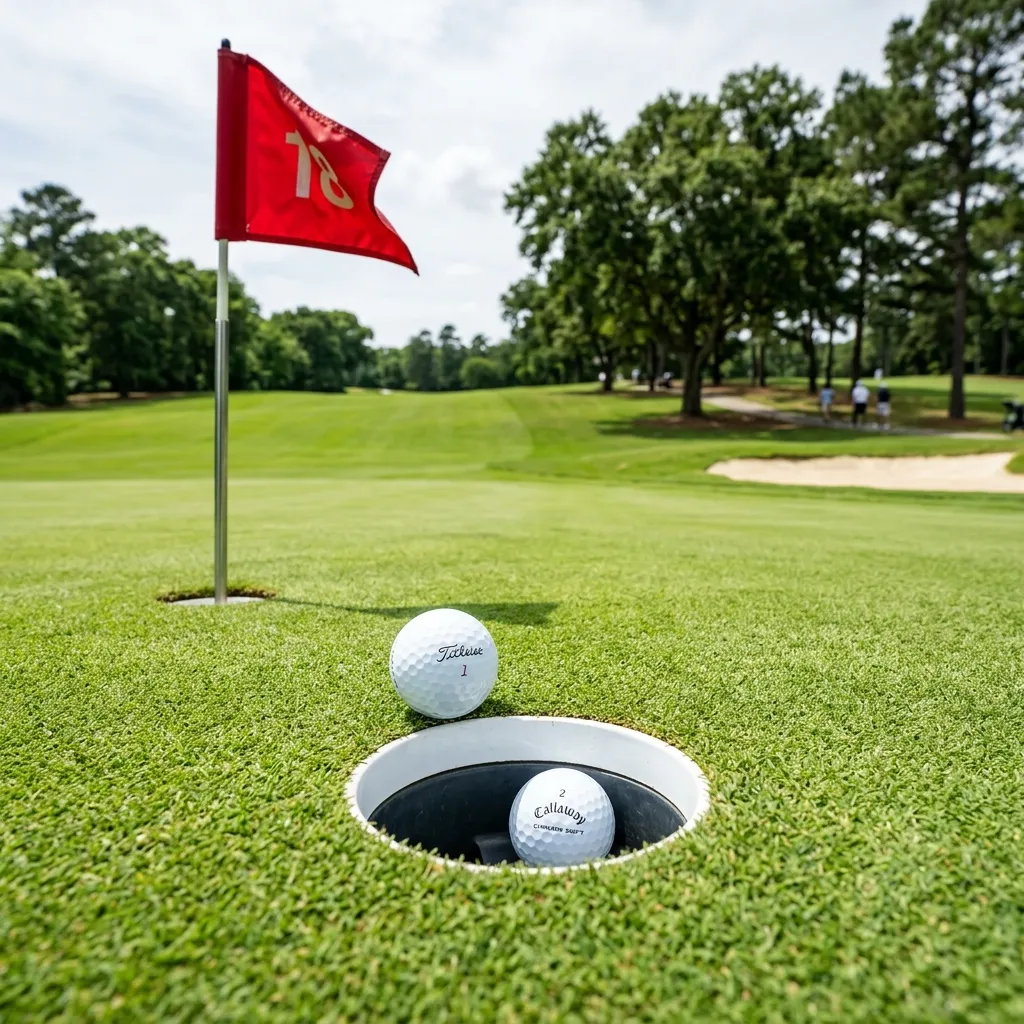
An eagle is one step better than a birdie. While a birdie is one stroke under par, an eagle is two strokes under par. Eagles are far less common because they require exceptional play.
On a par-5 hole, an eagle means finishing in just 3 strokes—often by reaching the green in two shots and sinking a single putt. On a par-4, an eagle would require holing your second shot from off the green, which is a rare and thrilling moment.
In short:
- Birdie: 1 under par (achievable for many golfers)
- Eagle: 2 under par (impressive and uncommon)
If birdies are small victories, eagles are major triumphs. Most amateur golfers may score plenty of birdies over a season but only a handful of eagles, if any.
What Does “Under Par” Mean in Golf?
“Under par” is one of the most important phrases in golf scoring. It simply means you took fewer strokes than the expected par—whether on a single hole or across an entire round.
Both birdies and eagles are examples of scoring under par. If you finish a full 18-hole round with a total score lower than the course’s combined par, you’ve shot “under par” overall, which is an excellent result.
Interestingly, “under par” carries a different meaning outside of golf. In everyday language, saying you feel “under par” means feeling below your usual standard. On the golf course, though, under par is exactly where you want to be.
A Simple Golf Scoring Guide for Beginners
If you’re new to golf, here’s an easy way to keep the scoring system straight. Start by checking the par for each hole, which is printed on the scorecard and usually displayed at the tee.
Then, count your strokes and compare them to par:
- Took one fewer stroke than par? That’s a birdie.
- Matched par exactly? That’s a par.
- Took one more stroke than par? That’s a bogey.
- Took two fewer strokes than par? That’s an eagle.
Don’t pressure yourself to score birdies right away. For most beginners, simply finishing a hole at or near par is a great accomplishment. Birdies tend to come naturally as your consistency improves.
Common Golf Terminology for Beginners
Beyond scoring terms, golf has plenty of vocabulary worth knowing as you get started. Here are a few essentials:
- Tee: The starting point of each hole, and also the small peg you place the ball on.
- Green: The smooth, closely mowed area surrounding the hole.
- Fairway: The well-maintained strip of grass between the tee and the green.
- Rough: The longer grass bordering the fairway, which makes shots harder.
- Hazard: Obstacles like bunkers (sand traps) or water that add difficulty.
- Approach shot: A shot aimed at landing the ball on the green.
- Handicap: A number that reflects a golfer’s skill level, used to level the playing field.
Learning these terms will help you feel more comfortable on the course and understand conversations with fellow golfers.
Start Chasing Your First Birdie

A birdie—scoring one stroke under par—is one of golf’s most rewarding moments and a clear sign that your game is improving. Now that you understand how birdies fit into the broader scoring system alongside pars, eagles, and bogeys, you’re well equipped to read a scorecard and track your progress.
The best way to put this knowledge into action is to get out on the course. Pick a short par-3, focus on your putting, and aim to sink that ball one stroke under par. With practice and patience, your first birdie could be closer than you think.
Want to keep building your golf knowledge? Explore more beginner guides, practice your short game regularly, and don’t be afraid to ask experienced golfers for tips. Every great player started exactly where you are now.
Frequently Asked Questions
What is a birdie in golf in simple terms?
A birdie is when you complete a golf hole in one stroke fewer than par. For example, scoring 3 on a par-4 hole is a birdie. It’s a sign you played that hole better than the expected standard.
Is a birdie good in golf?
Yes, a birdie is a very good score. It means you beat par by one stroke on a hole. While professional golfers score birdies regularly, they’re an exciting achievement for amateur and beginner golfers.
What’s the difference between a birdie and an eagle?
A birdie is one stroke under par, while an eagle is two strokes under par. Eagles are rarer and harder to achieve because they require exceptionally efficient play, often on par-5 holes.
How many birdies does a typical golfer make?
This varies widely by skill level. Professional golfers may score several birdies per round, while many amateur golfers might score one or two—or sometimes none. As your skills improve, birdies become more frequent.
Why is it called a birdie?
The term comes from early 1900s American slang, where “bird” meant something excellent. A golfer’s “bird of a shot” eventually became “birdie,” and the bird theme inspired related terms like eagle and albatross.
How difficult is it to score a birdie in golf?
Scoring a birdie in golf can be challenging for beginners, but it becomes more common as players improve their driving, approach shots, and putting. Even experienced golfers celebrate every birdie in golf because it represents strong play on a hole.
Can beginners score a birdie in golf?
Yes, beginners can score a birdie in golf, especially on shorter par-3 holes. While it may not happen often at first, consistent practice can increase your chances of making a birdie in golf.
What is the easiest hole to make a birdie in golf on?
Par-3 holes are often considered the easiest opportunities for a birdie in golf because they require fewer shots to reach the green and finish under par.
Does a birdie in golf improve your overall score?
Absolutely. Every birdie in golf lowers your total score by one stroke compared to par, helping you achieve a better overall round.
How common is a birdie in golf for amateur players?
For many amateur golfers, a birdie in golf is a memorable achievement that may occur only a few times each season. More skilled amateurs often make several birdies throughout a round.
What should I focus on to make a birdie in golf?
To make a birdie in golf, focus on hitting accurate approach shots and improving your putting. Most birdie opportunities are created by getting the ball close to the hole on the green.
Is a birdie in golf better than par?
Yes, a birdie in golf is better than par because it means you completed the hole in one fewer stroke than the expected score.
Can you score a birdie in golf on every type of hole?
Yes. A birdie in golf can be scored on par-3, par-4, and par-5 holes. The number of strokes required simply changes based on the hole’s par value.
How does a birdie in golf affect tournament standings?
In competitive golf, every birdie in golf can improve a player’s position on the leaderboard. Multiple birdies often make the difference between winning and finishing lower in the standings.
What is the opposite of a birdie in golf?
The opposite of a birdie in golf is typically a bogey, which occurs when a golfer takes one stroke more than par to complete a hole.
