

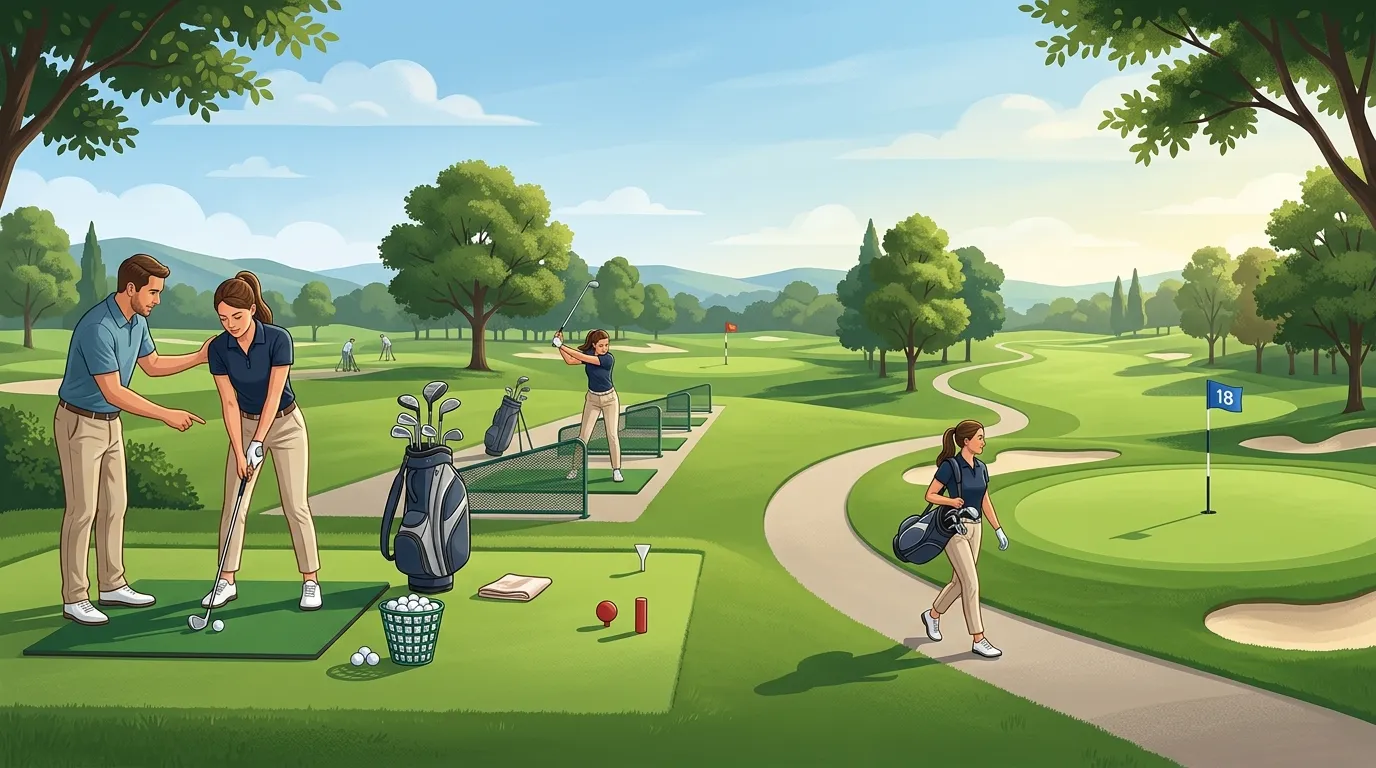
To start playing golf, learn the basic rules, get a starter set of clubs, and practice your grip and swing at a driving range before hitting the course. Take a few lessons, focus on the fundamentals, and follow basic etiquette like keeping pace and staying quiet during others’ shots.
Golf has a reputation for being complicated, expensive, and a little intimidating. But here’s the good news: you don’t need fancy gear or natural talent to get started. With a handful of clubs and some practice, anyone can learn to enjoy this game.
This guide breaks down everything a beginner needs to know—from the rules and equipment to your first swing and basic etiquette. Think of it as your roadmap from total newcomer to confident first-timer on the course.
By the end, you’ll understand how to hold a club, what to practice, and how to behave during your first round. Let’s get into it.
What Are the Basic Rules of Golf for Beginners?
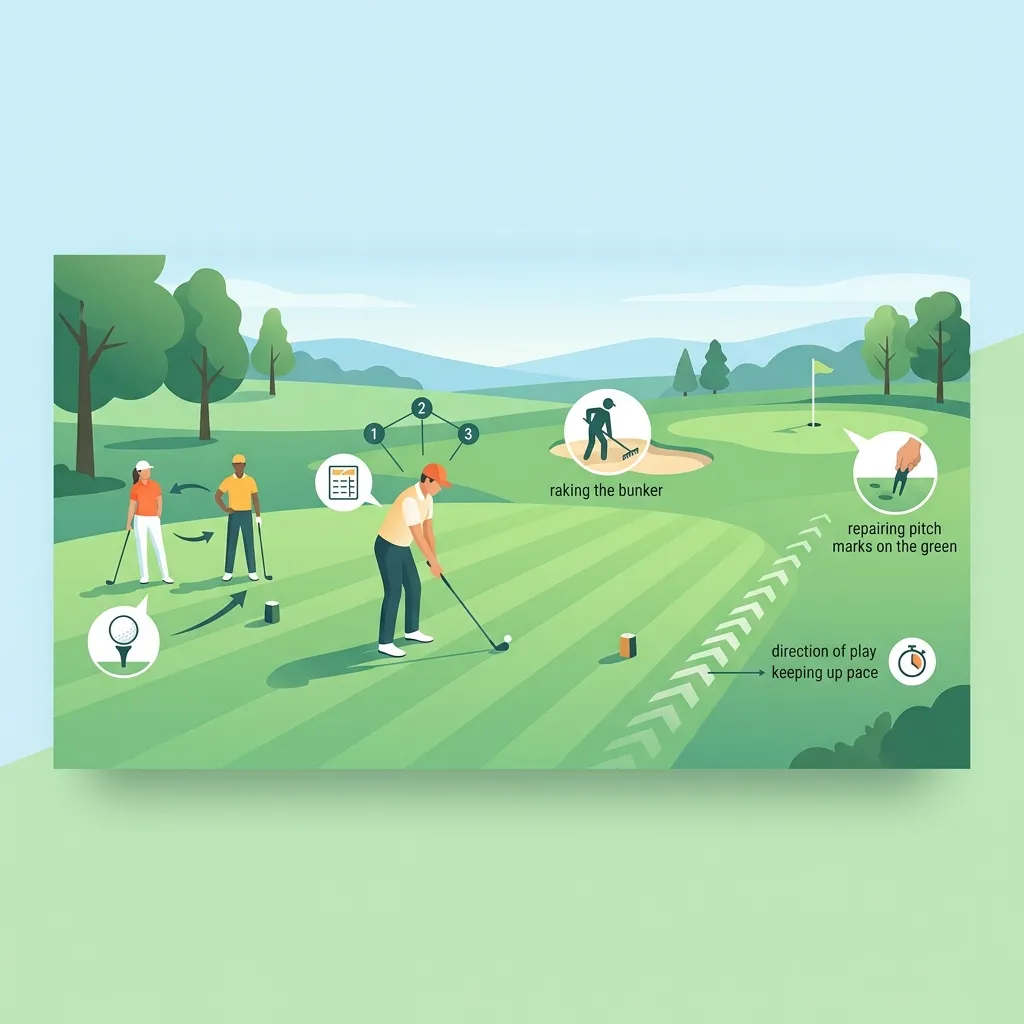
Golf is simple at its core: hit the ball into a series of holes using as few strokes as possible. A standard course has 18 holes, though many beginners start with 9-hole rounds to keep things manageable.
Here are the key rules every new player should know:
- Count every stroke. Each time you swing at the ball counts as one stroke, even if you miss. Your goal is to finish each hole in the fewest strokes.
- Play the ball as it lies. You generally can’t move your ball to a better spot. Where it lands is where you play your next shot.
- Understand par. Par is the number of strokes an expert is expected to take on a hole. Most holes are par 3, 4, or 5.
- Know your penalties. If you hit your ball into water or out of bounds, you’ll add a penalty stroke and play again.
- Finish in order. The player furthest from the hole usually plays first.
Don’t stress about memorizing the entire rulebook. The official rules of golf run dozens of pages, but knowing these basics is enough to play and enjoy your first rounds.
What Golf Equipment Do Beginners Actually Need?
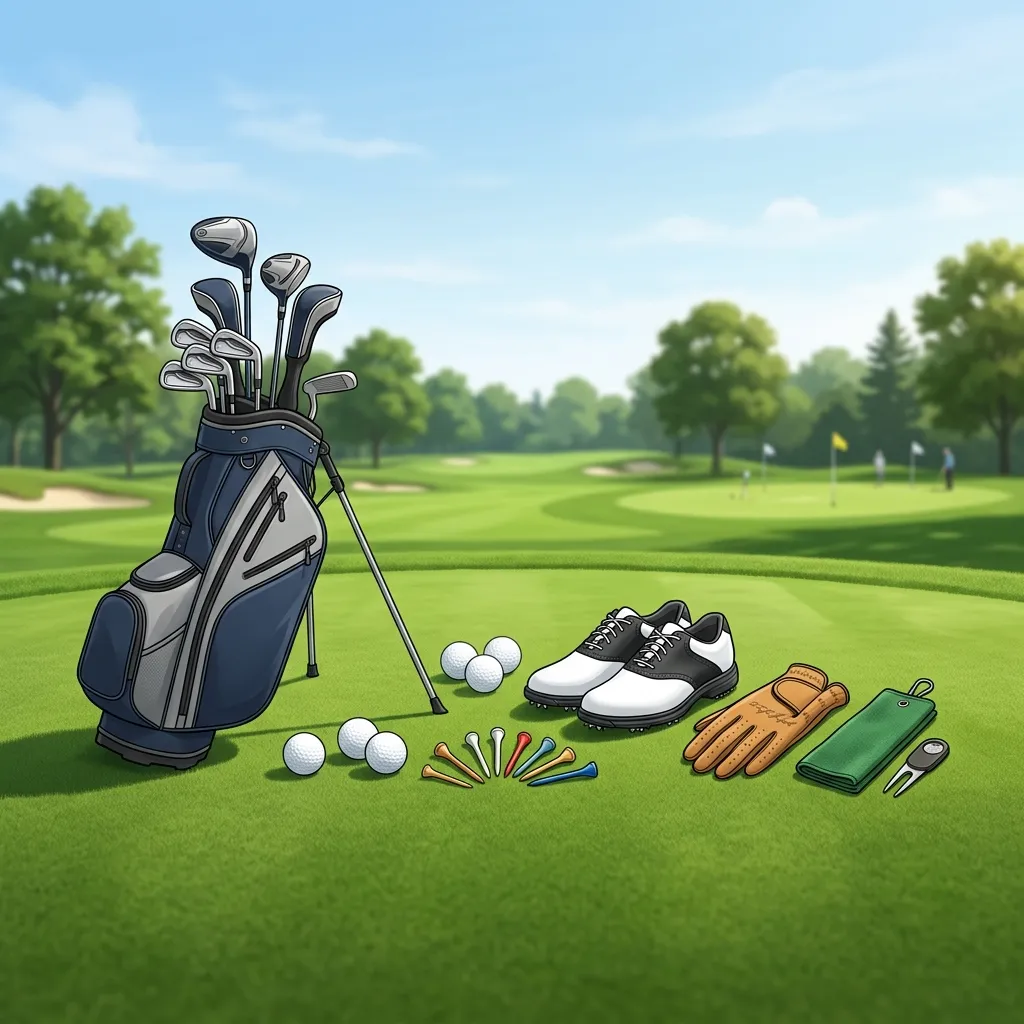
You don’t need a $2,000 set of clubs to start. In fact, buying too much gear too soon is a common beginner mistake. Here’s what actually matters.
Essential Golf Equipment for New Players
- Clubs: A starter set with 8 to 12 clubs is plenty. Look for a set that includes a driver, a couple of irons, a wedge, and a putter. Many brands sell beginner-friendly boxed sets.
- Golf balls: Buy a pack of inexpensive balls. You’ll lose a few while learning, so don’t splurge here.
- Tees: These small pegs hold your ball off the ground for your first shot on each hole.
- A golf glove: Worn on your lead hand, a glove improves your grip and prevents blisters.
- Comfortable shoes: Golf shoes help with stability, but supportive sneakers work fine when you’re starting out.
Should Beginners Buy New or Used Clubs?
Choose used or rental clubs if you’re not sure golf will stick. A secondhand starter set costs a fraction of new gear and works perfectly well while you learn. Once you’re committed and understand your playing style, you can invest in clubs fitted to your height and swing.
How Do You Hold a Golf Club Correctly?
Your grip is the foundation of every shot, so it’s worth getting right early. A poor grip leads to inconsistent shots and bad habits that are hard to break.
Follow these steps for a basic grip (instructions for right-handed players—reverse for left-handed):
- Place your left hand near the top of the grip. The club should rest across the base of your fingers, not deep in your palm.
- Wrap your fingers around so your left thumb points down the shaft. You should see two knuckles on your left hand when you look down.
- Add your right hand below the left. The pad of your right hand should cover your left thumb.
- Link your hands together. Most players use an overlapping grip, resting the right pinky between the left index and middle fingers.
- Keep your grip relaxed. Squeeze too hard and you’ll lose control and distance. Aim for firm but comfortable pressure.
Practice this grip at home until it feels natural. A solid grip makes everything that follows easier.
What Are the Basics of a Good Golf Swing?
The golf swing intimidates a lot of beginners, but you can break it into simple parts. Focus on consistency over power—distance comes with practice.
Beginner Golf Swing Techniques
- Set your stance. Stand with your feet shoulder-width apart, knees slightly bent, and weight balanced. The ball should sit roughly in the center of your stance for most shots.
- Stay relaxed. Tension kills a good swing. Keep your arms and shoulders loose.
- Turn, don’t just lift. Rotate your shoulders and hips on the backswing rather than just raising your arms.
- Keep your head steady. Watch the ball through impact instead of looking up to see where it goes.
- Follow through. Let the swing finish naturally with your weight shifting to your front foot.
Start with half-swings and shorter clubs before working up to a full driver swing. Smooth and controlled beats fast and wild every time.
Why Should You Take a Golf Lesson?
A single lesson with a golf professional can save you months of frustration. An instructor spots flaws in your grip, stance, and swing that you can’t see yourself. Many driving ranges and courses offer affordable group clinics for beginners, which are a great low-pressure way to learn the fundamentals.
How Should Beginners Practice at the Driving Range?
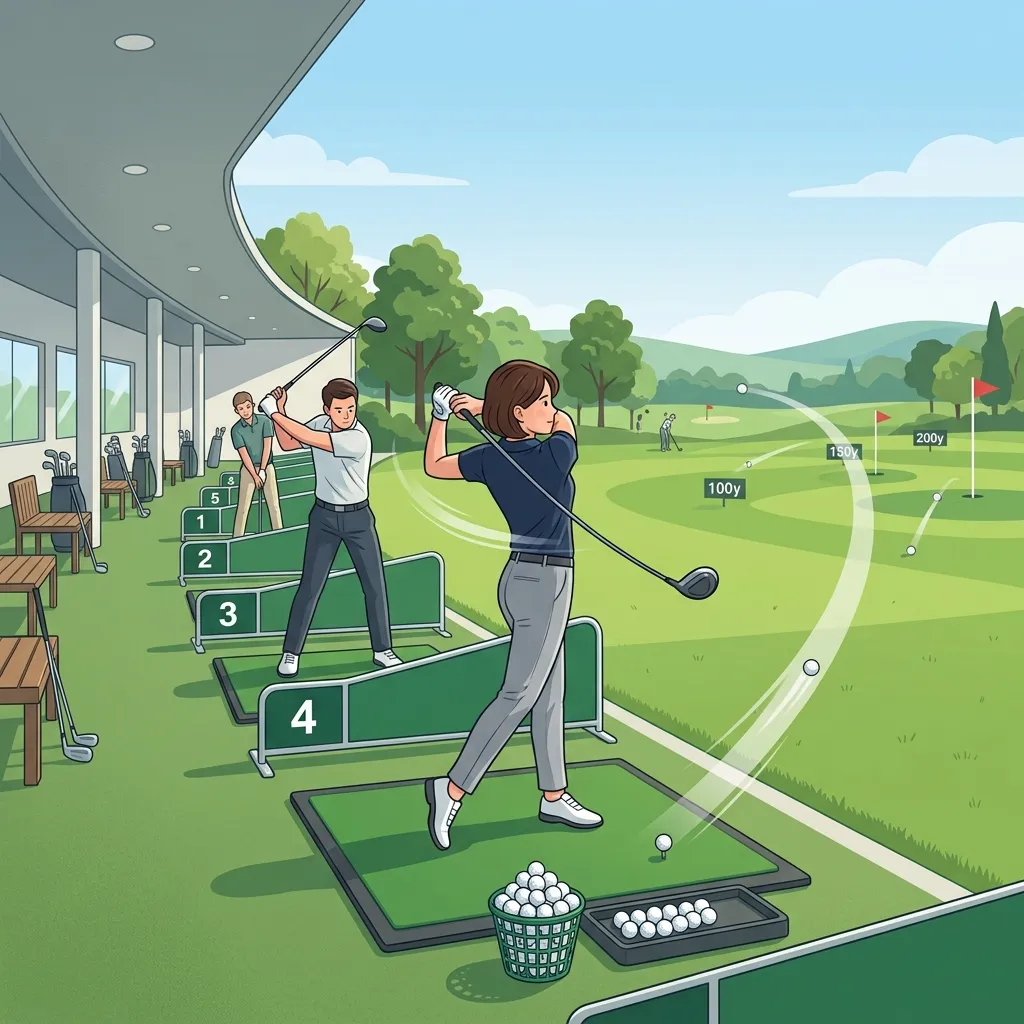
The driving range is where most of your early improvement happens. It’s a relaxed environment where you can hit dozens of balls without worrying about scores or slowing down other players.
Make the most of your range sessions with these tips:
- Warm up first. Stretch and start with easy half-swings before going full power.
- Start with shorter clubs. Wedges and short irons are easier to control than a driver. Build confidence before moving up.
- Aim at targets. Pick a flag or marker to aim for instead of just hitting blindly. This trains accuracy.
- Focus on quality, not quantity. Hitting 30 balls with intention beats smashing 100 carelessly.
- Practice your putting too. Many ranges have a putting green. Putting accounts for a huge chunk of your strokes, so don’t ignore it.
Consistent range practice builds muscle memory, which is exactly what you need before stepping onto a real course.
What Golf Etiquette Should First-Time Players Know?
Golf has unwritten rules that keep the game enjoyable for everyone. Following etiquette shows respect and helps you blend in, even as a beginner.
Keep these etiquette basics in mind:
- Stay quiet when others are swinging. Silence and stillness are expected during another player’s shot.
- Keep pace. Be ready to play when it’s your turn, and let faster groups play through if you’re falling behind.
- Repair the course. Replace divots, fix ball marks on the green, and rake bunkers after use.
- Mind the green. Don’t walk across another player’s putting line, and watch where your shadow falls.
- Stay safe. Never swing or hit when someone is within range, and shout “fore!” if your ball heads toward other players.
Nobody expects perfection from a beginner. Showing you care about the game and the people around you goes a long way.
Easy Tips to Keep Improving as a Beginner
Once you’ve got the basics down, a few simple habits will speed up your progress:
- Play with patience. Everyone shanks shots and misses putts at first. Improvement takes time.
- Set small goals. Aim to break 100 strokes for 18 holes, or simply to finish a round without losing too many balls.
- Play with better golfers. Watching experienced players teaches you more than you’d expect.
- Track your progress. Note what’s working and what isn’t so you know what to practice.
- Have fun. Golf is a game. Enjoy the fresh air, the company, and the small wins along the way.
Your Next Steps Toward Your First Round
Starting golf is far more achievable than it looks. Get a basic set of clubs, nail down your grip, and spend time at the driving range before booking your first tee time. Add a lesson or two, learn the core rules, and follow basic etiquette—you’ll be ready to enjoy the course in no time.
The hardest part is simply starting. Grab some clubs, head to your local range, and take that first swing. Every great golfer was a beginner once.
Frequently Asked Questions
How much does it cost to start playing golf?
Starting golf can cost as little as $150 to $300 for a used starter set of clubs, balls, tees, and a glove. Green fees at public courses often range from $20 to $60 per round, while driving range buckets typically cost $5 to $15.
How long does it take to get good at golf?
Most beginners can play a basic round within a few weeks of practice. Becoming consistently good usually takes one to two years of regular play. Improvement depends on how often you practice and whether you take lessons.
Do I need lessons to learn golf?
Lessons aren’t required, but they speed up learning significantly. A golf professional can correct your grip, stance, and swing before bad habits set in. Even one or two beginner lessons can make a big difference.
What should a beginner golfer wear?
Most courses require a collared shirt and avoid denim. Comfortable pants or shorts, athletic socks, and supportive shoes or golf shoes work well. Always check the dress code of the course you plan to visit.
Should I start at a driving range or a golf course?
Beginners should start at a driving range. It’s a low-pressure environment where you can practice your swing without worrying about scores, etiquette, or holding up other players. Move to the course once you can make consistent contact with the ball.
