

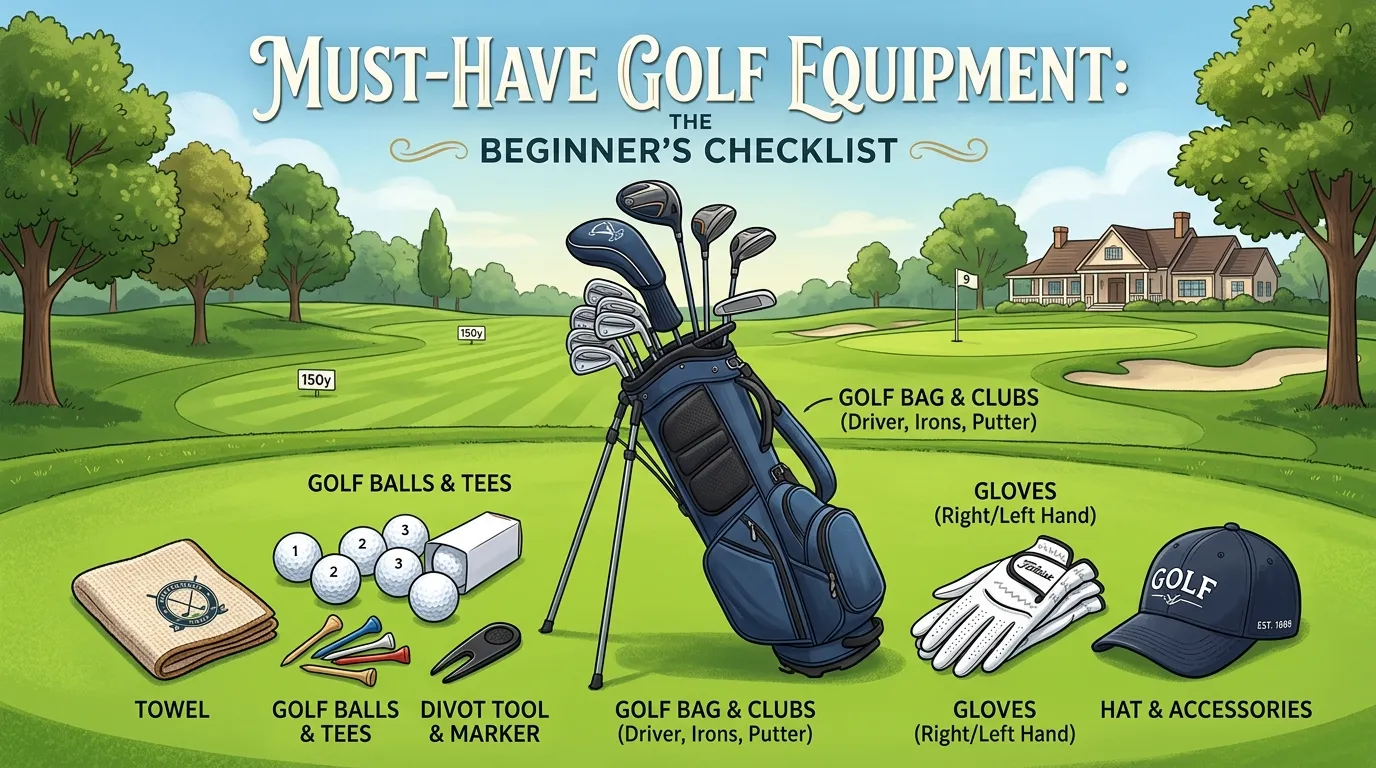
Must-have golf equipment for beginners includes a quality starter club set, golf bag, balls, tees, glove, and proper golf shoes. Adding a few essential accessories and training aids can improve comfort, build confidence, and help you develop your skills faster on the course.
Must-have golf equipment for beginners includes a starter set of golf clubs (driver, irons, putter, and wedge), a golf bag, golf balls, tees, gloves, and proper footwear. Adding a few key accessories and training aids can accelerate your progress on the course significantly.
Walking onto a golf course without the right gear is a bit like showing up to a road race in flip-flops. Technically possible—but you’re making things much harder for yourself. The good news? You don’t need to spend a fortune to get started. You just need to know what actually matters.
This guide breaks down every piece of must-have golf equipment—from the clubs in your bag to the training aids that will sharpen your game between rounds. Whether you’ve just signed up for your first lesson or you’re preparing for your first full round, this checklist has everything you need to step onto the course with confidence.
By the end of this post, you’ll know exactly what to buy, what to skip for now, and how to build a solid gear setup without overwhelming your wallet.
Golf Essentials: What Every Golfer Needs Before Teeing Off
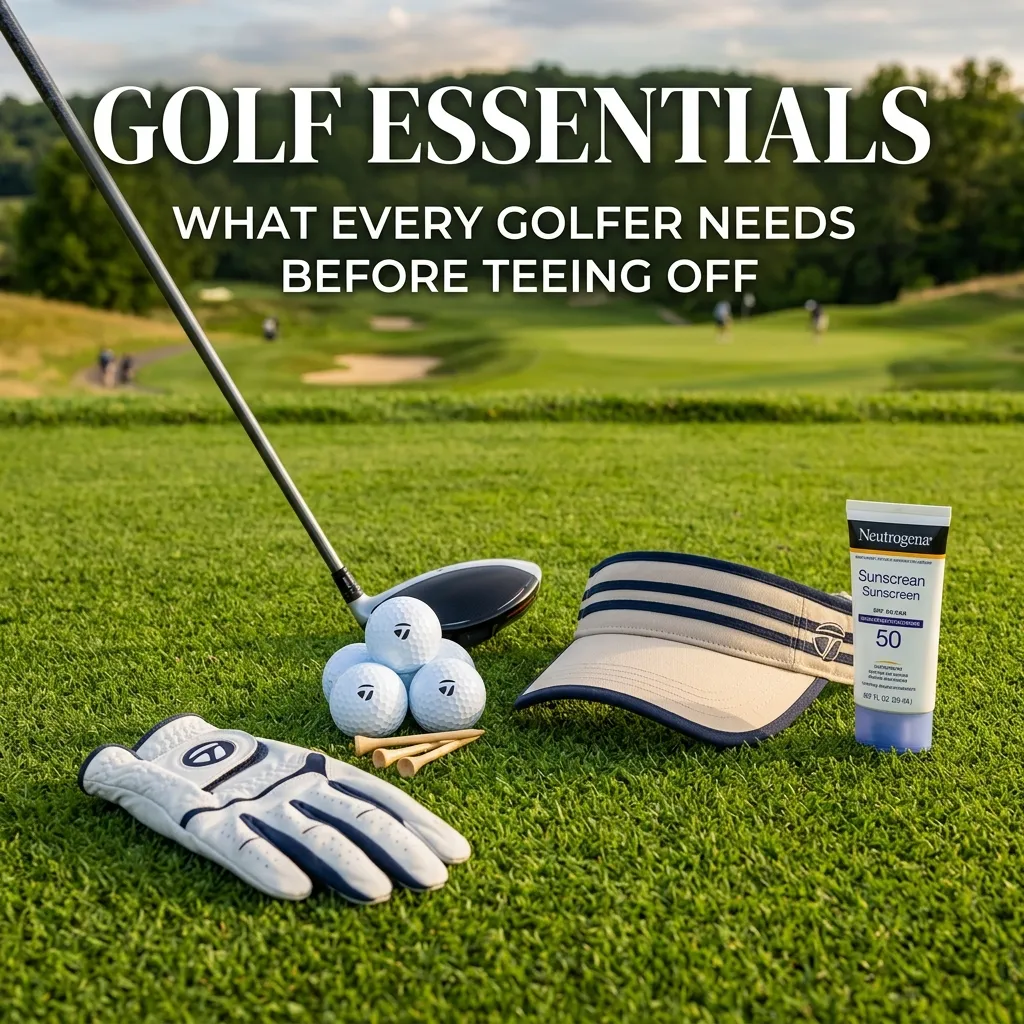
Before diving into specific gear categories, it helps to understand the core categories of golf equipment. Every golfer—beginner or experienced—needs the following:
- Golf clubs (a starter set covering the key club types)
- A golf bag to carry and organize your clubs
- Golf balls and tees
- A golf glove for grip and control
- Appropriate footwear
Everything beyond this list falls into the “helpful but optional” category—at least when you’re starting out. The sections below explore each category in detail, including what to look for and why it matters.
Golf Clubs for Beginners: What’s Actually in a Starter Set?
Golf rules allow up to 14 clubs in your bag, but beginners don’t need anywhere near that number. A well-rounded starter set typically includes 7 to 9 clubs that cover the full range of shots you’ll encounter on a typical course.
What clubs should a beginner golfer carry?
Here’s what a solid beginner golf club set should include:
- Driver (1-wood): Used for tee shots on par-4 and par-5 holes. Beginners benefit from a driver with a larger clubhead and higher loft (10.5° or more), which is more forgiving on off-center hits.
- Fairway wood (3-wood or 5-wood): A versatile club for long shots from the fairway or off the tee on shorter holes.
- Irons (6-iron through 9-iron): Mid-range clubs for approach shots. Many beginner sets include cavity-back irons, which have a hollowed-out back that distributes weight more evenly—making them far more forgiving than blade irons.
- Pitching wedge (PW): Essential for short approach shots and chip shots around the green.
- Sand wedge (SW): Specifically designed to help escape bunkers—a club you’ll be very grateful for.
- Putter: Used on the green to roll the ball into the hole. Beginners often do well with a mallet-style putter, which offers a larger sweet spot and more stability.
Beginner tip: Pre-packaged beginner golf sets from brands like Callaway, TaylorMade, and Cleveland are a practical starting point. These sets are designed to work together, and they’re generally more affordable than assembling clubs individually.
Golf Bag Essentials: Choosing the Right Bag for Your Game
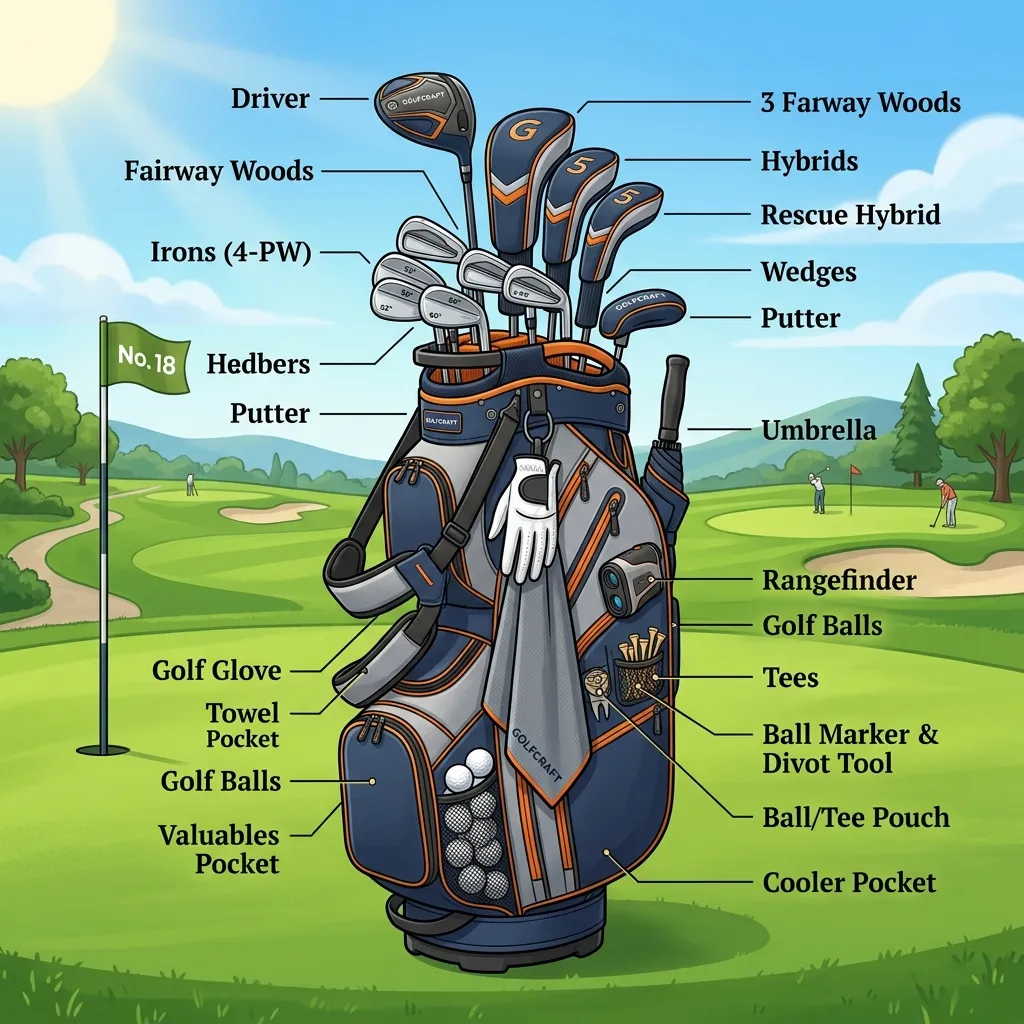
A golf bag does more than just carry your clubs—it keeps your gear organized, protects your equipment, and makes your round more comfortable. There are three main types to consider:
- Stand bags: Lightweight bags with retractable legs that allow the bag to stand upright on the course. These are the most popular choice for beginners who walk the course.
- Cart bags: Heavier and designed to sit on a golf cart. These typically offer more storage pockets and organization options.
- Tour bags: Large, professional-grade bags used by tour caddies. Not practical for recreational beginners.
For most beginners, a stand bag strikes the right balance between portability and storage. Look for padded shoulder straps, a rain hood, and enough pockets to store balls, tees, a rangefinder, and personal items.
What should you keep in your golf bag at all times?
A well-stocked golf bag should contain:
- At least a dozen golf balls (beginners lose more than you’d expect)
- A bag of wooden or plastic tees in varying heights
- A golf glove (one for your lead hand)
- A divot repair tool and ball marker
- A small towel to clean clubs and balls
- Sunscreen and insect repellent
- A snack or two for longer rounds
Essential Golf Accessories That Make a Real Difference
Once your clubs and bag are sorted, a handful of golf accessories can genuinely improve your experience on the course—and in some cases, your score.
Golf Glove
A golf glove worn on the lead hand (left hand for right-handed golfers) improves grip and reduces the risk of blisters. It’s a small investment that makes a noticeable difference, especially in humid conditions where grip becomes harder to maintain.
Golf Shoes
Standard athletic shoes don’t provide the traction and lateral support that golf demands. Golf-specific footwear—either with soft spikes or spikeless soles—keeps you stable during your swing and comfortable across 18 holes. Brands like FootJoy, Nike, and ECCO offer solid beginner-friendly options at a range of price points.
Rangefinder or GPS Watch
Knowing the exact distance to the pin removes a lot of guesswork from club selection. Laser rangefinders like those from Bushnell or Nikon give precise yard readings to the flag. GPS golf watches from Garmin and Shot Scope offer a more hands-free approach, displaying hole layouts and distances on your wrist. Either option is a worthwhile addition once you’re playing regularly.
Ball Marker and Divot Tool
These two items are small, inexpensive, and part of basic golf etiquette. A ball marker lets you lift and clean your ball on the green without losing its position. A divot repair tool is used to fix the small indentations your ball makes when it lands on the green—keeping the course in good condition for everyone.
Golf Training Aids: Gear That Accelerates Improvement
Training aids don’t just fill your practice sessions—the right tools can correct swing habits that are hard to spot on the course. Here are a few of the most effective options for beginners:
Alignment Sticks
Two of the most underrated training tools in golf. Place them on the ground during practice to check your stance, ball position, and club path. Many PGA Tour professionals still use alignment sticks in their warm-up routines.
Putting Mat
Putting accounts for roughly 40% of total strokes in an average round—so it’s worth practicing. A quality putting mat like those from PuttOUT or Wellputt allows you to work on your stroke at home, developing consistency and feel without needing to visit a course.
Swing Trainer
Devices like the Orange Whip or Lag Shot help you develop proper tempo, rhythm, and lag in your swing. They’re particularly useful for beginners who tend to rush through their downswing—a common and easily correctable fault.
Impact Bag
An impact bag gives you immediate physical feedback on club position at the point of contact. Striking a padded target repeatedly trains your hands and wrists to arrive in the correct position—building muscle memory faster than hitting balls alone.
Golf Equipment List: Your Complete Beginner Checklist
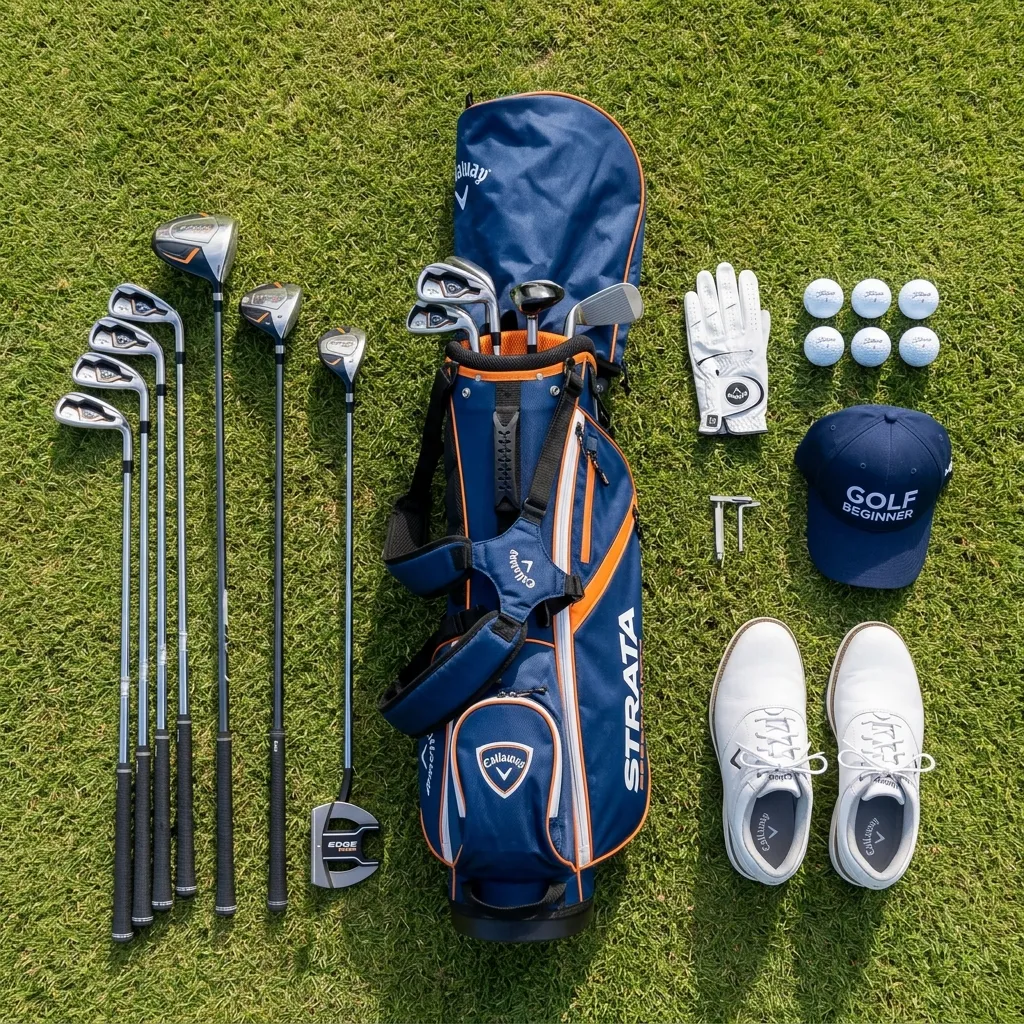
Here’s a consolidated golf gear checklist you can use before your first round:
Must-have equipment:
- ✅ Beginner golf club set (7–9 clubs)
- ✅ Golf stand bag
- ✅ Golf balls (at least 12)
- ✅ Golf tees (assorted heights)
- ✅ Golf glove
- ✅ Golf shoes
Recommended golf accessories:
- ✅ Rangefinder or GPS watch
- ✅ Divot repair tool and ball marker
- ✅ Towel
- ✅ Sunscreen and rain gear
Helpful golf training aids:
- ✅ Alignment sticks
- ✅ Putting mat
- ✅ Swing trainer
What’s the Best Golf Gear for Beginners on a Budget?
You don’t need to spend thousands to get properly equipped. Here’s a realistic budget breakdown for beginner golfers:
|
Item |
Budget Option |
Mid-Range Option |
|---|---|---|
|
Club Set |
$150–$250 (used set) |
$300–$500 (new starter set) |
|
Golf Bag |
$40–$80 |
$100–$150 |
|
Golf Shoes |
$50–$80 |
$100–$150 |
|
Balls & Tees |
$20–$30 |
$30–$50 |
|
Glove |
$10–$15 |
$15–$25 |
|
Rangefinder |
$80–$120 |
$150–$250 |
A full beginner setup can realistically cost anywhere from $350 to $1,000+, depending on whether you opt for new or used equipment. Buying a used starter set in good condition is one of the smartest moves a new golfer can make—clubs hold up well over time, and the savings can go toward lessons and green fees.
Gear Up and Get Out There
The right equipment won’t fix a poor swing overnight, but it will make your first rounds far more enjoyable—and give you a legitimate foundation to improve from. Start with the essentials, resist the urge to over-invest before you know the game is for you, and add accessories as your needs become clearer.
Golf rewards patience, practice, and consistency. The gear checklist above gives you everything you need to start on the right foot. Now, it’s time to book that tee time.
Frequently Asked Questions
What is the most essential golf equipment for beginners?
The most essential golf equipment for beginners includes a starter set of golf clubs (typically 7–9 clubs), a golf bag, golf balls, tees, a golf glove, and proper footwear. These items cover every fundamental need for a round of golf.
How many clubs does a beginner golfer need?
Beginners need between 7 and 9 clubs. A standard beginner set typically includes a driver, a fairway wood, a set of irons (6-iron through 9-iron), a pitching wedge, a sand wedge, and a putter. Golf rules allow up to 14 clubs, but beginners don’t need that many to start.
What should I look for in beginner golf clubs?
Look for clubs labeled as “game improvement” or “forgiving.” These typically feature cavity-back irons and larger clubheads that minimize the penalty for off-center hits. Brands like Callaway, TaylorMade, and Cleveland offer well-regarded beginner sets.
Do I need golf shoes to play golf?
Golf shoes are not strictly required on all courses, but they are strongly recommended. Golf-specific footwear provides the traction and lateral stability needed during a golf swing, and many courses require soft spikes or spikeless shoes to protect their greens.
What golf training aids are best for beginners?
The most effective training aids for beginner golfers are alignment sticks, a putting mat, and a swing trainer like the Orange Whip. These tools address the most common beginner challenges: alignment, putting consistency, and swing tempo.
Is it worth buying used golf clubs as a beginner?
Yes. Used golf clubs in good condition offer excellent value for beginners who are still developing their game. Many golfers trade in lightly used sets, making it easy to find quality clubs at a fraction of the new price.
What is the must-have golf equipment for beginners?
The must-have golf equipment includes a beginner golf club set, golf bag, golf balls, tees, a golf glove, golf shoes, and a few basic accessories for playing comfortably.
How many golf clubs should a beginner carry?
Most beginners only need 7–9 clubs, including a driver, fairway wood, several irons, a pitching wedge, a sand wedge, and a putter.
Is it better to buy a complete beginner golf set?
Yes. A complete beginner golf set is affordable, easy to use, and includes the essential clubs needed to learn the game.
What accessories should every golfer keep in their golf bag?
Every golfer should carry golf balls, tees, a towel, a divot repair tool, a ball marker, sunscreen, water, and an extra golf glove.
Are golf shoes necessary for beginners?
Golf shoes are highly recommended because they provide better traction, balance, and comfort throughout a round of golf.
What are the best golf training aids for beginners?
Alignment sticks, putting mats, swing trainers, and impact bags are excellent training aids that help improve swing mechanics and putting accuracy.
Can I buy used golf equipment as a beginner?
Yes. Buying used golf equipment is a cost-effective way to get quality clubs and accessories while learning the game.
How much does beginner golf equipment cost?
A complete beginner setup typically costs between $350 and $1,000, depending on whether you choose new or used equipment and the brands you buy.
What golf balls should beginners use?
Beginners should use affordable, durable, low-compression golf balls that provide good distance and forgiveness while learning.
When should I upgrade my golf equipment?
Upgrade your golf equipment once your swing becomes more consistent and you outgrow your beginner clubs, usually after gaining regular playing experience.
