

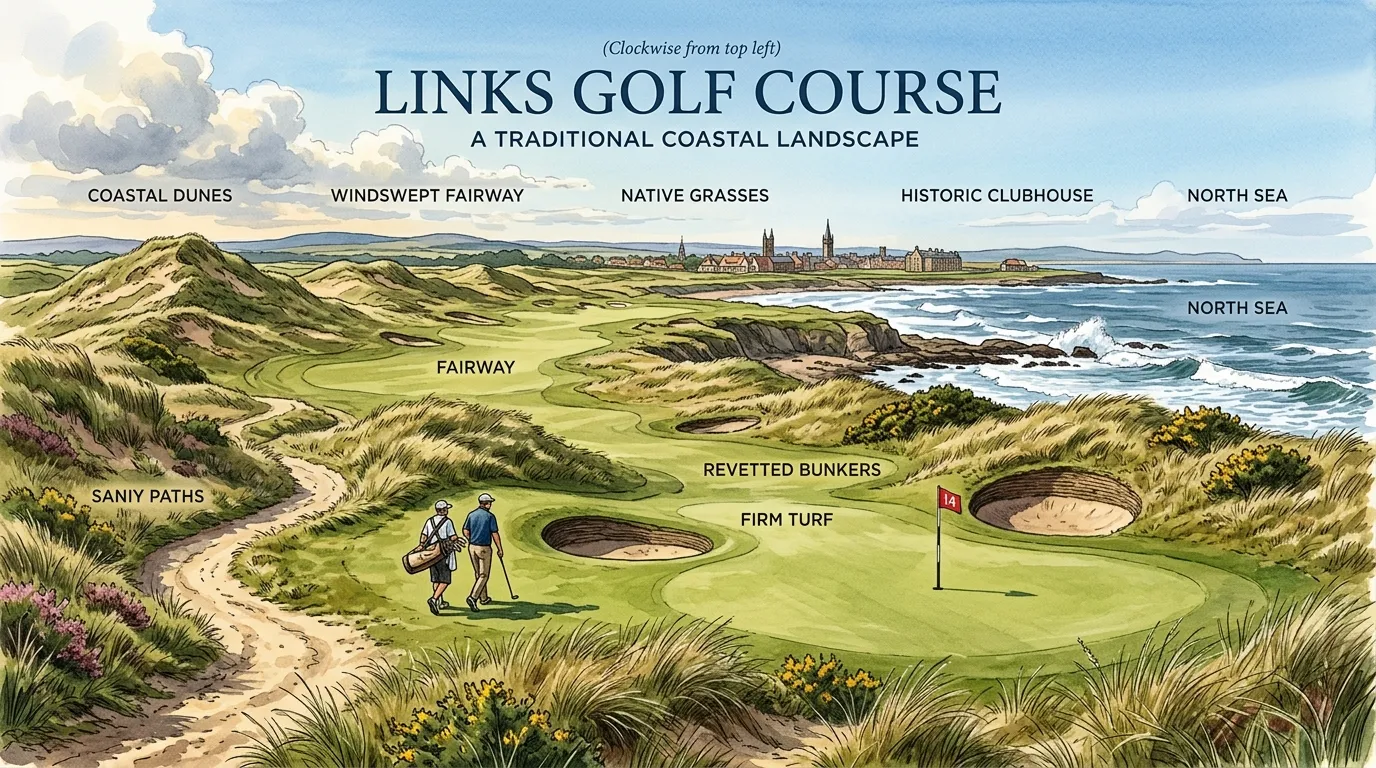
What is links course golf? A links golf course is a traditional coastal course built on sandy terrain with firm fairways, deep pot bunkers, few trees, and challenging winds. Originating in Scotland, links courses reward strategic shot-making, creativity, and a strong ground game, offering a unique golfing experience unlike parkland courses.
A links golf course is a type of course built on sandy coastal land, typically found near the sea. Links courses feature firm, fast-running fairways, few trees, deep pot bunkers, tall fescue grasses, and constant wind. This style originated in Scotland and represents the oldest form of golf in the world.
If you’ve ever watched The Open Championship and wondered why the courses look so different from your local club—windswept, treeless, with the ball scuttling along the ground instead of soaring through the air—you’ve witnessed links golf in action. This is golf in its purest, oldest form, and it plays nothing like the manicured parkland courses most golfers grew up on.
Links golf demands creativity, patience, and a willingness to play the ball along the ground. It rewards the thinking golfer over the power hitter. Yet many players have never set foot on a true links, and plenty more aren’t sure what actually makes a course a “links” in the first place.
This guide breaks down everything you need to know: what defines a links course, where the term comes from, the key characteristics to look for, how links golf differs from parkland golf, and what you should expect the first time you tee it up by the sea.
What Does “Links” Mean in Golf?
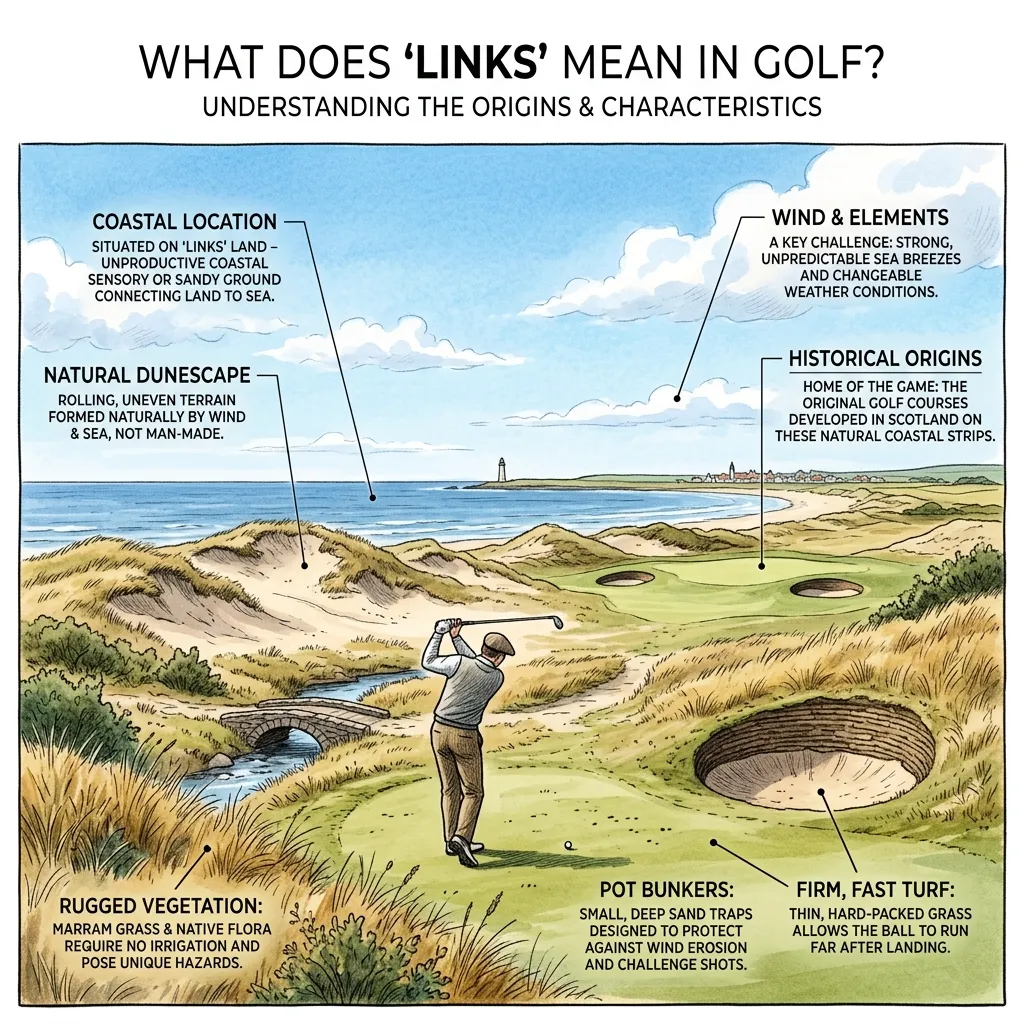
The word “links” comes from the Old English word “hlinc,” meaning rising ground or ridge. It refers to the sandy, undulating terrain that sits between the sea and the more fertile farmland inland.
This land was largely useless for agriculture. The sandy soil couldn’t support crops, so it became common ground for grazing sheep and, eventually, for playing golf. The natural dunes, hollows, and rough grasses formed the framework for the earliest courses, with very little human alteration needed.
A true links, by the strictest definition, must be located on this coastal sandy soil. That’s why golf purists argue that many courses described as “links” are not technically links at all—they simply borrow the style without the geography.
A Short History of Scottish Links Golf
Golf as we know it was born on the links land of Scotland’s eastern coast. The Old Course at St Andrews, often called “the home of golf,” has hosted the game since the early 15th century. Other famous Scottish links include Carnoustie, Muirfield, Royal Troon, and Turnberry.
These courses weren’t designed in the modern sense. Early golfers simply played across the natural terrain, with sheep keeping the grass short and rabbits carving out hollows that became bunkers. Over time, the routing settled into the formats we recognize today.
Scotland remains the spiritual home of links golf, but the style spread across the British Isles and Ireland, where you’ll find legendary courses like Royal County Down, Ballybunion, and Royal Birkdale.
Links Golf Course Characteristics
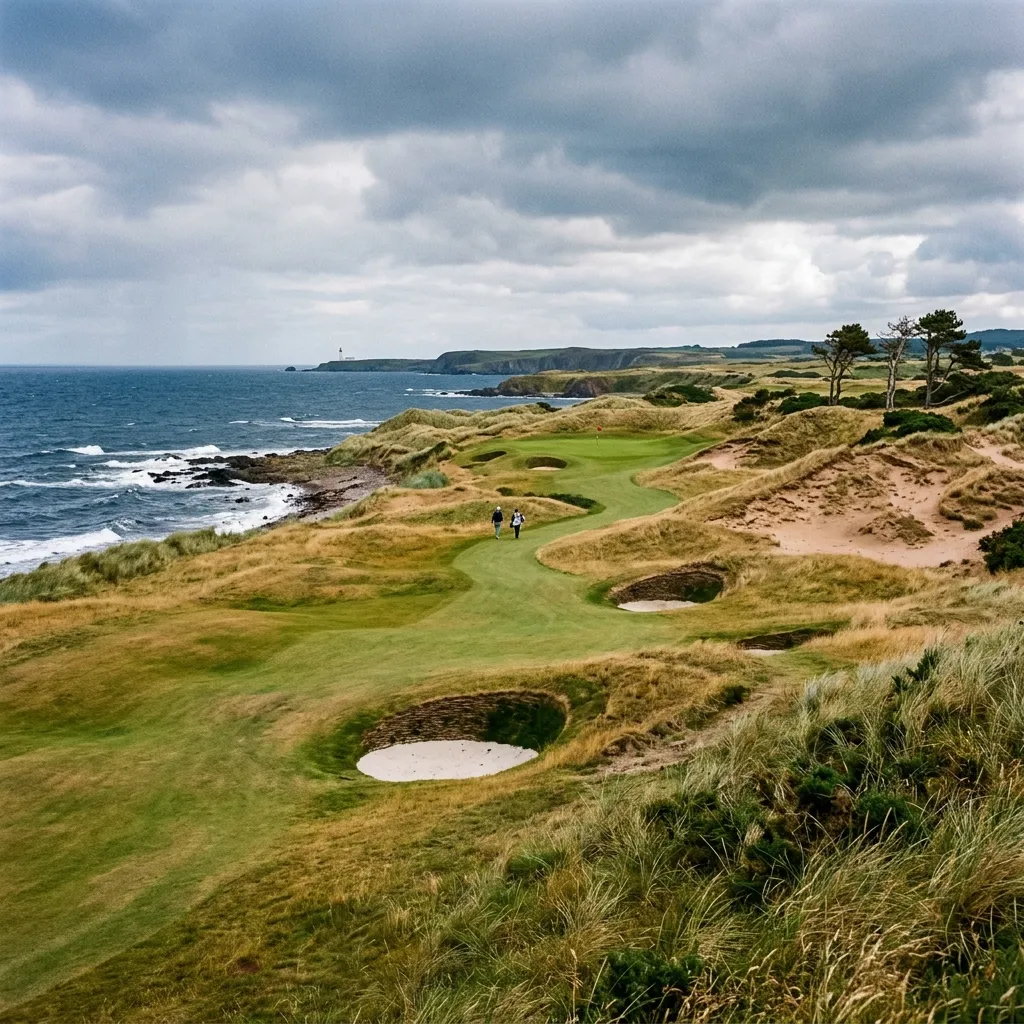
What sets a links course apart? Several defining features show up again and again, regardless of which country the course sits in.
Sandy, Coastal Terrain
Links courses are built on sandy soil near the ocean. This soil drains exceptionally well, which keeps the ground firm and fast even after heavy rain. The proximity to the sea also delivers the wind that defines the links challenge.
Firm, Fast-Running Fairways
Because of the sandy base, links fairways are hard and bouncy. A well-struck drive can roll out 40 or 50 yards after landing. This changes strategy completely—you have to account for roll, slopes, and the angle your ball will bounce.
Few or No Trees
Unlike tree-lined parkland courses, links courses are largely treeless. The salty coastal air and sandy soil make it difficult for trees to grow. Instead of trees, the main obstacles are the wind, the terrain, and the rough.
Deep Pot Bunkers
Links bunkers are small, round, and brutally deep. Known as pot bunkers, they often have steep, revetted walls built from stacked turf. Landing in one can mean playing out sideways or even backward just to escape.
Tall Fescue and Native Grasses
The rough on a links course is made up of tall fescue grasses, marram grass, and gorse. These wispy, golden grasses look beautiful swaying in the wind, but they swallow golf balls and punish wayward shots severely.
Constant Wind
Wind is the great equalizer on a links. With nothing to block it, the breeze comes straight off the sea and can shift dramatically throughout a round. Golfers must learn to flight the ball low and control trajectory to score well.
Undulating, Natural Terrain
The land rolls and tumbles with natural humps, hollows, and dunes. Blind shots, awkward stances, and unpredictable bounces are all part of the experience. The terrain was shaped by nature, not bulldozers.
Traditional Links vs. Links-Style Golf Courses
Not every course marketed as a “links” qualifies as one. This is where the distinction between a traditional links and a links-style course matters.
A traditional links sits on genuine coastal, sandy soil and was typically shaped by the natural landscape. These are the real deal—courses like St Andrews, Carnoustie, and Royal Dornoch.
A links-style course borrows the visual and strategic elements of links golf—treeless layouts, fescue rough, pot bunkers, rolling fairways—but sits inland or on soil that isn’t true links land. Many modern courses in the United States and elsewhere are designed in this style to capture the links experience, even though they aren’t located by the sea.
Both can be fun and challenging. But if you want the authentic article, look for a course that meets the geographic definition, not just the aesthetic one.
Links vs. Parkland Golf Courses: Key Differences
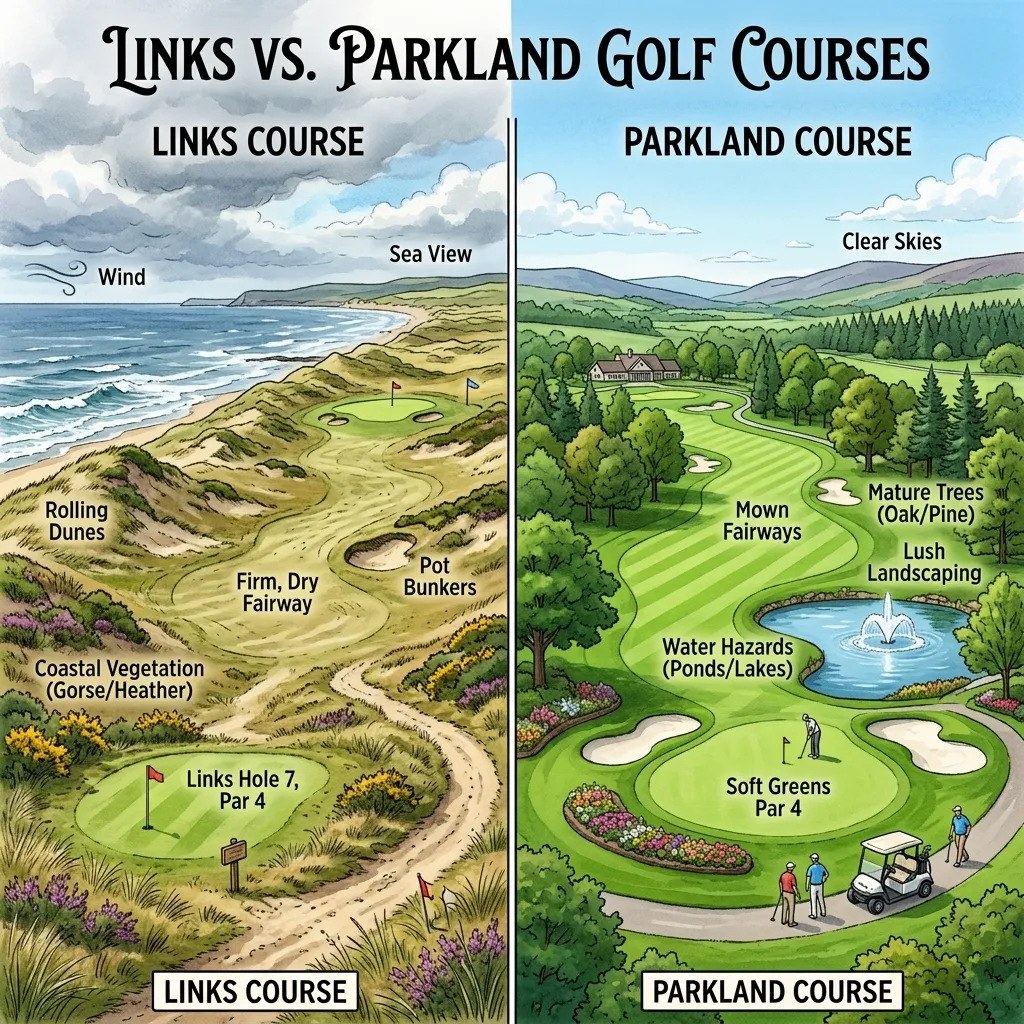
Most golfers learn the game on parkland courses, so understanding the contrast helps explain why links golf feels so foreign at first.
|
Feature |
Links Course |
Parkland Course |
|---|---|---|
|
Location |
Coastal, sandy soil |
Inland, often on fertile soil |
|
Trees |
Few or none |
Tree-lined fairways |
|
Ground conditions |
Firm and fast |
Soft and lush |
|
Main hazards |
Wind, pot bunkers, fescue |
Trees, water, larger bunkers |
|
Playing style |
Ground game, low shots |
Aerial game, target golf |
|
Terrain |
Rolling, natural dunes |
Flatter, manicured |
On a parkland course, you fly the ball to a target and stop it on soft greens. On a links, you often run the ball onto the green, using slopes and contours to feed it close. The skills don’t always transfer—which is exactly what makes links golf such a rewarding test.
Links Course Design Philosophy
Links course design is rooted in working with the land rather than against it. Early architects didn’t move much earth; they routed holes through the natural dunes and let the terrain dictate the challenge.
Several design principles define classic links layouts:
- Out-and-back routing: Many traditional links, including St Andrews, run nine holes out away from the clubhouse and nine holes back. This means you often play with the wind one way and against it the other.
- Double greens: St Andrews famously features enormous shared greens that serve two holes at once.
- Blind shots: Dunes and ridges sometimes hide the green or fairway from view, forcing golfers to trust their aim.
- Strategic bunkering: Pot bunkers are placed to catch slightly errant shots, rewarding precise placement over raw distance.
Modern designers who build links-style courses often try to mimic these principles, creating wide fairways, firm turf, and natural-looking hazards.
What to Expect When Playing Links Golf Courses
Stepping onto a links course for the first time can be humbling, even for low-handicap golfers. Here’s how to prepare and adjust your game.
Embrace the Ground Game
Forget about flying everything to the pin. On firm links turf, the smart play is often a low running shot—a bump-and-run with a less-lofted club. Let the ball release and use the slopes to your advantage.
Respect the Wind
Check the wind before every shot. Into the wind, take more club and swing smoother to keep the ball low. Downwind, you may hit clubs much shorter than usual. Crosswinds require you to aim off and trust the ball to drift.
Stay Out of the Pot Bunkers
Treat pot bunkers as penalty areas. Often your only realistic option is to play out sideways or backward. Aim away from them off the tee, even if it means sacrificing distance.
Putt From Off the Green
The firm, closely mown approaches around links greens make putting from well off the surface a viable—and often safer—option than chipping. Local players call this the “Texas wedge,” and it’s a staple of links strategy.
Be Patient and Creative
Links golf rewards imagination. There’s rarely one correct shot. Bad bounces happen, the wind plays tricks, and scoring takes patience. Accept the quirks as part of the charm, and you’ll enjoy the round far more.
Where to Play Links Golf
If you want to experience true links golf, the British Isles offer the best concentration of courses. Scotland’s St Andrews, Carnoustie, and Royal Troon are bucket-list destinations. Ireland boasts Ballybunion, Lahinch, and Royal County Down. England features Royal Birkdale, Royal St George’s, and Royal Liverpool.
In the United States, genuine links courses are rare due to geography, but standouts include Bandon Dunes in Oregon and Whistling Straits in Wisconsin (a links-style design). These offer a taste of the coastal experience without crossing the Atlantic.
Bringing It All Together
A links golf course is far more than a treeless layout by the sea—it’s the original form of the game, shaped by sandy coastal land, relentless wind, and centuries of tradition. The firm fairways, deep pot bunkers, and rolling terrain demand a creative, strategic approach that differs sharply from the aerial target golf of parkland courses.
Whether you’re planning a golf trip to Scotland or simply want to appreciate the history behind The Open Championship, understanding what makes a links course unique will deepen your love of the game. The next step? Book a tee time at a true links and experience the ground game for yourself. There’s no better way to connect with golf’s roots.
Frequently Asked Questions
What makes a golf course a “true” links?
A true links course must be built on sandy, coastal soil located between the sea and inland farmland. It typically features firm fairways, few or no trees, pot bunkers, fescue rough, and exposure to coastal wind. Courses that copy this style but sit inland are called “links-style” rather than true links.
Why are links courses harder to play?
Links courses challenge golfers with constant wind, firm and fast ground conditions, deep pot bunkers, and unpredictable bounces from natural terrain. These factors require shot-making creativity, trajectory control, and a strong ground game—skills many golfers don’t develop on softer parkland courses.
What is the difference between a links and a parkland course?
A links course sits on coastal sandy soil with firm turf, few trees, and heavy wind, favoring low running shots. A parkland course is inland, tree-lined, and lush, favoring high aerial shots that stop quickly on soft greens. The two require very different playing styles.
Where did links golf originate?
Links golf originated in Scotland, where the game was first played on coastal sandy land along the eastern coast. The Old Course at St Andrews, dating back to the early 15th century, is widely regarded as the home of golf and the birthplace of the links tradition.
Can you play links golf in the United States?
Yes, though true links courses are rare in the United States due to limited suitable coastal terrain. Bandon Dunes in Oregon is considered one of the most authentic links experiences, while courses like Whistling Straits in Wisconsin offer a links-style design that mimics the traditional characteristics.
