


Golf education helps players build strong fundamentals, improve technique, and develop the skills needed to play with confidence. Through golf training programs, instruction courses, online learning, and consistent practice, golfers of all levels can enhance their performance, lower their scores, and continue improving throughout their golfing journey.
Golf is a sport of continuous learning, where players of every skill level can improve through proper instruction and consistent practice. Success in golf depends on more than physical ability—it requires technical skills, strategy, mental focus, and discipline. That’s why golf education is essential for building strong fundamentals, improving consistency, and making smarter decisions on the course.
Today, golfers have access to more learning opportunities than ever before, including traditional coaching, online golf education, swing analysis technology, mobile apps, and structured golf training programs. Whether you’re a beginner looking to master the basics or an experienced player aiming to refine your game, this guide covers everything you need to know about golf education, from instruction courses and coaching techniques to skill development and effective practice methods.
What Is Golf Education?
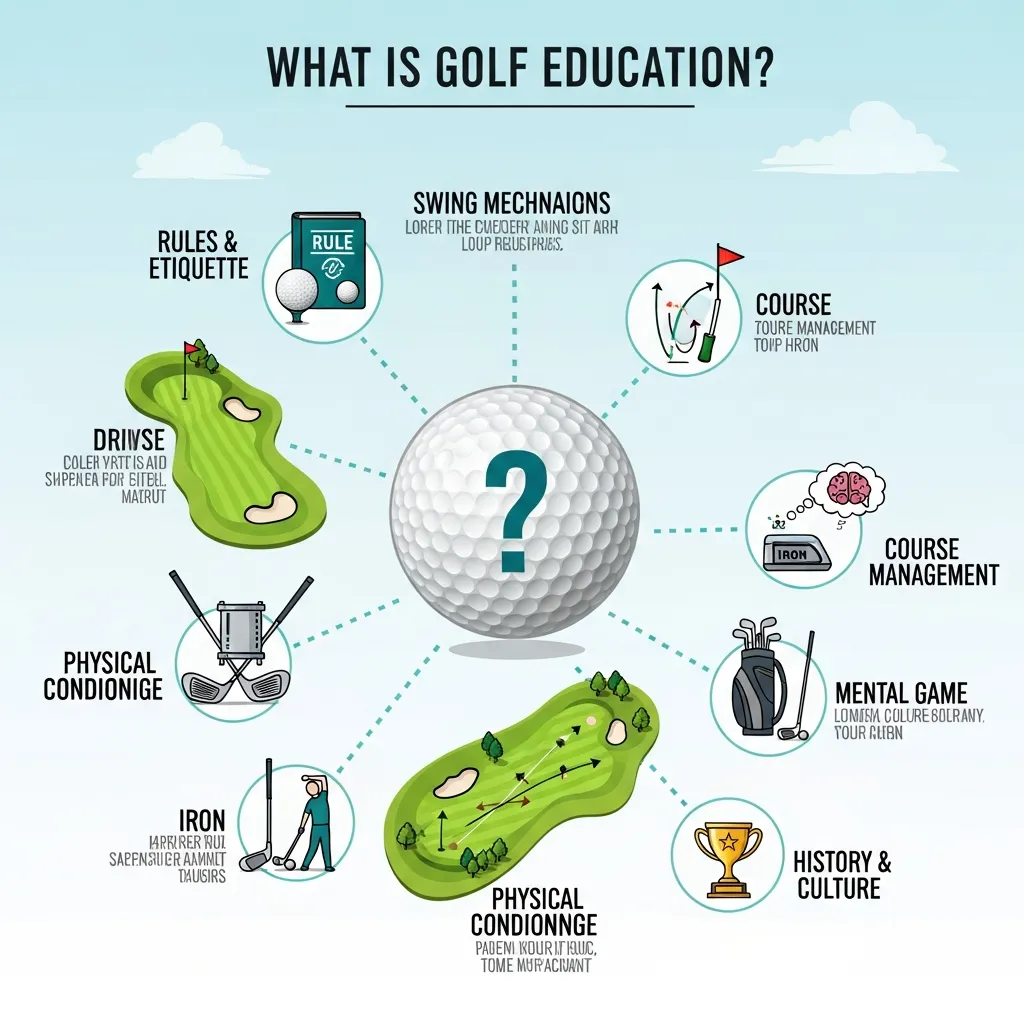
Golf education refers to the complete process of learning the game through structured instruction, guided practice, coaching, and continuous skill development. It covers every aspect of golf, including technical fundamentals, mental preparation, course strategy, physical fitness, and the rules of the game.
Unlike casual practice, golf education follows a systematic approach. Players learn skills in a logical progression, ensuring that each new technique builds upon a strong foundation.
A complete golf education generally includes:
- Grip and hand positioning
- Proper posture and setup
- Swing mechanics
- Driver and iron techniques
- Chipping and pitching
- Putting fundamentals
- Bunker play
- Shot shaping
- Golf rules and etiquette
- Course management
- Mental performance
- Golf fitness and flexibility
- Equipment selection and club fitting
The objective is not simply to hit the ball farther but to become a smarter, more consistent, and more confident golfer.
Why Golf Education Is Important
Many golfers believe that spending countless hours at the driving range is enough to become a better player. While regular practice is undoubtedly an essential part of improvement, simply hitting hundreds of golf balls without proper guidance often leads to frustration rather than progress. When golfers repeat incorrect swing mechanics, poor posture, or improper grip, these mistakes gradually become habits that are much harder to fix later. This is why structured golf education is so valuable. It provides a clear learning path that teaches players the correct techniques from the beginning, helping them avoid common mistakes and develop skills that last a lifetime.
Proper golf education transforms practice sessions into productive learning experiences. Instead of guessing what needs improvement, golfers learn exactly which aspects of their game require attention and how to improve them effectively. Whether it is refining swing mechanics, improving distance control, mastering the short game, or understanding course management, a structured education program ensures that every practice session has a clear purpose. As golfers continue learning, they become more confident in their abilities, make smarter decisions on the course, and ultimately achieve lower scores. Rather than relying on trial and error, golf education offers a proven roadmap that helps players improve faster while enjoying the game even more.
Golf Training Programs
Structured golf training programs are among the most effective ways to develop golf skills because they provide a systematic approach to learning. Unlike random practice sessions, these programs are designed to help golfers progress step by step while measuring their improvement over time. A good training program focuses on building a strong foundation before introducing more advanced techniques, ensuring that each new skill supports the next stage of development.
For beginners, training programs concentrate on the fundamentals of the game. New golfers learn how to hold the club correctly, establish proper posture, position the ball, and align themselves accurately with the target. They also receive instruction on basic swing mechanics, putting, chipping, golf etiquette, and the official rules of the game. Developing these core skills early helps beginners avoid forming bad habits that could slow their progress in the future.
Intermediate golfers benefit from programs that focus on improving consistency and refining existing skills. At this stage, players work on striking the ball more cleanly, increasing driving distance, controlling ball flight, improving their short game, and making better decisions during each round. They also begin to understand how course strategy and shot selection influence scoring.
Advanced golf training programs are designed for experienced players who want to compete at a higher level. These programs often include detailed swing analysis, pressure management techniques, precision wedge play, tournament preparation, mental performance coaching, and performance analytics. By combining technical instruction with strategic thinking, advanced training programs help golfers maximize their potential in competitive situations.
Golf Instruction Courses
Comprehensive golf instruction courses provide a structured learning experience that covers every major aspect of the game. Rather than focusing on a single skill, these courses guide players through each stage of golf development, allowing them to build knowledge and confidence over time. Whether delivered in person or online, quality instruction courses follow a logical progression that helps golfers understand both the theory and practical application of each technique.
A well-designed course typically begins with swing fundamentals before moving into more specialized areas such as driver optimization, iron play, pitching, chipping, bunker shots, putting, and shot shaping. As students progress, they also learn how to handle uneven lies, improve course management, understand golf rules, and select equipment that suits their playing style. Many modern instruction courses enhance the learning experience by including video demonstrations, personalized practice plans, quizzes, downloadable resources, and instructor feedback. This combination of education and guided practice allows golfers to continue improving long after completing the course.
Golf Learning Resources
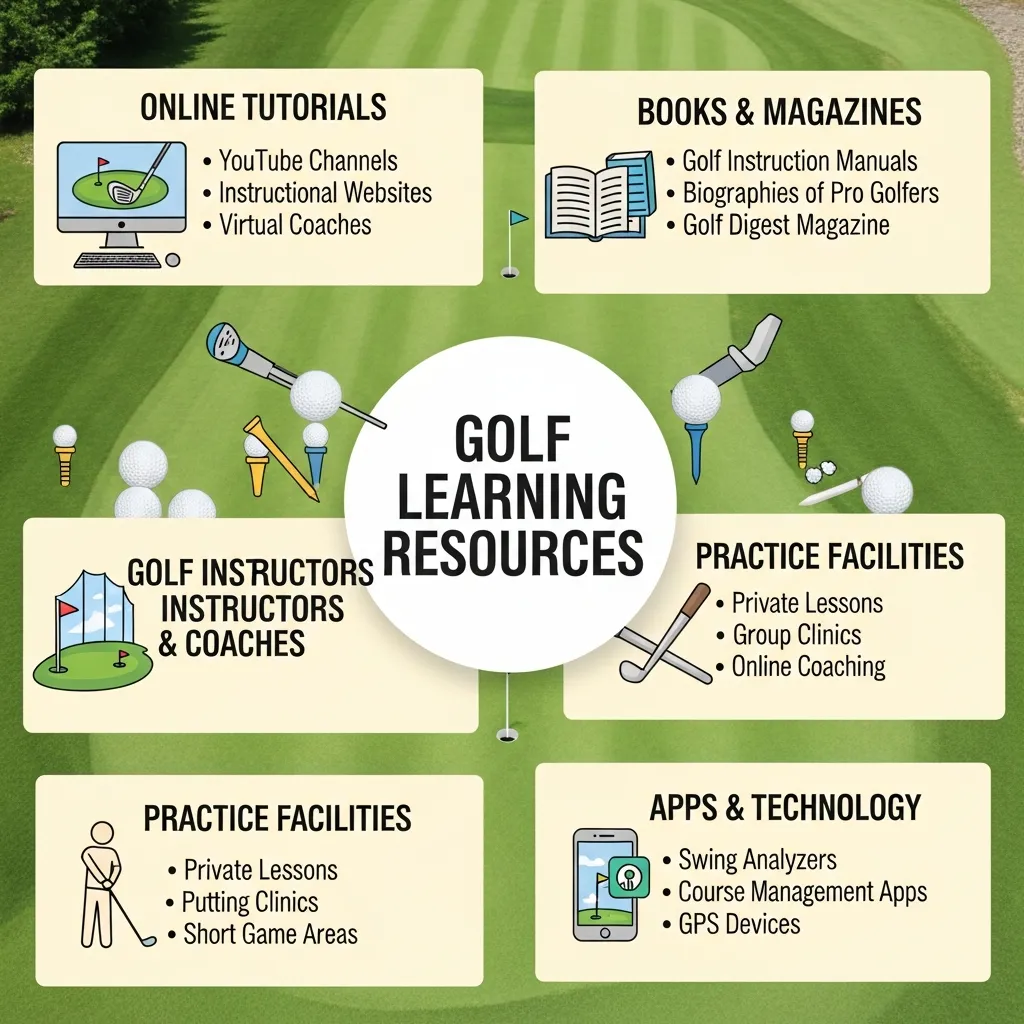
One of the greatest advantages available to today’s golfers is the wide variety of golf learning resources that support continuous improvement. Unlike previous generations that relied almost entirely on local instructors, modern players can access expert knowledge from anywhere in the world through books, online courses, mobile applications, instructional videos, podcasts, swing analysis software, and golf simulators.
Each learning resource offers unique benefits. Instructional books explain the technical and strategic aspects of golf in detail, while online videos provide visual demonstrations that make complex techniques easier to understand. Golf simulators and launch monitors generate accurate performance data, allowing players to analyze ball speed, launch angle, carry distance, and swing efficiency. Mobile applications help golfers track statistics, organize practice sessions, and monitor long-term improvement.
Combining several learning resources creates a more complete educational experience. Reading about a concept, watching it demonstrated, practicing it on the range, and reviewing performance data helps reinforce learning from multiple perspectives. This balanced approach enables golfers to develop both theoretical knowledge and practical skills.
Beginner Golf Lessons
Every golfer begins their journey with beginner golf lessons, making this stage one of the most important parts of golf education. Learning the correct fundamentals early provides a solid foundation that supports every future improvement. Beginners who receive professional instruction generally progress faster than those who attempt to learn entirely on their own because they develop proper techniques from the very beginning.
A typical beginner lesson starts by teaching the correct grip, which serves as the golfer’s only connection to the club. From there, instructors introduce proper posture, balance, stance, and alignment to create a stable setup before each shot. Once these basics are established, players learn simple swing mechanics that emphasize rhythm, balance, and consistency rather than raw power.
Putting is another essential part of beginner instruction because it accounts for a significant percentage of shots during every round. Learning proper putting techniques early allows golfers to lower their scores much faster than focusing exclusively on long drives. By building confidence in each area of the game, beginner lessons prepare players for more advanced instruction in the future.
Golf Coaching Techniques
Professional instructors use a variety of golf coaching techniques to help players improve efficiently. Rather than relying solely on verbal instruction, modern coaches combine technology, performance analysis, personalized drills, and mental training to create highly effective learning experiences.
One of the most valuable coaching methods is video swing analysis. High-speed cameras capture every stage of the golf swing, allowing instructors to identify technical flaws that may be difficult to notice with the naked eye. Comparing a player’s swing to ideal movement patterns helps golfers understand exactly where improvements are needed.
Many coaches also use launch monitor technology to measure important performance data such as club speed, ball speed, launch angle, spin rate, carry distance, smash factor, and shot dispersion. These detailed statistics provide objective feedback that helps players make informed adjustments rather than relying on guesswork.
Beyond technology, experienced coaches design personalized practice drills that target each golfer’s specific weaknesses. Instead of hitting balls without direction, players complete focused exercises that improve consistency and reinforce proper movement patterns. Mental coaching is another important aspect of player development, teaching golfers how to maintain concentration, manage emotions, establish pre-shot routines, and recover quickly from poor shots. Together, these coaching techniques create a balanced approach that develops both technical ability and mental resilience.
Online Golf Education
The growth of digital technology has made online golf education one of the most convenient and effective ways to learn the game. Golfers no longer need to rely exclusively on local instructors, as they can now access lessons from world-class coaches regardless of their location. This flexibility has made quality golf education more accessible to players of all skill levels.
Online learning allows golfers to study at their own pace, replay lessons whenever necessary, and practice according to their personal schedule. Many online platforms include structured learning paths, swing analysis tools, progress tracking, and personalized improvement plans that guide students through each stage of development. Because online programs often cost less than private coaching, they provide an affordable option for golfers who want professional instruction without a significant financial commitment.
Although online education cannot completely replace face-to-face coaching, it serves as an excellent supplement that allows players to continue learning between lessons. With consistent practice and dedication, many golfers achieve remarkable improvements through online instruction.
Golf Skills Development
Effective golf skills development requires a balanced approach that focuses on every area of the game rather than only the full swing. While powerful drives often receive the most attention, lower scores usually result from consistent performance across driving, iron play, short-game shots, putting, and course management.
Developing driving skills involves improving both accuracy and distance while maintaining control. Iron play focuses on producing consistent ball striking that allows golfers to hit greens more frequently. The short game, including pitching, chipping, and bunker play, is equally important because these shots often determine whether players save or lose strokes around the green. Putting remains one of the most valuable skills to master, as even small improvements on the green can significantly reduce scoring averages.
Course management is another critical component of skill development. Learning when to play aggressively and when to choose safer options enables golfers to avoid unnecessary mistakes and make smarter decisions throughout each round. Together, these skills create a complete golfer capable of performing consistently in a variety of playing conditions.
Golf Fundamentals Training
Even the world’s best golfers regularly return to golf fundamentals training because strong fundamentals form the foundation of consistent performance. Elements such as grip, posture, stance, alignment, ball position, tempo, balance, weight transfer, and follow-through influence every shot a golfer plays. Small errors in any of these areas can create larger problems throughout the swing.
Regularly revisiting the fundamentals helps golfers maintain consistency, especially during periods when their performance begins to decline. Instead of making major swing changes, experienced players often improve simply by correcting basic setup positions or refining their tempo. This emphasis on fundamentals ensures that golfers develop reliable swing mechanics capable of performing under both casual and competitive conditions.
Golf Coaching Certification

For individuals who want to teach the game professionally, golf coaching certification provides the knowledge and qualifications necessary to become an effective instructor. Certification programs are designed not only to improve a coach’s understanding of golf mechanics but also to develop teaching skills that help students learn more effectively.
Participants study swing analysis, instructional techniques, player evaluation, junior and adult coaching methods, golf psychology, communication skills, lesson planning, practice design, and the official rules of golf. Many programs also introduce business management concepts that prepare coaches to build successful teaching careers.
Earning a recognized certification demonstrates professionalism and commitment to high teaching standards. It increases credibility with students, enhances career opportunities, and provides instructors with the confidence to guide golfers of all experience levels.
Golf Practice and Improvement
Long-term golf practice and improvement depend on practicing with purpose rather than simply spending hours hitting golf balls. Every practice session should focus on a specific objective, whether improving putting accuracy, refining swing mechanics, or developing better distance control. Purposeful practice helps golfers identify weaknesses, measure progress, and make consistent improvements over time.
A balanced practice schedule should devote significant attention to the short game because putting, chipping, and pitching account for a large percentage of shots during every round. Iron play and driving should also receive regular practice, while time should be set aside for improving course management and mental preparation. Keeping a practice journal, tracking performance statistics, reviewing completed rounds, and setting realistic goals allow golfers to monitor their development and maintain motivation throughout their learning journey.
| Practice Area | Recommended Practice Time | Primary Goal |
|---|---|---|
| Putting | 35% | Improve scoring and distance control |
| Chipping & Pitching | 25% | Build a reliable short game |
| Iron Play | 20% | Increase consistency and accuracy |
| Driving | 15% | Improve distance and fairway accuracy |
| Course Management & Mental Game | 5% | Make smarter decisions during play |
Common Mistakes Golfers Should Avoid
Many golfers unknowingly slow their progress by making mistakes that limit their development. One of the most common problems is practicing without a structured plan, which often results in repeating the same errors instead of correcting them. Others focus too heavily on hitting the ball farther while neglecting their short game, even though putting and chipping have a greater impact on overall scores. Constantly changing swing techniques after watching multiple instructional videos can also create confusion and inconsistency.
Using poorly fitted equipment, skipping warm-up exercises, neglecting flexibility and fitness, and comparing personal progress with other golfers are additional habits that can hinder improvement. Recognizing and correcting these mistakes allows players to develop more efficiently and enjoy greater confidence on the golf course.
Tips to Improve Faster
Improving at golf is a gradual process that rewards patience, consistency, and smart practice. Taking lessons from qualified instructors provides valuable guidance and helps golfers avoid developing poor habits. Following a structured training program keeps learning organized and ensures that each practice session contributes to long-term progress. Recording your swing regularly, using technology to analyze performance, and playing a variety of golf courses expose you to different challenges that strengthen your overall game.
Above all, golfers should focus on improving one aspect of their game at a time rather than attempting to change everything at once. Developing a consistent pre-shot routine, maintaining a positive mindset, and trusting the learning process will produce steady improvement over time. Golf is a lifelong journey, and continuous education remains the key to becoming a more skilled, confident, and successful player.
Conclusion
Golf education is the foundation of long-term success in the sport. Whether you choose private coaching, structured golf instruction courses, online golf education, or independent learning resources, the key is following a structured plan and practicing with purpose.
By focusing on golf fundamentals, participating in quality golf training programs, developing every aspect of your game, and continually refining your skills, you can become a more confident, consistent, and knowledgeable golfer. Improvement in golf is a journey rather than a destination, and investing in your education today will lead to better scores, greater enjoyment, and lasting success on the course.
Frequently Asked Questions
What is golf education?
Golf education is the structured process of learning golf techniques, rules, strategy, fitness, and mental skills through coaching, lessons, and practice.
Why is golf education important?
It helps golfers build proper fundamentals, avoid bad habits, improve consistency, and lower their scores over time.
What are golf training programs?
Golf training programs are structured learning plans that guide golfers through progressive skill development based on their experience level.
Are golf instruction courses suitable for beginners?
Yes. Most instruction courses are specifically designed to teach beginners the fundamentals before introducing advanced techniques.
Can I learn golf online?
Absolutely. Online golf education offers flexible learning through videos, live coaching, and personalized practice plans.
How often should I practice golf?
Practicing three to five times per week with focused drills is generally recommended for consistent improvement.
What should beginners focus on first?
Grip, posture, alignment, balance, and swing fundamentals should always be the first priorities.
How long does it take to become a good golfer?
The timeline varies, but consistent practice and quality instruction can lead to noticeable improvements within a few months.
What is the importance of the short game?
The short game accounts for a significant portion of strokes during a round, making it one of the fastest ways to improve scores.
Is professional coaching worth the investment?
Yes. Personalized feedback helps golfers identify weaknesses and improve more efficiently than practicing alone.
What equipment does a beginner need?
A beginner should have a basic set of clubs, golf balls, tees, a glove, golf shoes, and comfortable clothing.
What is golf coaching certification?
It is a professional qualification that prepares individuals to teach golf using proven coaching methods and instructional techniques.
How can technology improve golf performance?
Video analysis, launch monitors, simulators, and swing-tracking apps provide valuable insights that help golfers improve faster.
What is the best way to measure improvement?
Tracking fairways hit, greens in regulation, putts per round, scoring average, and practice sessions provides clear indicators of progress.
What is the most effective way to continue improving after learning the basics?
Continue taking lessons, follow a structured practice plan, analyze your performance regularly, strengthen your short game, and stay committed to continuous learning.
