


A Golf Fitness Routine is a mix of strength, core, flexibility, and mobility exercises designed to improve swing power, consistency, and prevent injuries. Training 2–3 times a week with golf-specific movements helps golfers hit longer shots, improve balance, and stay physically strong on the course.
A complete golf fitness routine combines strength training, core work, flexibility, and mobility drills. Focus on movements that mimic the golf swing—rotational power, hip stability, and shoulder mobility. Train two to three times per week, prioritize injury prevention, and you’ll hit longer, more consistent shots while staying pain-free on the course.
Most amateur golfers spend hours practicing their swing, yet ignore the engine that powers it: their body. The truth is, a stronger, more mobile body produces faster club speed, better balance, and fewer injuries. You don’t need to become a gym rat or sacrifice your weekends. A focused golf fitness routine—done right—can transform how you play.
This guide breaks down everything you need to build a body that swings better. We’ll cover a beginner-friendly workout plan, strength training for golfers, flexibility and mobility drills, core exercises for swing power, and home routines you can do without fancy equipment. You’ll also learn how to train in the off-season and protect yourself from common golf injuries.
Whether you’re a weekend warrior or chasing a single-digit handicap, these exercises will help you play your best golf yet.
Why golf fitness matters more than you think

Golf demands a surprising blend of power, stability, and flexibility. A single swing recruits muscles from your feet to your fingertips, all firing in a fraction of a second. Without proper conditioning, your body becomes the weak link.
Stronger golfers generate more clubhead speed, which translates directly into distance. Better mobility allows for a fuller backswing and smoother follow-through. And good stability keeps your spine and joints safe through thousands of repetitions. Simply put, fitness isn’t optional if you want to improve—it’s foundational.
A golf workout plan for beginners
If you’re new to training, keep it simple. The goal is consistency, not exhaustion. Start with two sessions per week, then build to three as your body adapts.
A solid beginner plan includes four pillars:
- Strength: Build the muscles that drive your swing.
- Core: Develop rotational power and stability.
- Flexibility: Improve your range of motion for a fuller swing.
- Mobility: Keep your joints moving freely and safely.
Here’s a sample weekly structure for beginners:
- Day 1: Lower-body strength + core
- Day 2: Rest or light walking
- Day 3: Upper-body strength + flexibility
- Day 4: Rest
- Day 5: Full-body mobility + core
Warm up for five to ten minutes before every session. Light cardio, arm circles, and gentle trunk rotations prepare your muscles and reduce injury risk.
Strength training for golfers
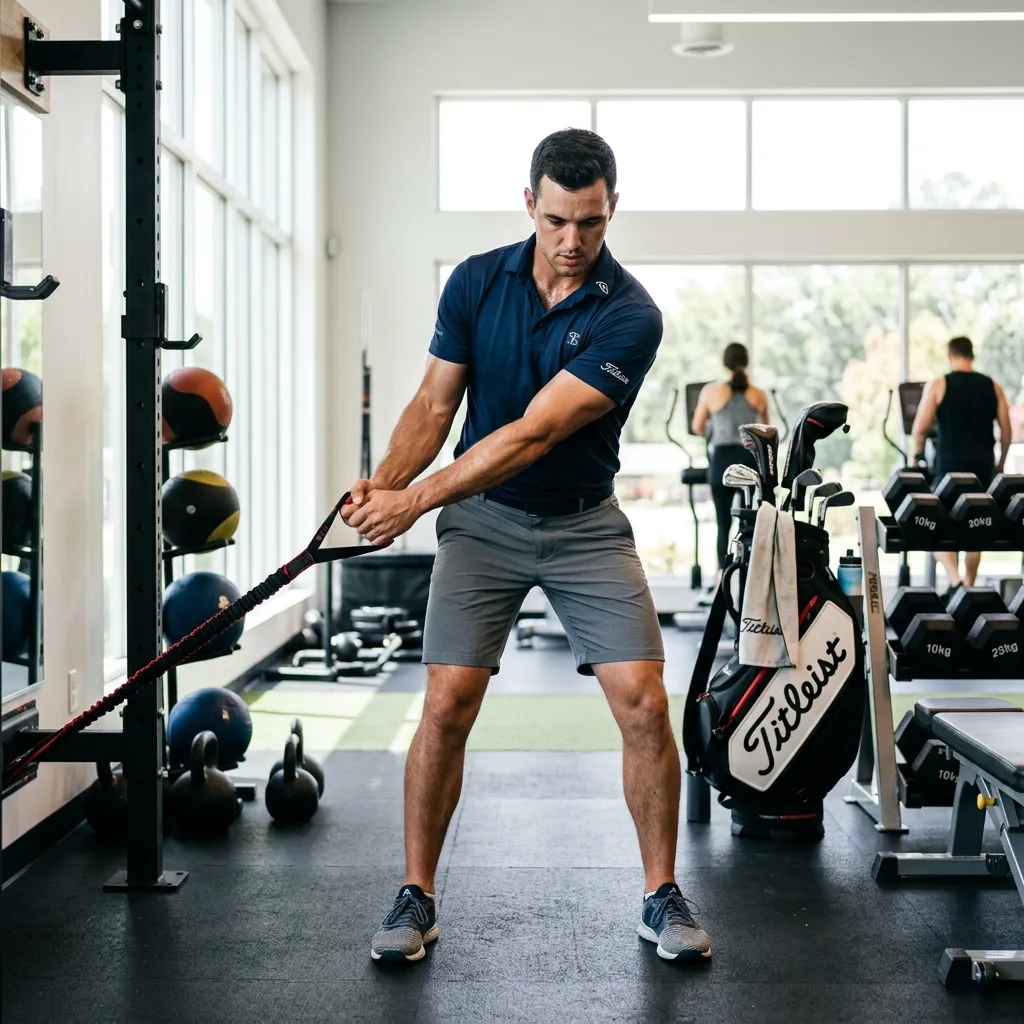
Strength is the foundation of distance. The stronger your legs, hips, and back, the more force you can transfer into the ball. Focus on compound movements that work multiple muscle groups at once.
Here are the best strength exercises for golfers:
- Squats: Build powerful legs and glutes, the source of your swing’s power. Start with bodyweight, then add dumbbells as you progress.
- Deadlifts: Strengthen your posterior chain—glutes, hamstrings, and lower back—for stability and force.
- Lunges: Improve single-leg strength and balance, which mirror the weight shift in your swing.
- Rows: Build a strong back to support your posture and protect your spine.
- Overhead presses: Develop shoulder strength and stability for a controlled swing.
Aim for two to three sets of 8 to 12 reps per exercise. Use a weight that challenges you by the final rep, but never sacrifice form for heavier loads.
Golf flexibility exercises routine
Flexibility lets you reach a fuller backswing and follow-through without straining. Tight hips, shoulders, and hamstrings restrict your motion and rob you of distance. A few minutes of stretching after each workout makes a real difference.
Try this simple flexibility routine:
- Standing trunk rotations: Loosen your spine and improve rotational range. Hold a club across your shoulders and rotate gently side to side.
- Hip flexor stretch: Kneel and push your hips forward to open tight hip flexors from sitting all day.
- Hamstring stretch: Reach toward your toes to lengthen the back of your legs.
- Shoulder cross-body stretch: Pull one arm across your chest to release tight shoulders.
- Cat-cow stretch: Move between arching and rounding your back to mobilize your spine.
Hold each stretch for 20 to 30 seconds and breathe deeply. Stretching when your muscles are warm—after a workout or round—gives the best results.
Home workout for golf performance
No gym? No problem. You can build real golf strength with bodyweight exercises and minimal equipment. A pair of resistance bands and a set of dumbbells cover almost everything you need.
This home routine hits all the key areas:
- Bodyweight squats: 3 sets of 15 reps
- Push-ups: 3 sets of 10 reps
- Glute bridges: 3 sets of 15 reps
- Resistance band rows: 3 sets of 12 reps
- Plank holds: 3 sets of 30 seconds
Perform this circuit two to three times per week. Rest 30 to 60 seconds between exercises. As you get stronger, add reps, sets, or resistance to keep progressing.
Core exercises for golf swing power
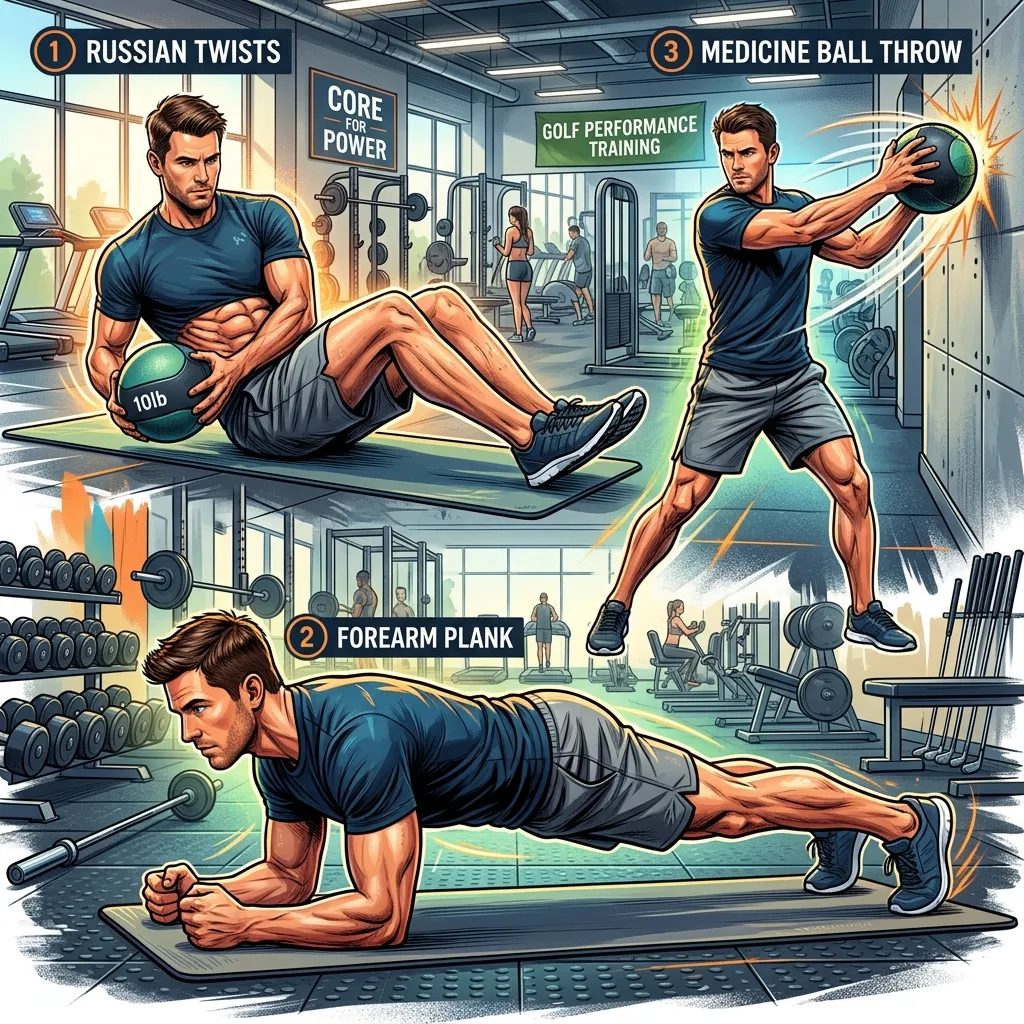
Your core is the link between your upper and lower body. A strong, stable core transfers power efficiently and protects your spine during the violent twist of a golf swing. Rotational strength is especially important.
Add these core exercises to your routine:
- Russian twists: Sit with knees bent and rotate a weight side to side to build rotational power.
- Planks: Strengthen your entire midsection for stability through impact.
- Pallof press: Use a resistance band to resist rotation, training your core to stay stable.
- Dead bug: Lie on your back and extend opposite arm and leg to build deep core control.
- Medicine ball rotational throws: Mimic the explosive twist of your swing for real power transfer.
Train your core two to three times per week. Quality matters more than quantity—focus on controlled movement rather than rushing through reps.
Golf conditioning and mobility drills
Mobility differs from flexibility. While flexibility is about how far a muscle stretches, mobility is about how well your joints move through their full range. Both matter for golf, but mobility often gets overlooked.
These mobility drills keep you moving freely:
- Hip 90/90 rotations: Sit on the floor and rotate your legs between positions to open your hips.
- Thoracic spine rotations: On all fours, reach one arm to the ceiling to improve upper-back rotation.
- Ankle mobility drills: Rock your knee over your toes to improve ankle range, which affects balance.
- Arm circles and band pull-aparts: Keep your shoulders healthy and mobile.
For conditioning, brisk walking, cycling, or interval training builds the endurance to stay sharp over 18 holes. Fatigue late in a round often leads to poor swings and higher scores.
The best fitness program for golfers: putting it together
A great golf fitness program balances all the elements without overwhelming you. Here’s how to structure a full week:
- Monday: Strength training (lower body) + core
- Tuesday: Mobility drills + light cardio
- Wednesday: Rest or easy walking
- Thursday: Strength training (upper body) + flexibility
- Friday: Core + conditioning
- Saturday: Play golf or active recovery
- Sunday: Rest
Adjust the schedule to fit your life. Consistency over months beats intensity for a single week. Track your progress and celebrate small wins, like a fuller backswing or less soreness after a round.
Golf swing fitness training exercises
Some exercises directly translate to a better swing. These movements train the specific patterns your body uses on the course.
- Cable or band wood chops: Mimic the diagonal motion of your swing for power and coordination.
- Single-leg balance drills: Improve stability for a controlled weight shift.
- Rotational medicine ball slams: Build explosive rotational power.
- Step-ups: Strengthen your legs through the same range used during your swing.
Add two or three of these to your strength sessions. They bridge the gap between general fitness and on-course performance.
Off-season golf training routine
The off-season is your chance to build strength and fix weaknesses without worrying about your score. Use this time to push harder in the gym.
During the off-season, focus on:
- Building maximum strength: Lift heavier with lower reps (4 to 6) to develop raw power.
- Improving mobility: Address tight areas that limited your swing during the season.
- Correcting imbalances: Strengthen your weaker side to swing more symmetrically.
- Building endurance: Add cardio to prepare for long days on the course.
When the season returns, shift toward maintaining strength and sharpening your swing-specific movements. This cycle keeps you progressing year-round.
Injury prevention exercises for golfers
Golf injuries are common—the lower back, elbows, and shoulders take the most strain. The good news is that smart training prevents most of them. Strong, mobile muscles absorb stress that would otherwise damage your joints.
Protect yourself with these habits:
- Warm up properly: Never swing cold. Spend five to ten minutes warming up before practice or play.
- Strengthen your core and back: A strong midsection shields your spine from the twisting forces of a swing.
- Train both sides: Golf is one-sided, so balance your body to avoid overuse injuries.
- Stretch regularly: Maintain flexibility to reduce strain on tight muscles.
- Listen to your body: Rest when you feel pain. Pushing through often makes things worse.
A few minutes of prevention saves weeks of recovery. Treat injury prevention as part of your routine, not an afterthought.
Start swinging stronger today
Building a golf fitness routine doesn’t require hours in the gym or expensive equipment. It takes consistency, smart exercise choices, and a focus on the movements that matter most for your swing. Start with two sessions a week, master the basics, and build from there.
Pick three or four exercises from this guide and commit to them for the next month. Pay attention to how your body feels and how your swing responds. Over time, you’ll notice more distance, better control, and fewer aches after a round.
Your best golf starts with a stronger, more mobile body. Lace up, warm up, and get to work—the course is waiting.
Frequently asked questions
How often should golfers work out?
Most golfers benefit from two to three workouts per week. This gives you enough volume to build strength and mobility while allowing time to recover. Beginners should start with two sessions and add a third as their fitness improves.
Can I improve my golf game without going to a gym?
Yes. Bodyweight exercises, resistance bands, and a few dumbbells are enough to build real golf strength at home. Focus on squats, push-ups, glute bridges, rows, and planks. Consistency matters far more than fancy equipment.
What exercises add the most distance to my drive?
Exercises that build rotational power and leg strength add the most distance. Squats, deadlifts, medicine ball rotational throws, and cable wood chops train the muscles and movement patterns that generate clubhead speed.
How long before I see results from golf fitness training?
Most golfers notice improvements in flexibility and stability within four to six weeks of consistent training. Strength and distance gains often appear after eight to twelve weeks. The key is sticking with your routine over the long term.
What’s the best way to prevent golf injuries?
The best injury prevention combines a proper warm-up, a strong core, balanced training on both sides of your body, and regular stretching. Listening to your body and resting when you feel pain is equally important.
