

Golf Rules explain how to play each hole, count strokes, and handle situations like water hazards, out-of-bounds shots, and penalties. The main idea is to play the ball as it lies, count every stroke, and follow basic scoring and etiquette rules. Beginners don’t need to learn everything at once—just the key Golf Rules that ensure fair play and help them enjoy the game with confidence.
Golf rules cover how you play each hole, count your strokes, and handle tricky situations like water hazards or out-of-bounds shots. The core idea is simple: play the ball as it lies, count every stroke, and add penalty strokes when the rules call for them. Beginners only need to learn a handful of key rules to enjoy a fair, fun round.
Starting golf can feel overwhelming. The sport has a famously thick rulebook, an unwritten code of etiquette, and plenty of jargon that sounds like a foreign language. But here’s the good news: you don’t need to memorize all 200-plus pages to play your first round.
This guide breaks down the rules that actually matter for beginners. You’ll learn how scoring works, what to do when your ball lands in the water, and how to avoid the most common penalties. We’ll also touch on golf etiquette—the polite habits that keep the game enjoyable for everyone.
By the end, you’ll have the confidence to step onto the course knowing what’s allowed, what isn’t, and how to keep an honest score. Let’s tee off.
What are the basic rules of golf for beginners?
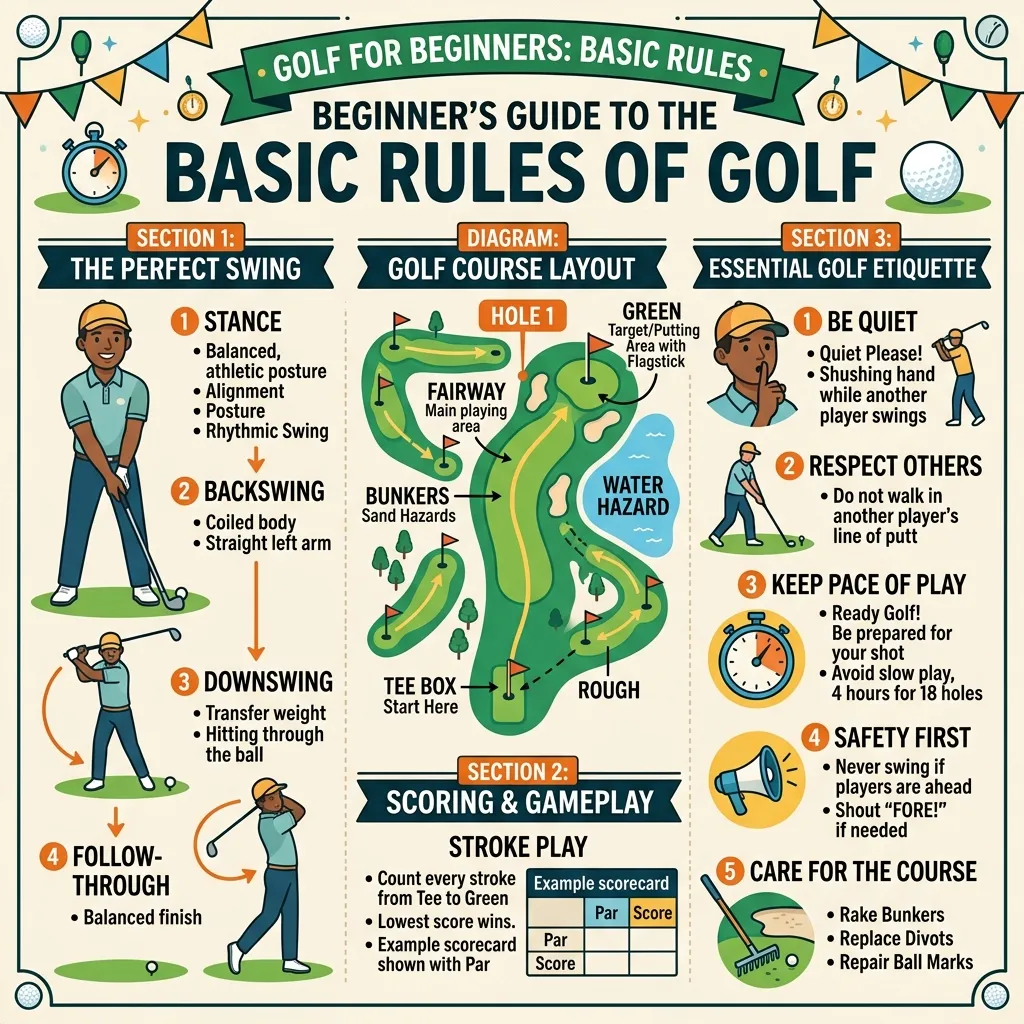
At its heart, golf asks you to get a small ball into a hole using as few strokes as possible. Every swing you take at the ball counts as one stroke, even if you miss it completely (yes, an air swing still counts).
Here are the foundational rules every beginner should know:
- Play the ball as it lies. Don’t move, touch, or improve your ball’s position unless a rule allows it.
- Count every stroke. This includes penalty strokes and accidental swings.
- Play the course as you find it. Don’t press down grass, break branches, or build a stance.
- Tee off from behind the markers. On each hole, your first shot must be played from within the tee box.
- Finish each hole in order. Play holes 1 through 18 in sequence.
A standard round of golf is 18 holes. The player or team with the lowest total score wins. Each hole has a “par”—the number of strokes an expert is expected to take. Most holes are par 3, 4, or 5.
You’re allowed to carry up to 14 clubs in your bag. Bring more than that, and you’ll face a penalty.
How are the official golf rules organized?
The official rules of golf are written and maintained by two governing bodies: the United States Golf Association (USGA) and The R&A. Together, they update the rulebook every four years to keep the game fair and consistent worldwide.
The most recent major overhaul came in 2019, when the rules were simplified to make the game faster and easier to understand. For example, the time allowed to search for a lost ball dropped from five minutes to three, and players can now leave the flagstick in the hole while putting.
The full rulebook contains 24 rules, each covering a different part of the game—from equipment to penalties to how to handle a ball stuck in a tree. For beginners, only a small slice of these rules will come up in a typical round.
What is golf etiquette, and why does it matter?
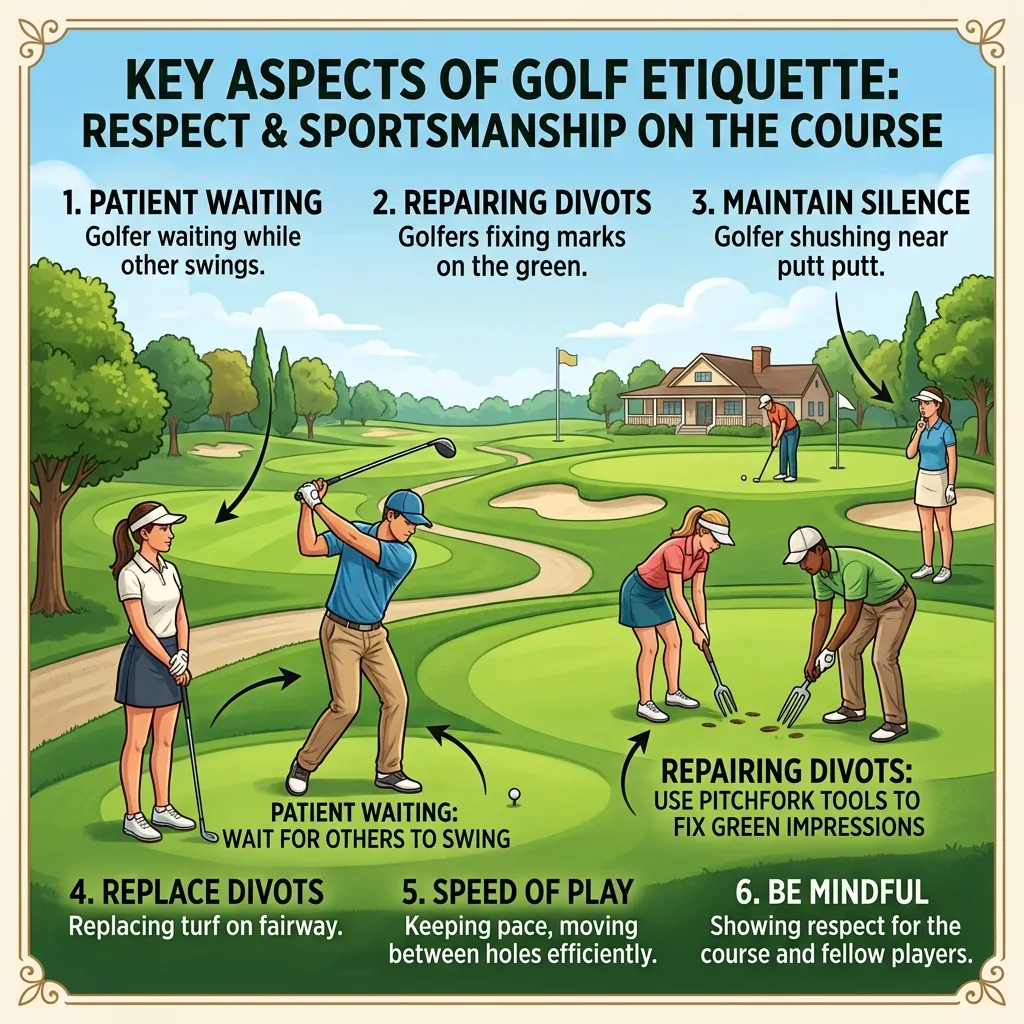
Golf etiquette is the set of unwritten manners that keep the game pleasant and respectful. While breaking etiquette won’t usually cost you strokes, it can earn you frosty looks from your playing partners.
Here are the etiquette basics every golfer should follow:
- Keep pace. Play without unnecessary delay. If your group falls behind, let faster groups play through.
- Stay quiet and still. Don’t talk or move while someone is taking their shot.
- Repair the course. Replace divots, fix ball marks on the green, and rake bunkers after use.
- Mind your shadow. Avoid standing where your shadow falls across another player’s putting line.
- Shout “Fore!” If your ball heads toward another person, yell loudly to warn them.
Good etiquette also means being safe. Never swing a club when someone is standing close by, and wait until the group ahead is well out of range before you hit.
How does scoring work in golf?
Scoring in golf is refreshingly simple: count the number of strokes you take, then compare that total to par.
Each stroke adds one to your score. If a par-4 hole takes you six shots, you scored a six—two over par. Add up your scores across all 18 holes to get your total.
Golf uses some colorful terms to describe how you score on each hole:
- Birdie: one stroke under par
- Eagle: two strokes under par
- Bogey: one stroke over par
- Double bogey: two strokes over par
- Albatross: three strokes under par (very rare)
A “hole-in-one” happens when you sink the ball with your very first shot on a hole—usually only possible on shorter par-3 holes.
Many casual golfers also use a handicap system, which levels the playing field by adjusting scores based on skill. A higher handicap means you’re newer to the game, allowing you to compete fairly against more experienced players.
What are the penalty rules in golf?
Penalty strokes are extra strokes added to your score when you break a rule or hit your ball into trouble. Understanding them helps you avoid surprises on the scorecard.
Most penalties cost either one or two strokes. Here are the most common situations:
- Lost ball or out of bounds: stroke-and-distance penalty (one stroke, plus you replay from the original spot).
- Ball in a penalty area (water): one-stroke penalty to take relief.
- Unplayable lie: one-stroke penalty to move your ball.
- Touching the sand in a bunker before your shot: two-stroke penalty.
- Hitting the wrong ball: two-stroke penalty in stroke play.
When in doubt, the safest move is to know your relief options before you play. Taking the correct drop can save you strokes and headaches.
What are the golf out-of-bounds rules?
Out of bounds (often marked by white stakes or a fence) is any area where play is not allowed. If your ball comes to rest out of bounds, you cannot play it from there.
The penalty for out of bounds is “stroke and distance.” This means you add one penalty stroke and must replay your shot from the spot where you last played. So if your tee shot sails out of bounds, your next shot from the tee counts as your third stroke.
To save time, many golfers play a “provisional ball” when they suspect their shot may be lost or out of bounds. You announce your intention, hit a second ball, and use it if the original can’t be found or is confirmed out of bounds.
What are the golf hazard and water rules?
Under the modern rules, water hazards are called “penalty areas.” They’re marked with either yellow or red stakes or lines, and each color comes with slightly different relief options.
Yellow penalty areas give you two choices, both costing one penalty stroke:
- Replay from where you last hit.
- Drop a ball behind the penalty area, keeping the point where the ball crossed the edge between you and the hole.
Red penalty areas offer the same two options, plus a third:
- Take lateral relief by dropping within two club-lengths of where the ball crossed the edge, no closer to the hole.
If your ball lands in a penalty area but is still playable, you can hit it as it lies without any penalty. Just remember—you’re now allowed to ground your club in a penalty area, a change from the older rules.
What’s the difference between stroke play and match play?
Golf has two main formats, and the rules for scoring differ between them.
Stroke play is the most common format. You count every stroke across the entire round, and the lowest total score wins. This is how most professional tournaments and casual rounds are scored.
Match play pits you against an opponent hole by hole. Instead of counting total strokes, you win, lose, or tie each hole. The player who wins the most holes wins the match. In match play, you can concede a putt or even an entire hole to your opponent.
Choose stroke play if you want to track your overall performance and compare scores over time. Match play suits head-to-head competition and tends to be more forgiving—a disastrous hole only costs you that one hole, not your whole round.
Where can I find a golf rules PDF guide for beginners?
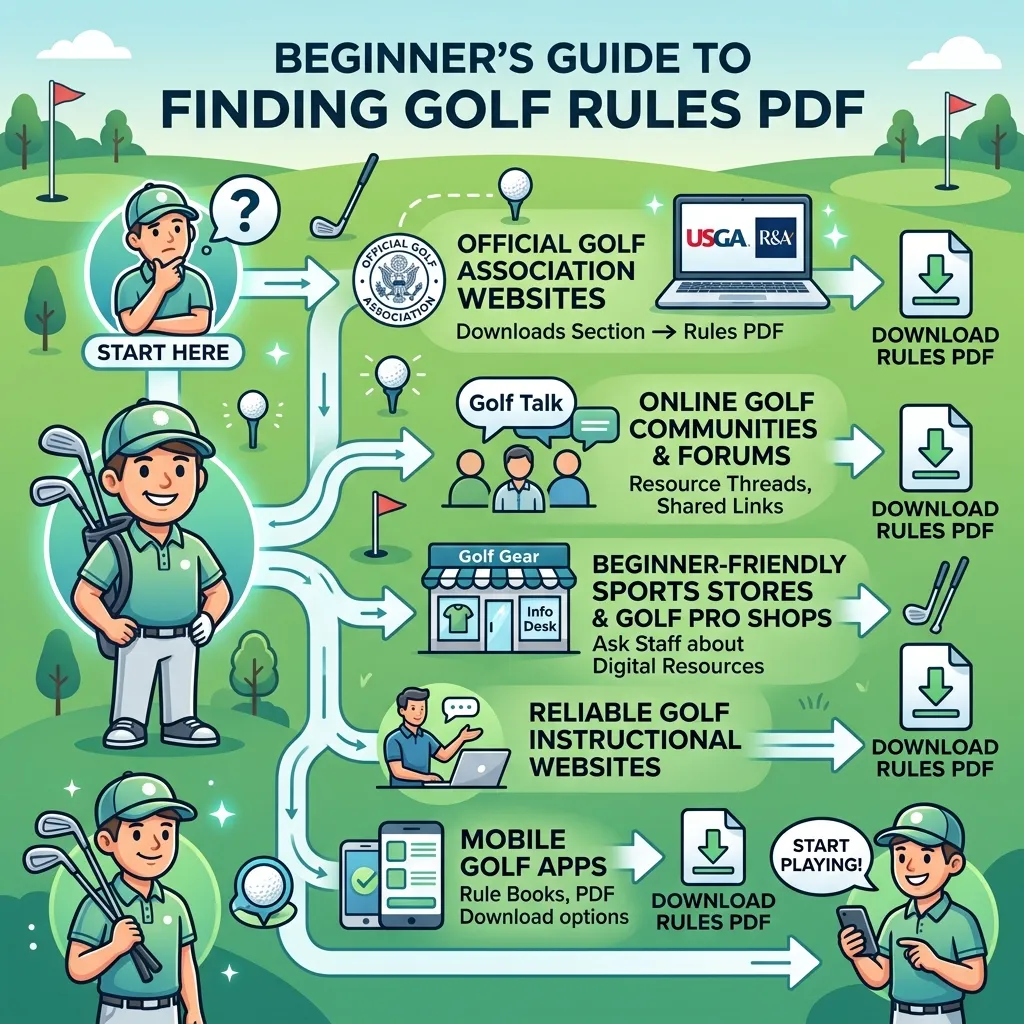
The USGA and The R&A both offer free downloadable resources on their official websites. The “Player’s Edition of the Rules of Golf” is a condensed, beginner-friendly version that covers the situations you’ll most often encounter. It’s available as a free PDF and is far less intimidating than the full rulebook.
Both organizations also offer free mobile apps with searchable rules, helpful diagrams, and video explanations. Keeping one on your phone means you’ll always have answers on the course.
What are the most common golf rule violations and penalties?
Even experienced golfers slip up. Here are the violations beginners commit most often, along with their penalties:
- Playing the wrong ball: two-stroke penalty in stroke play. Always mark your ball so you can identify it.
- Grounding your club in a bunker: two-stroke penalty. Don’t let your club touch the sand before your swing.
- Taking too many clubs: penalty for carrying more than 14 clubs.
- Improving your lie: moving leaves, branches, or pressing down grass behind your ball can cost two strokes.
- Failing to take proper relief: dropping in the wrong spot adds penalty strokes.
- Hitting from out of bounds: forgetting the stroke-and-distance rule.
Most of these mistakes are easy to avoid once you know the rules. When unsure, ask a playing partner or check your rules app before you swing.
Your next steps on the course
Learning golf rules doesn’t have to be a chore. Start with the basics—play the ball as it lies, count every stroke, and know your relief options for water and out of bounds. The rest will come with experience.
Download the free Player’s Edition from the USGA or The R&A, keep a rules app handy, and don’t be afraid to ask questions during your round. Most golfers are happy to help newcomers learn.
The best way to get comfortable with the rules is simply to play. Each round will teach you something new, and before long, these rules will feel like second nature.
Frequently asked questions
How many rules are there in golf?
The official rulebook contains 24 rules, last updated in 2019. However, beginners only need to understand a handful of common ones to play a fair round.
Can I move my ball if it lands in a bad spot?
Generally no—the core rule is to play the ball as it lies. You can only move it under specific circumstances, such as taking relief from a penalty area or declaring an unplayable lie, both of which usually come with a penalty stroke.
What happens if I lose my ball?
A lost ball carries a stroke-and-distance penalty. You add one stroke and replay from where you last hit. You have three minutes to search before the ball is officially considered lost.
How many clubs can I carry in my bag?
You’re allowed a maximum of 14 clubs. Carrying more results in a penalty.
Do I have to follow the rules in a casual round?
Casual rounds are more relaxed, and many golfers use informal “local rules” or simply play for fun. However, learning the official rules helps you improve and prepares you for competitive play.
What’s the easiest scoring format for beginners?
Stroke play is the most straightforward—just count your total strokes. That said, match play can feel less stressful since one bad
