

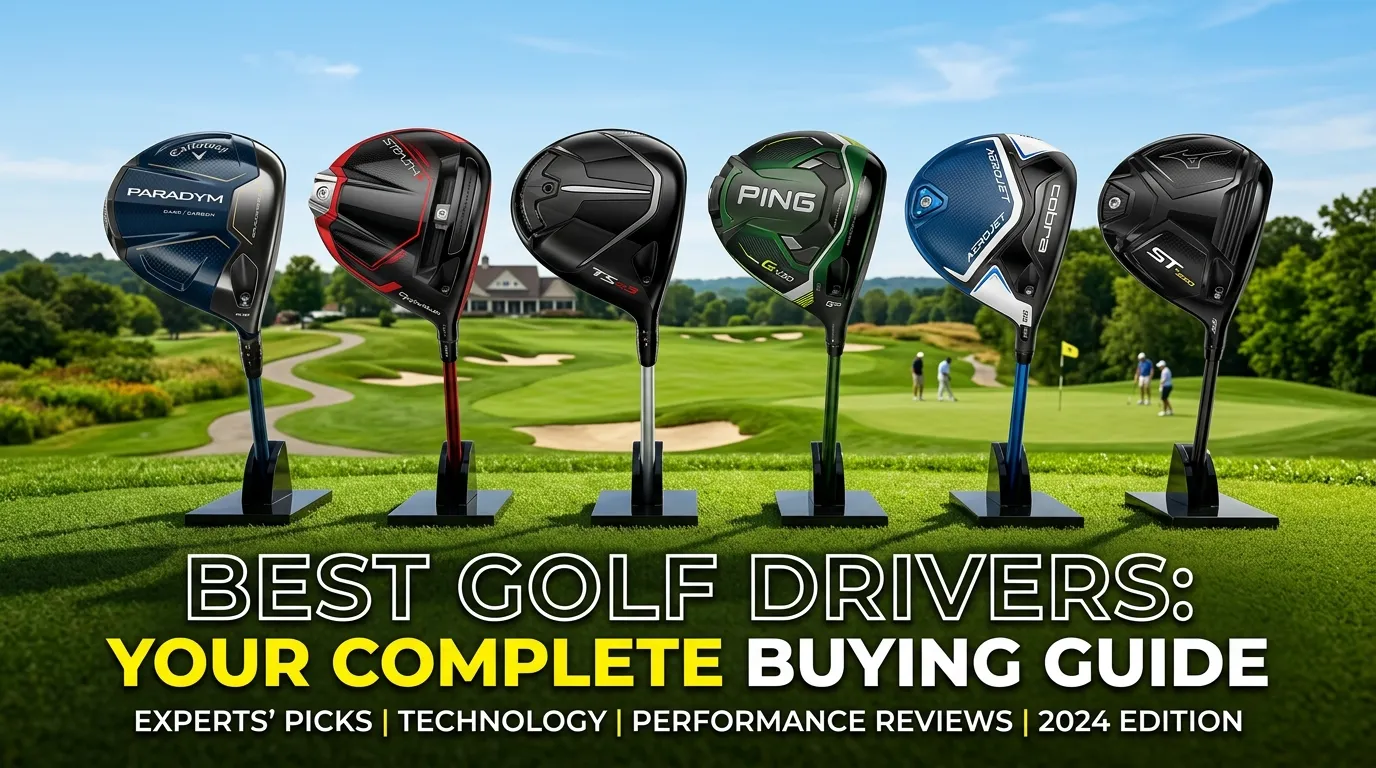
The best golf driver depends on your skill level and swing. Beginners benefit from forgiving, high-launch drivers like the Callaway Paradym, while low-handicap players favor adjustable, low-spin models like the TaylorMade Qi10. Seniors should prioritize lightweight shafts, and slicers need drivers with draw-bias technology.
Buying a new driver can feel overwhelming. There are dozens of models, each promising more distance, tighter dispersion, and that satisfying crack off the tee. But the truth is simpler than the marketing suggests: the right driver for you depends on your swing speed, your skill level, and the specific problems you’re trying to fix.
This guide breaks down the best golf drivers for every type of player. Whether you’re chasing raw distance, trying to straighten out a stubborn slice, or shopping for a lightweight club that suits a slower swing, you’ll find clear recommendations here. We’ll also compare two of the biggest names in golf—TaylorMade and Callaway—so you can make a confident choice.
By the end, you’ll know exactly what to look for and which features actually matter for your game.
What are the best golf drivers for distance?
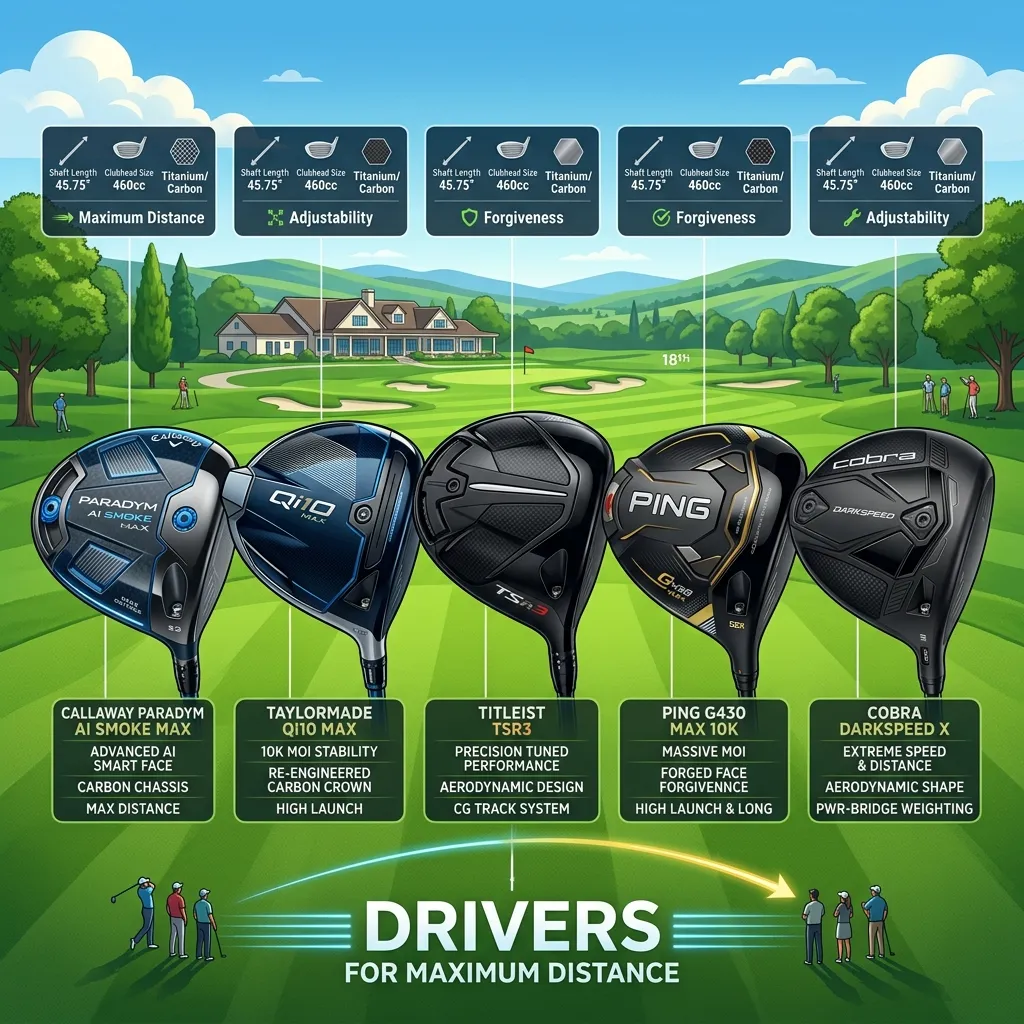
If maximum distance is your goal, look for drivers with low spin and high ball speed. These two factors do most of the heavy lifting when it comes to adding yards.
Low-spin drivers reduce backspin at impact, which produces a more penetrating ball flight and extra roll once the ball lands. Models like the TaylorMade Qi10 LS (Low Spin) and the Titleist TSR3 are built for exactly this. They reward players who already strike the ball well and want to squeeze out every yard.
Distance also comes from the clubface. Many premium drivers now use thin, flexible titanium or carbon faces that flex and rebound at impact, boosting ball speed across a wider area. Just remember—distance without accuracy can cost you strokes. The longest drive in the world means little if it’s out of bounds.
Choose a distance driver if: you have a moderate-to-fast swing speed and consistently make solid contact near the center of the face.
Which forgiving golf drivers are best for beginners?
Forgiveness is the single most important feature for new golfers. A forgiving driver minimizes the damage from off-center hits, so your mishits still travel reasonably straight and far.
The key here is a high MOI (Moment of Inertia). Drivers with high MOI resist twisting when you miss the sweet spot. This keeps your ball flight more stable and predictable. The Callaway Paradym and Ping G430 MAX are widely praised for their forgiveness, thanks to oversized clubheads and weight positioned low and toward the back.
Beginners should also look for a larger clubface and a higher loft (around 10.5 to 12 degrees). More loft helps get the ball airborne, which is exactly what newer players need.
Choose a forgiving driver if: you’re new to the game, you miss the center of the face often, or you simply want more consistency from the tee.
What are the top long drive golf clubs?
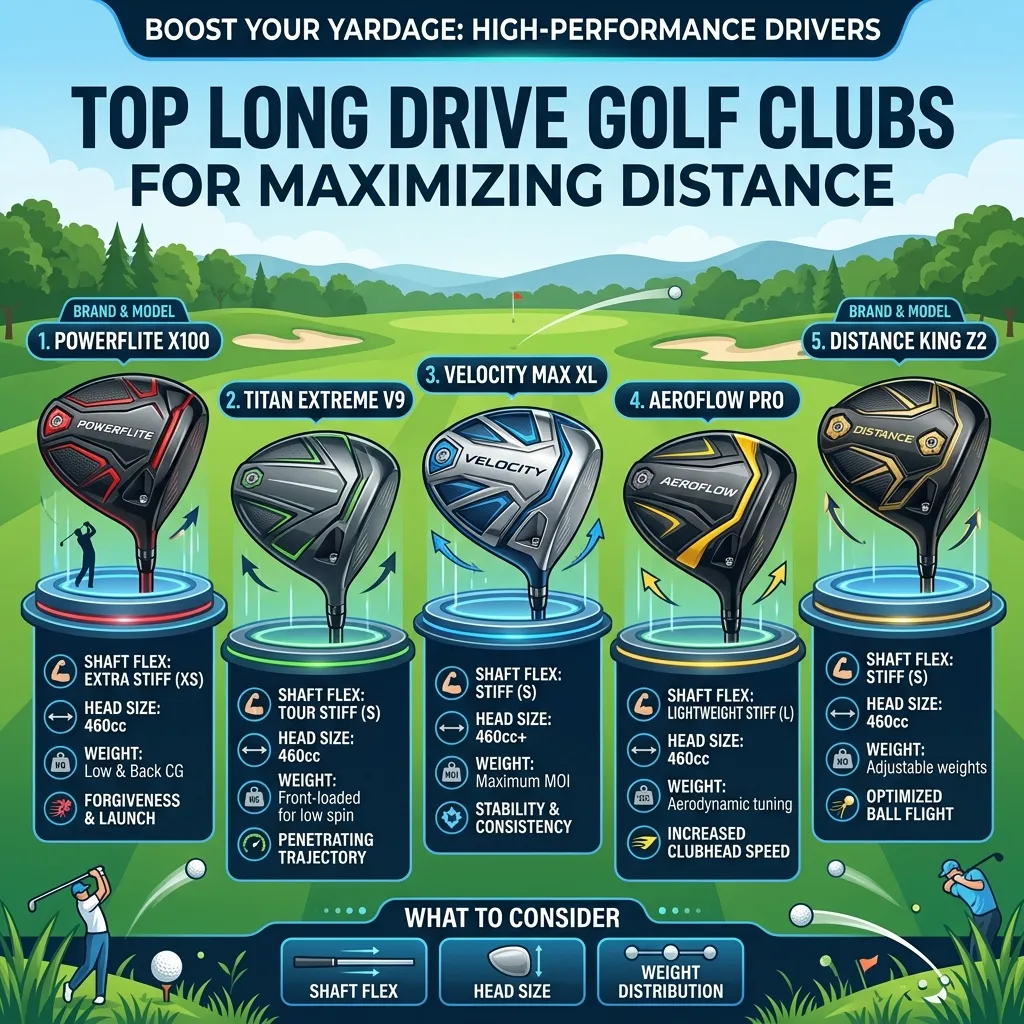
Long drive clubs are a different breed. They’re engineered for one thing: maximum carry and total distance, often at the expense of forgiveness.
In 2026, the standout long-drive models combine low spin with lightweight, stiff shafts that let players generate higher swing speeds. The TaylorMade Stealth 2 Plus and the Cobra Aerojet LS are popular among aggressive swingers and competitive long-drive enthusiasts.
These drivers usually feature adjustable weights set toward the front of the clubhead, which lowers spin and flattens trajectory. Pair one with a low-spin golf ball and a stiff shaft, and you’ve got a setup designed to fly.
Keep in mind that long-drive setups demand a fast, repeatable swing. They’re not the friendliest clubs for the average player, but for those with the speed to use them, the distance gains can be impressive.
What are high launch golf drivers and who needs them?
High launch drivers help get the ball into the air quickly and keep it there. They’re ideal for players with slower swing speeds or those who struggle with a low, weak ball flight.
These drivers achieve high launch through a combination of higher loft, a low center of gravity, and lightweight construction. The Ping G430 SFT and Callaway Paradym X are excellent examples. They launch the ball high while still offering plenty of forgiveness.
A higher launch angle adds carry distance, which matters most for golfers who can’t rely on swing speed alone. If your drives tend to fall out of the sky early, a high launch driver could add meaningful yards.
Choose a high launch driver if: your swing speed is on the slower side or your shots lack height and carry.
How do adjustable loft golf drivers work?
Adjustable loft drivers let you fine-tune your launch and trajectory without buying a new club. Most modern drivers include an adjustable hosel that lets you increase or decrease loft by a degree or two.
Adding loft raises your launch angle and adds backspin, which helps players who hit the ball too low. Reducing loft does the opposite, producing a flatter, more piercing flight. Many adjustable drivers, like the TaylorMade Qi10 and Callaway Paradym, also offer movable weights that shift the ball flight from draw to neutral to fade.
This flexibility is valuable because your swing changes over time. An adjustable driver grows with you and adapts to different courses and conditions.
Choose an adjustable driver if: you like to experiment with your setup, or your swing is still developing and may change.
What is the best driver for slice correction?
A slice—that frustrating shot that curves hard to the right for right-handed players—is one of the most common faults in golf. The good news is that several drivers are specifically designed to fight it.
Slice-correcting drivers use draw-bias technology, which positions weight toward the heel of the club. This helps the clubface close more easily at impact, counteracting the open face that causes a slice. The Ping G430 SFT (Straight Flight Technology) and Callaway Paradym X are two of the most effective anti-slice drivers available.
These drivers won’t fix a flawed swing entirely, but they can dramatically reduce the severity of a slice while you work on your mechanics.
Choose a slice-correction driver if: your tee shots consistently curve to the right and cost you both distance and accuracy.
TaylorMade golf drivers review: are they worth it?
TaylorMade has long been one of the most trusted names in driver technology, and its lineup covers nearly every type of player.
The TaylorMade Qi10 series is the brand’s flagship, offering three versions: the standard Qi10 for all-around performance, the Qi10 Max for maximum forgiveness, and the Qi10 LS for low-spin distance. TaylorMade is known for its carbon-faced construction, which the company markets as a way to deliver faster ball speeds across a larger area of the face.
Players tend to praise TaylorMade drivers for their crisp feel and acoustic feedback at impact. The adjustable hosel and weight systems are also intuitive and easy to use.
Best for: players who want premium technology and a wide range of options across skill levels.
Callaway golf drivers comparison: which model fits you?
Callaway is TaylorMade’s closest rival, and its drivers are consistently ranked among the best on the market.
The Callaway Paradym lineup mirrors TaylorMade’s tiered approach. The standard Paradym balances distance and forgiveness, the Paradym X adds draw bias and higher launch for slicers and beginners, and the Paradym Triple Diamond targets better players who want low spin and workability.
Callaway uses AI-designed clubfaces, which the brand says optimize ball speed and spin across different impact points. Many golfers find Callaway drivers slightly more forgiving than comparable TaylorMade models, making them a strong pick for mid-to-high handicappers.
Best for: golfers who prioritize forgiveness and consistency, especially those battling a slice.
TaylorMade vs Callaway: a quick comparison
|
Factor |
TaylorMade Qi10 |
Callaway Paradym |
|---|---|---|
|
Best for |
Feel and adjustability |
Forgiveness and consistency |
|
Face technology |
Carbon face |
AI-designed face |
|
Slice help |
Qi10 Max |
Paradym X |
|
Low-spin option |
Qi10 LS |
Paradym Triple Diamond |
Choose TaylorMade if feel and adjustability matter most. Choose Callaway if you want maximum forgiveness and slice help.
Which premium golf drivers are best for low-handicap players?
Skilled golfers have different priorities. Instead of maximum forgiveness, they want control, workability, and the ability to shape shots.
Premium drivers for pros and low-handicappers feature low-spin designs and compact, more workable clubheads. The TaylorMade Qi10 LS, Callaway Paradym Triple Diamond, and Titleist TSR3 are top choices. These drivers let skilled players control trajectory and curve the ball on command.
The trade-off is a smaller margin for error. These clubs reward precise ball striking and punish mishits more harshly than forgiving models. For players who consistently find the center of the face, that control is well worth it.
Choose a premium players’ driver if: you have a single-digit handicap and want to shape your shots with precision.
What are the best lightweight golf drivers for seniors?
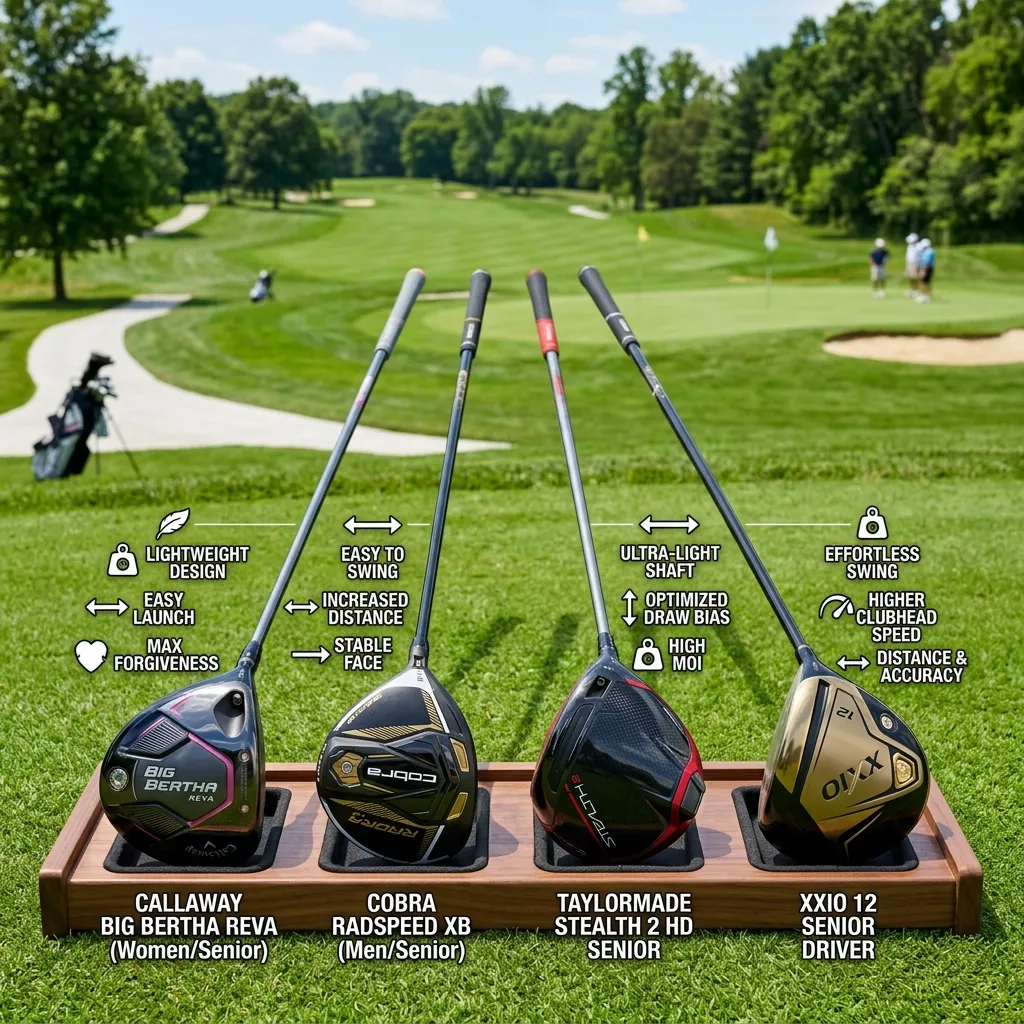
As swing speed naturally declines with age, lightweight drivers become a smart choice. A lighter club is easier to swing fast, which directly translates to more distance.
Senior golfers should look for drivers with lightweight shafts, often in a senior or regular flex, and an overall lighter total weight. The Ping G430 HL (High Launch), Callaway Paradym X, and Cobra Aerojet Max are excellent options. These drivers combine low weight with high launch and forgiveness—exactly what a slower swing needs.
A senior-flex shaft helps players load and release the club more efficiently, recovering some of the swing speed lost over time. Pairing a lightweight head with the right shaft can add noticeable yards back to your drives.
Choose a lightweight driver if: your swing speed has slowed and you want an easier club to swing without sacrificing distance.
Choosing the right driver for your game
The best golf driver isn’t the one topping every list—it’s the one that fits your swing, fixes your weaknesses, and gives you confidence on the tee. Beginners should lean toward forgiving, high-launch models. Distance seekers need low-spin technology. Slicers benefit from draw-bias designs, and seniors should prioritize lightweight construction.
Before you buy, get fitted if you can. A professional club fitting matches the loft, shaft, and weight to your exact swing, and it’s the single best way to find your ideal driver. Many golf retailers and pro shops offer fittings for free or apply the fee toward your purchase.
Test a few models, trust the data, and pick the driver that makes golf more fun.
Frequently asked questions
How much should I spend on a golf driver?
New drivers from major brands typically cost between $400 and $650. Last year’s models often drop to $250 to $350 once new releases hit the market, offering excellent value. Beginners can find solid options under $300 without missing much in performance.
How often should I replace my driver?
Most golfers don’t need to upgrade every year. Driver technology improves gradually, so replacing your club every three to five years is reasonable. Upgrade sooner if your swing changes significantly or your current driver shows visible wear on the face.
Does a more expensive driver guarantee more distance?
No. A higher price doesn’t automatically mean more yards. Distance depends far more on proper fitting, the right loft, and matching the club to your swing speed. A well-fitted mid-range driver often outperforms an expensive one that doesn’t suit your game.
What loft should I choose for my driver?
Loft depends on your swing speed. Faster swingers (over 105 mph) often do well with 8.5 to 9.5 degrees. Average swing speeds suit 10.5 degrees, while slower swingers benefit from 11 to 12 degrees or higher to maximize launch and carry.
Can the right driver actually fix my slice?
A draw-bias or anti-slice driver can reduce a slice, sometimes significantly, but it won’t cure a flawed swing. These drivers help close the clubface at impact, which counteracts the slice. Combine the right club with swing improvement for the best results.
