

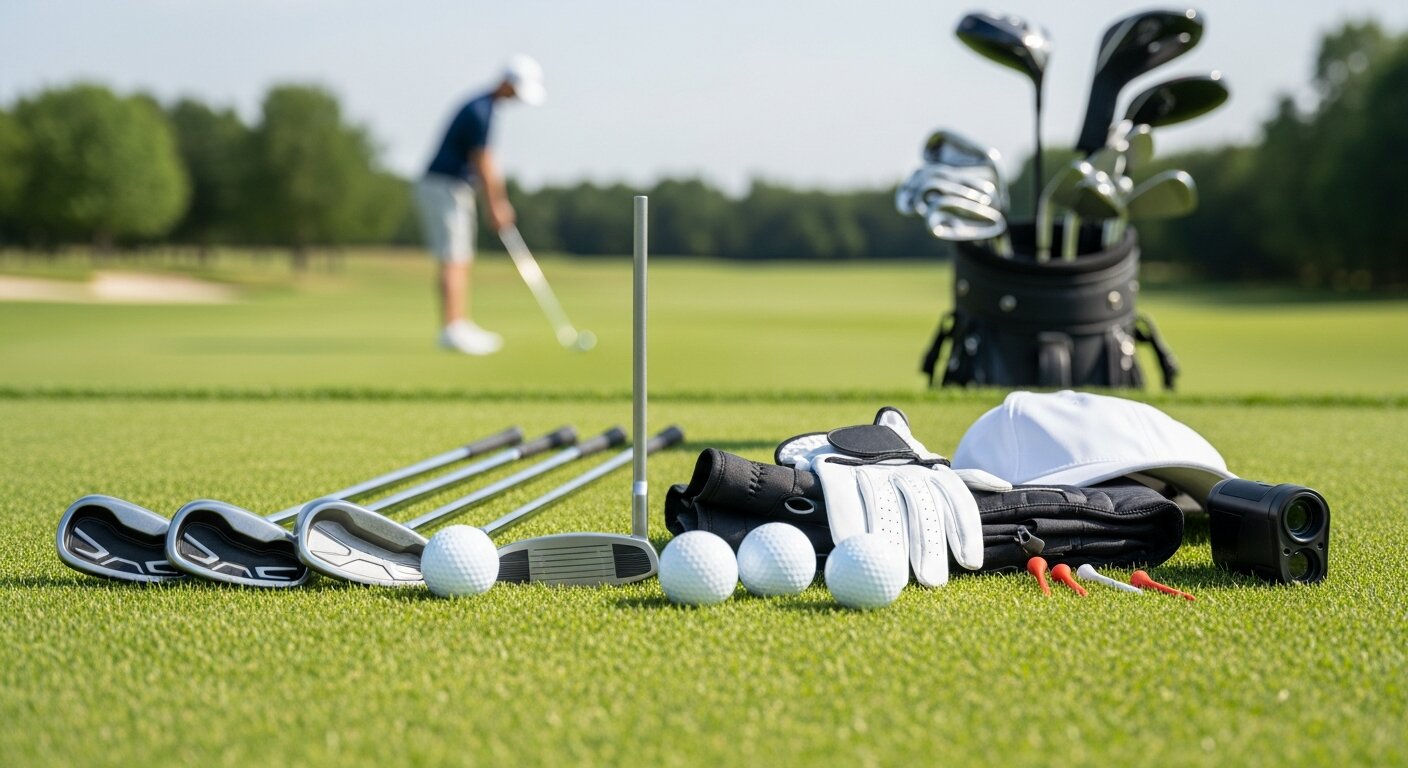
Golf is a sport of precision, patience, and preparation. Stepping onto the course unprepared can quickly turn a relaxing afternoon into a frustrating ordeal. Building a solid foundation starts with understanding exactly what gear you need to succeed. Having the right tools in your bag directly impacts your ability to play comfortably and score well.
Navigating the endless aisles of sporting goods stores can feel overwhelming for anyone. Racks of shiny clubs, walls of colorful balls, and countless gadgets compete for your attention. Knowing which items are strictly necessary versus which are optional luxuries is the key to building a functional setup without emptying your wallet.
This guide breaks down the absolute must-have golf equipment to get you from the first tee to the final green. We will explore everything from an essential golf equipment list for beginners to professional-grade tools that can shave strokes off your game. By the end of this read, you will know exactly how to pack your bag for optimal performance and maximum enjoyment on the course.
Basic Golf Gear for Beginners Guide
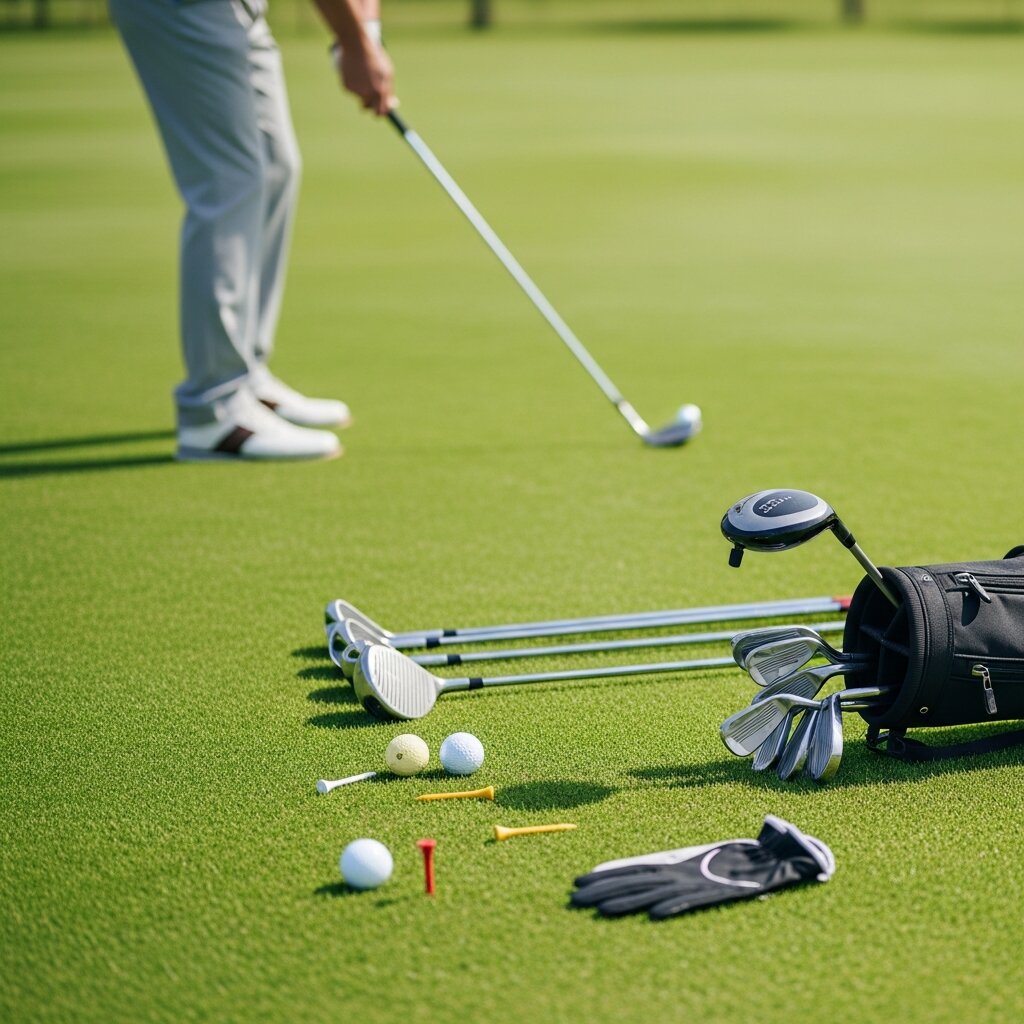
Starting your golf journey requires a few fundamental items. You do not need to purchase the most expensive items on the market right away. Instead, focus on acquiring reliable, forgiving gear that helps you learn the mechanics of the swing.
Essential Golf Equipment List for Beginners
Every new golfer needs a functional set of clubs. A standard set includes woods, irons, wedges, and a putter. You are legally allowed to carry 14 clubs in your bag, but beginners can easily get away with carrying a half-set. A driver, a fairway wood, odd-numbered irons (5, 7, 9), a pitching wedge, a sand wedge, and a putter provide plenty of options for navigating the course.
Next, you need a comfortable, durable golf bag. Stand bags are generally the best choice for beginners because they are lightweight and easy to carry. If you plan to ride in a cart most of the time, a cart bag offers more storage space. Pair your bag with a reliable set of golf balls. New players lose balls frequently, so look for affordable distance balls rather than premium tour-level options.
Best Golf Gear for New Players
Comfortable footwear is non-negotiable. Golf shoes provide the traction needed to keep your lower body stable during the swing. Spikeless golf shoes have become incredibly popular because they offer great grip on the grass while remaining comfortable enough to wear in the clubhouse.
A high-quality golf glove is another vital piece of basic golf gear for beginners guide recommendations. Worn on the lead hand (the left hand for a right-handed player), a glove provides crucial grip and prevents blisters. Look for cabretta leather options for maximum feel, or synthetic leather for better durability in humid conditions.
The Complete Golf Kit Essentials List
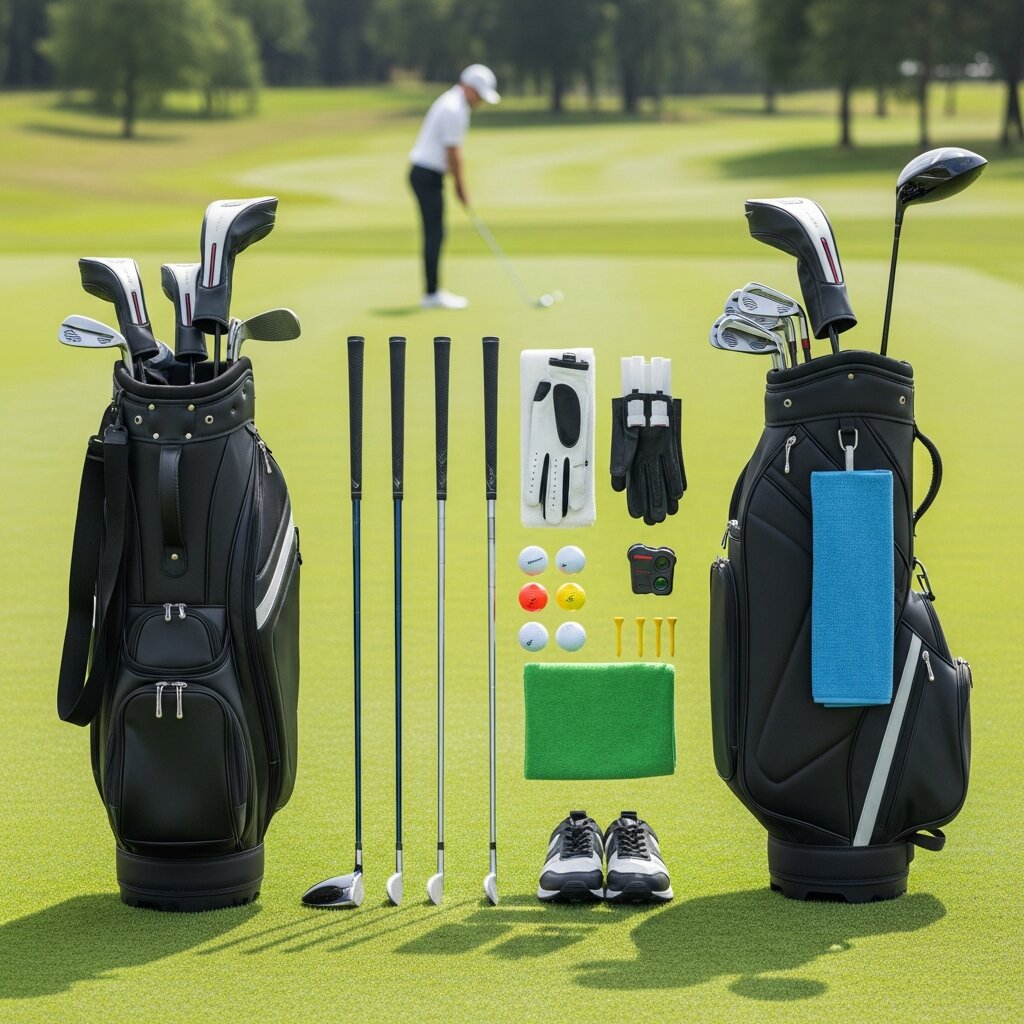
Once you have mastered the basics, you might want to upgrade your setup. Building a complete golf kit essentials list ensures you are prepared for any situation you might encounter during a round.
Golf Equipment Every Golfer Needs
Beyond clubs and balls, every golfer needs a reliable way to clean their gear. A sturdy club brush with both wire and nylon bristles will keep the grooves of your irons clean, ensuring maximum spin and control. Keep a microfiber towel clipped to your bag to wipe down grips, club faces, and golf balls.
Weather protection is another category of golf equipment every golfer needs. Pack an umbrella and a lightweight rain jacket in the side pockets of your bag. Golf is played in the elements, and a sudden downpour should not ruin your round. Sunscreen and a wide-brimmed hat or cap are equally important for protecting your skin during long summer afternoons.
Top Rated Golf Equipment for Players
As your skills improve, investing in top rated golf equipment for players can help refine your strategy. A laser rangefinder or a GPS watch provides accurate yardages to the pin, bunkers, and water hazards. Guessing distances by looking at physical markers on the course leaves too much room for error. Precise yardages allow you to confidently select the right club for every shot.
Upgrading your golf balls is another logical step. Premium urethane-covered balls offer significantly more spin around the greens compared to cheap distance balls. This added control allows you to stop the ball quickly on chip shots and pitches, leading to shorter putts and lower scores.
Professional Golf Equipment Essentials
For those looking to compete at a high level, professional golf equipment essentials focus on fine-tuning performance. Custom club fitting becomes mandatory at this stage. A professional fitter will analyze your swing speed, launch angle, and spin rates to build clubs with the exact shaft stiffness and lie angle you require.
Tour-level players also utilize alignment sticks during practice sessions. These simple fiberglass rods help dial in body alignment, ball position, and swing path. Professional players rarely hit balls on the driving range without laying down a few alignment sticks to ensure their fundamentals remain sharp.
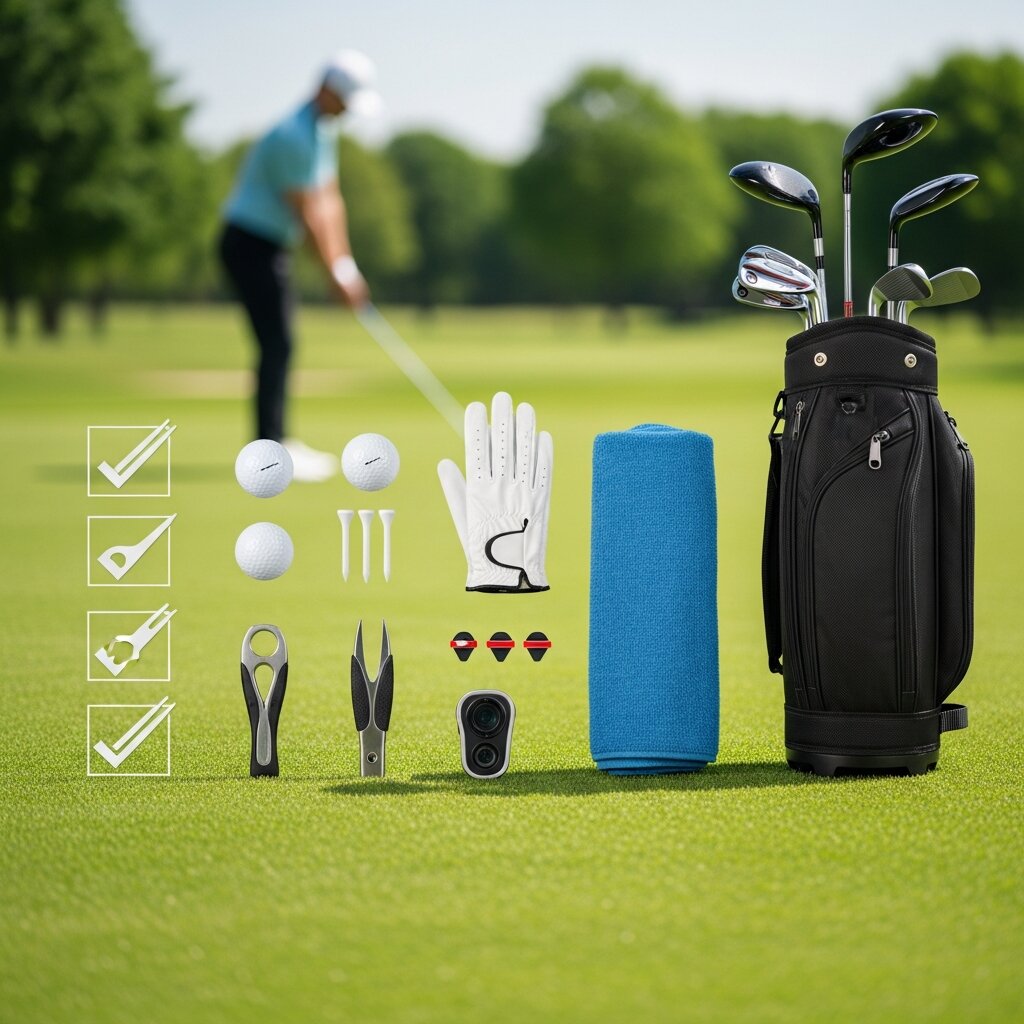
Accessories might seem like secondary items, but they significantly enhance your overall experience. A well-stocked bag includes a variety of tools designed to speed up play and keep you comfortable.
Important Golf Tools for Golfers
A divot repair tool is an essential piece of etiquette. When your ball lands on the green, it often leaves a small indentation. Using a divot tool to fix this mark ensures the putting surface remains smooth for the players behind you. Many modern divot tools also feature a magnetic ball marker, giving you two important golf tools for golfers in one compact package.
Tees are obviously required, but choosing the right type matters. Hardwood tees are traditional, but plastic tees are far more durable and can last for multiple rounds. Keep a handful of both long tees for your driver and short tees for par-3s in an easily accessible pocket.
Golf Accessories for Better Performance
Staying hydrated and nourished directly impacts your energy levels on the back nine. An insulated water bottle keeps drinks cold during summer rounds. Pack a few high-protein snacks like almonds or energy bars to maintain focus when fatigue sets in.
Finally, consider adding a clubhead wrench if you use an adjustable driver or fairway wood. Weather conditions and swing changes might necessitate a quick adjustment to your club’s loft or face angle before a round begins.
Frequently Asked Questions
What is the most important piece of must have golf equipment?
The most important piece of equipment is a putter. You will use your putter on almost every single hole, making it the most frequently used club in your bag. Finding a putter that feels balanced and comfortable to your eye is essential for scoring well.
Do beginners need a full 14-club set?
No, beginners do not need a full 14-club set. A half-set consisting of a driver, a fairway wood, a few mid-to-short irons, a wedge, and a putter is perfectly adequate for learning the game and navigating most golf courses.
What kind of golf balls should new players buy?
New players should buy inexpensive, two-piece distance balls. Because beginners tend to lose balls frequently in the woods and water hazards, spending money on premium, high-spin tour balls is an unnecessary expense.
Are golf shoes strictly necessary?
While you can play in athletic sneakers, golf shoes are highly recommended. They provide the lateral stability and traction required to swing the club powerfully without slipping on wet or uneven grass.
Why do golfers wear a glove?
Golfers wear a glove to maintain a secure grip on the club and prevent the club from twisting at impact. The glove also protects the hand from developing painful blisters caused by repetitive friction.
Should I buy a stand bag or a cart bag?
If you plan to walk the course and carry your clubs, a lightweight stand bag is the best option. If you primarily ride in a motorized golf cart or use a pushcart, a cart bag offers more storage and organization.
What is a divot tool used for?
A divot tool is used to repair the pitch marks or indentations a golf ball makes when it lands softly on the putting green. Repairing these marks is a crucial part of golf etiquette.
How do laser rangefinders help my golf game?
Laser rangefinders provide exact distance measurements to the flagstick or other hazards on the course. Knowing the precise yardage takes the guesswork out of club selection, allowing you to swing with confidence.
What should be on my must have golf accessories checklist?
Your checklist should include golf tees, a divot repair tool, ball markers, a club cleaning brush, a microfiber towel, sunscreen, a water bottle, and a few spare pencils for the scorecard.
Are custom fitted clubs worth the money?
For intermediate and advanced players, custom fitting is absolutely worth the money. Properly fitted clubs match your specific swing speed and body measurements, leading to more consistent ball striking and tighter shot dispersion.
Do I need an umbrella if it isn’t raining?
Yes, carrying an umbrella is wise even on sunny days. A large golf umbrella provides excellent shade during hot summer rounds, helping you stay cool and avoid heat exhaustion.
What are alignment sticks used for?
Alignment sticks are training aids used during practice. By placing them on the ground, golfers can visually ensure their feet, hips, and shoulders are aimed correctly toward the target before initiating the swing.
How often should I replace my golf glove?
You should replace your golf glove when it becomes stiff, crusty, or develops holes in the palm or fingers. Most regular players go through three to five gloves per season, depending on the weather conditions.
Can I use the same tees for my driver and my irons?
You can, but it is not ideal. Long tees (2.75 to 3.25 inches) are meant for drivers with large clubheads. Short tees (1.5 inches) are much better suited for hitting irons and fairway woods off the tee box.
What is the difference between cabretta leather and synthetic golf gloves?
Cabretta leather offers the softest feel and best grip, but it wears out quickly and degrades in wet weather. Synthetic gloves are more durable, handle sweat and rain better, and are generally less expensive.
