


Stepping onto a golf course for the very first time brings a mix of excitement and anxiety. You see players effortlessly launching balls down the fairway, carrying bags full of complex-looking equipment, and speaking a language filled with terms like “birdie,” “bogey,” and “mulligan.”
Learning the golf basics for beginners is your key to unlocking a lifelong sport. Golf offers a unique blend of physical activity, mental challenge, and social interaction. It allows you to spend hours outdoors in beautiful landscapes while testing your personal limits.
This guide breaks down the essential components of the game. We will walk you through the core rules, the equipment you actually need, the mechanics of a reliable swing, and the unwritten etiquette that keeps the game enjoyable for everyone. By the end of this post, you will have a solid foundation to start your golfing journey.
How to play golf for beginners

Golf equipment guide for beginners
Walking into a golf shop can be intimidating. Here is exactly what you need to get started:
- Clubs: You are legally allowed to carry up to 14 clubs in your bag, but beginners only need a half-set. Look for a driver, a fairway wood or hybrid, a few irons (like a 7-iron and 9-iron), a pitching wedge, a sand wedge, and a putter. Buying a used beginner set is a smart, cost-effective choice.
- Balls and Tees: Expect to lose golf balls when you are first starting. Buy inexpensive, recycled balls in bulk. You will also need wooden or plastic tees to elevate the ball on your first shot of each hole.
- Golf Bag: A lightweight stand bag or cart bag is essential for carrying your gear.
- Footwear and Glove: Golf shoes with soft spikes provide traction during your swing. A golf glove (worn on your non-dominant hand) helps maintain a secure grip on the club.
Golf grip and stance basics

Before you can swing, you need to set up correctly. A proper grip and stance are the foundation of a good golf shot.
- The Grip: Hold the club primarily in the fingers, not the palms. For a right-handed golfer, place your left hand at the top of the grip, with the right hand resting directly below it. Your hands should work together as a single unit.
- The Stance: Stand with your feet shoulder-width apart. Bend slightly at the hips (not the waist) and keep a slight flex in your knees. Let your arms hang naturally straight down. The ball should generally be positioned in the middle of your stance for irons, and closer to your front foot for drivers.
Golf swing basics for beginners
A successful golf swing is about rhythm and rotation, rather than sheer upper-body strength.
- The Backswing: Rotate your shoulders and torso away from the target, keeping your lead arm (left arm for right-handed players) relatively straight. Shift your weight slightly to your back foot.
- The Downswing: Initiate the downswing by shifting your weight back to your front foot. Uncoil your hips and let your arms drop naturally toward the ball.
- The Follow-Through: Accelerate through the ball, finishing with your chest facing the target and the club resting over your lead shoulder.
Beginner golf tips and techniques
When you are learning the ropes, keep these technical tips in mind:
- Keep your eye on the ball: Avoid the temptation to look up early to see where the ball went. Keep your head down until your right shoulder naturally brings it up during the follow-through.
- Focus on tempo: A smooth, controlled swing will produce far better results than a fast, aggressive one. Think “tick-tock” as you swing back and through.
Essential golf rules for beginners
Understanding the basic rules will keep you out of trouble and ensure you are keeping score correctly.
- Play the ball as it lies: You generally cannot touch or move the ball once it is in play, unless a specific rule allows it.
- Out of bounds (OB): Marked by white stakes. If you hit a ball OB, you must add a one-stroke penalty and drop a new ball from the spot where you originally hit the shot.
- Water hazards: Marked by yellow or red stakes. If your ball goes into the water, you take a one-stroke penalty and drop a new ball according to specific hazard rules.
Golf course etiquette for beginners
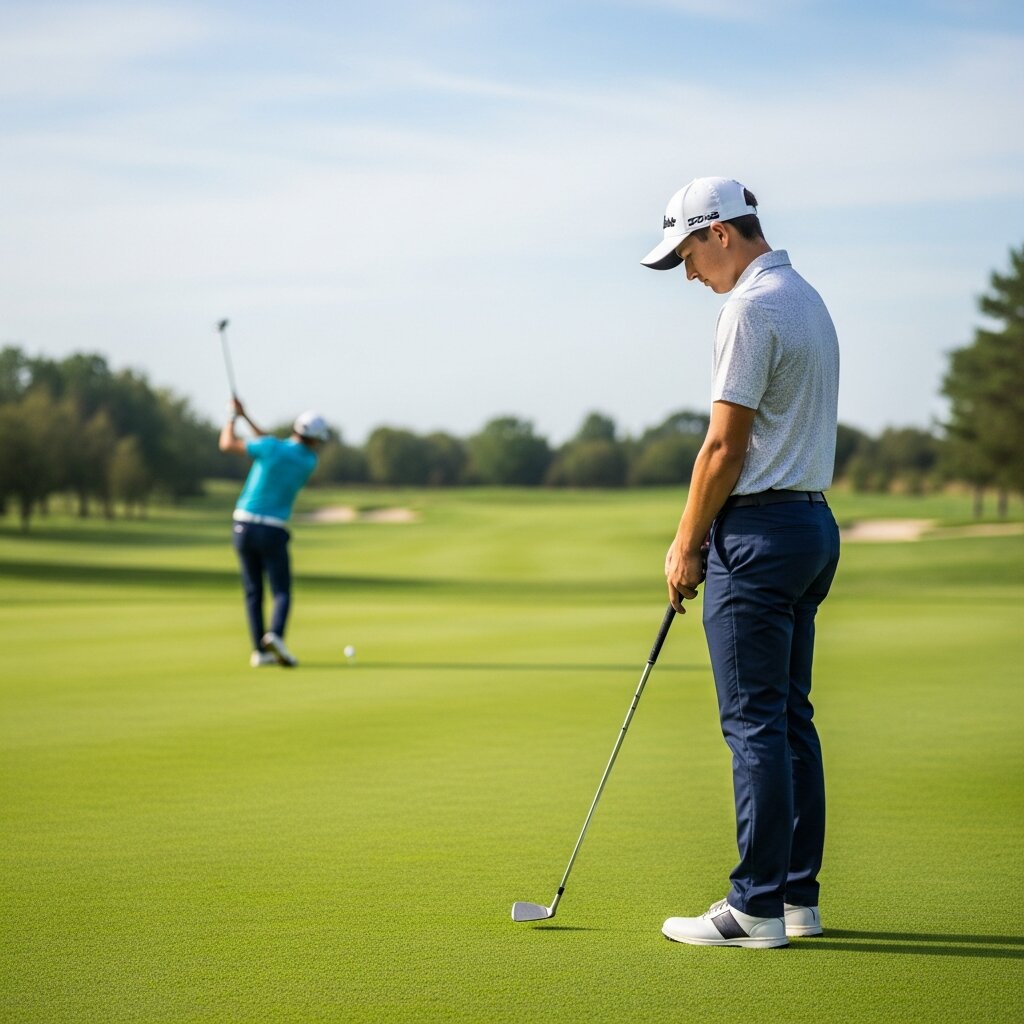
Etiquette is highly respected in the golfing community. Following these unwritten rules shows respect for the course and your fellow players.
- Pace of play: Keep moving. Be ready to hit when it is your turn. If your group is falling behind and the group behind you is waiting, offer to let them “play through.”
- Course care: Repair your ball marks on the greens, replace your divots in the fairway, and rake the sand bunkers after you hit out of them.
- Silence: Stand still and remain quiet when someone else in your group is hitting their shot.
Beginner golf training drills
Practicing with a purpose will accelerate your progress.
- The Towel Drill: Place a small towel under your armpits and hit half-shots with an iron. This keeps your arms connected to your torso, promoting a more consistent body rotation.
- The Coin Putting Drill: Place a coin on the practice green and putt a ball over it. This forces you to focus on a highly specific target, improving your alignment and focus.
Easy golf tips to improve your game
- Course Management: Don’t always aim directly for the flag. Aim for the center of the green to give yourself a wider margin for error.
- Leave the driver in the bag: If you are struggling to hit your driver straight, tee off with a fairway wood or a mid-iron. Accuracy is far more important than distance.
Golf lessons for new players
While you can learn a lot from articles and videos, there is no substitute for a professional set of eyes. Booking a few sessions with a certified PGA teaching professional is highly recommended. A coach can identify setup flaws, explain swing mechanics tailored to your body type, and prevent you from developing bad habits early on.
Frequently Asked Questions
What is a par?
Par is the number of strokes an expert golfer is expected to need to complete an individual hole or an entire course.
What is a birdie?
A birdie is a score of one stroke under par on a single hole.
What is a bogey?
A bogey is a score of one stroke over par on a single hole.
How many clubs can I carry?
The official rules of golf allow you to carry a maximum of 14 clubs in your bag during a round.
What does “fore” mean?
“Fore!” is a warning shout used when a golfer hits a ball that might accidentally strike another person on the course.
What is a mulligan?
A mulligan is a “do-over” shot that is sometimes allowed in casual, friendly play. It is not permitted in official tournament rules.
Do I need golf shoes to play?
While not strictly required at all public courses, golf shoes provide vital stability and traction during your swing. Sneakers can slip on wet grass.
How long does a round of golf take?
A full 18-hole round typically takes about four to four-and-a-half hours to complete, depending on the pace of play.
What is a handicap?
A handicap is a numerical measure of a golfer’s potential playing ability, allowing players of different skill levels to compete fairly against one another.
Can I use any golf ball?
Yes, beginners can use any standard golf ball. However, softer, low-compression balls are generally easier for beginners to hit straight.
What is the difference between an iron and a wood?
Woods (and drivers) have larger, rounded heads and are used for long-distance shots. Irons have flat, angled faces and are used for shorter, more precise shots approaching the green.
Should I buy new or used clubs?
Used clubs are excellent for beginners. They allow you to learn the game without making a massive financial investment upfront.
What is a divot?
A divot is a piece of turf that is cut out of the ground by the clubhead during a golf swing.
How do I know whose turn it is to hit?
The general rule is that the player whose ball is furthest from the hole hits first.
Is golf a good workout?
Yes. Walking an 18-hole golf course involves walking several miles, and the swinging motion engages your core, back, and leg muscles.
