

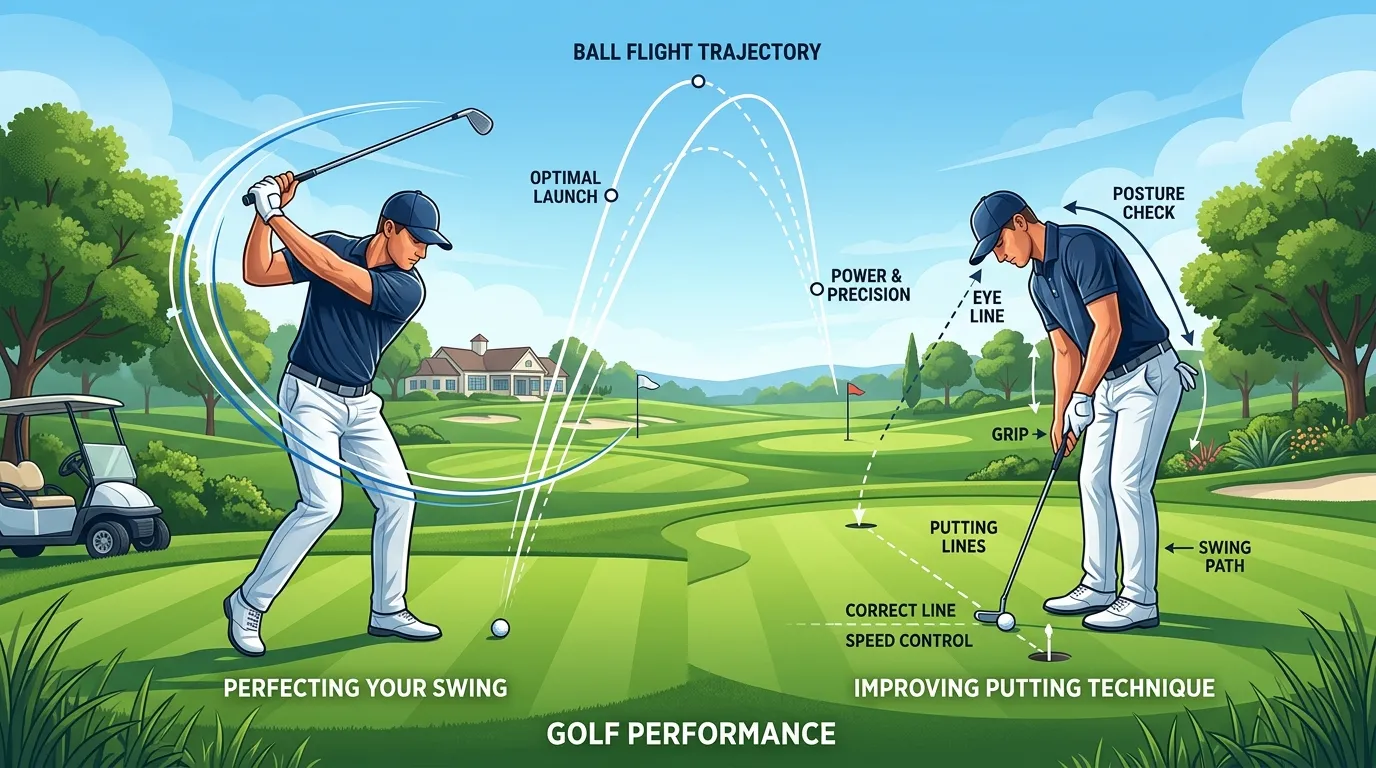
To improve your golf stroke, focus on the fundamentals first—a neutral grip, balanced stance, and smooth tempo. Most amateur mistakes come from poor setup and rushed swings. Build consistency through targeted drills, refine your short game, and practice your putting stroke regularly to lower your scores faster.
Few things in golf feel better than a clean, well-struck shot. The ball jumps off the clubface, flies straight, and lands right where you wanted it. But getting that result consistently? That’s the hard part.
Most golfers struggle not because they lack talent, but because they skip the basics. They chase distance before accuracy, or copy swings they see on TV without understanding the mechanics behind them. The good news is that small, deliberate changes can make a big difference—often within a single practice session.
This guide breaks down the golf stroke from the ground up. You’ll learn how to fix your grip and stance, sharpen your swing mechanics, improve your accuracy, and tighten up the short game that decides most rounds. Whether you’re brand new to the game or trying to break 90, these tips will help you strike the ball cleaner and score lower.
What are the fundamentals of a good golf stroke?
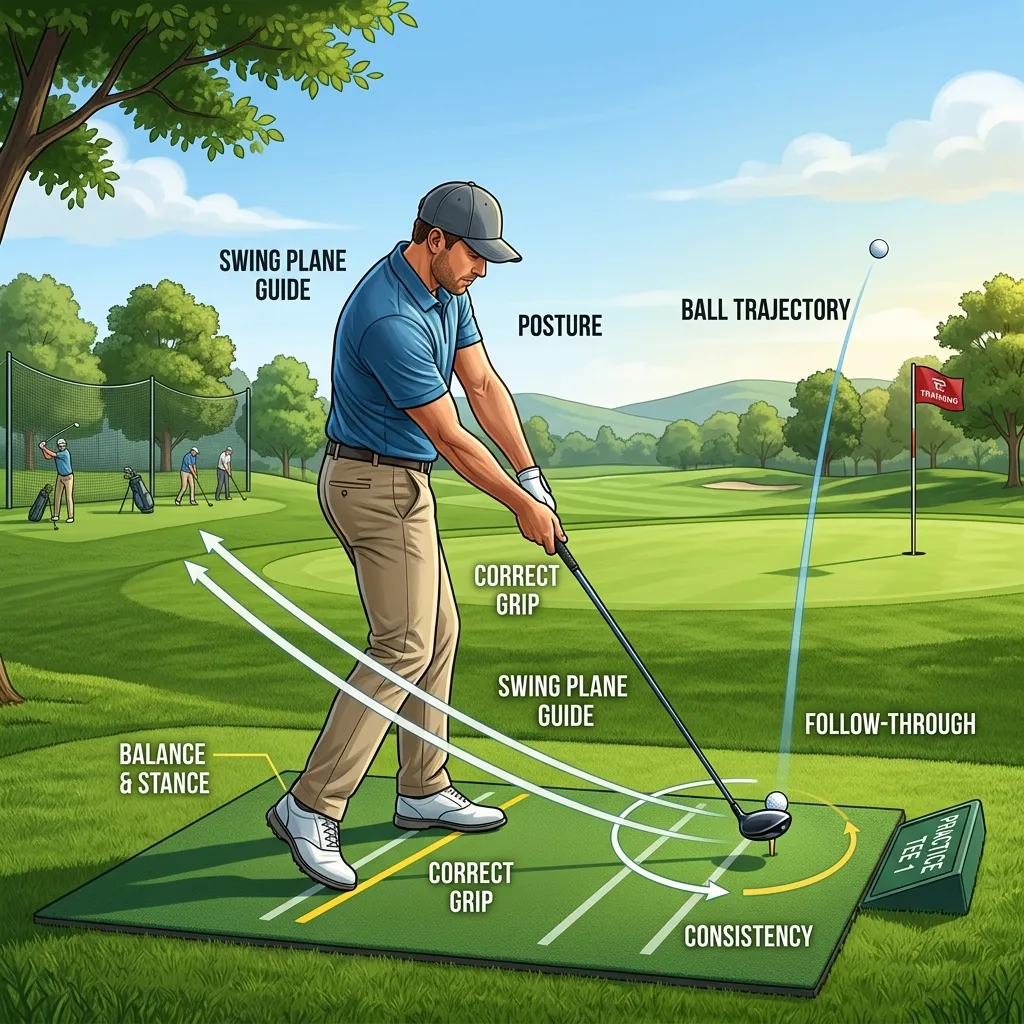
Every solid golf stroke rests on a few core principles. Master these, and everything else becomes easier.
The first fundamental is setup. Before you even move the club, your body position determines a huge portion of the outcome. Pros spend years refining their pre-shot routine because they know that a good swing starts from a good stance.
The second is tempo. A smooth, repeatable rhythm beats raw power almost every time. Many amateurs swing too fast, which throws off their timing and balance.
The third is contact. Striking the ball with the center of the clubface—often called the “sweet spot”—produces the best combination of distance and control. Clean contact matters more than swing speed for most players.
Think of these three elements as the foundation of a house. Without them, nothing you build on top will hold up.
How should you grip and stand for better golf shots?
Your grip and stance are the only direct connection you have to the club and the ground. Get them right, and you give yourself a real chance at a good shot.
Building a neutral grip
A neutral grip helps the clubface return to square at impact, which leads to straighter shots. Here’s how to set it up:
- Place the club in the fingers of your lead hand (left hand for right-handed golfers), not the palm.
- Wrap your fingers around so you can see two or three knuckles when you look down.
- Add your trailing hand below, letting it sit naturally against the lead hand.
- Keep your grip pressure light—around a 4 or 5 out of 10. Squeezing too hard creates tension that ruins your swing.
If your shots curve hard left or right, your grip is often the culprit. A grip that’s too “strong” (rotated away from the target) tends to cause hooks, while a “weak” grip causes slices.
Setting a balanced stance
Your stance gives your swing a stable base. Follow these guidelines:
- Stand with your feet about shoulder-width apart for most full swings.
- Distribute your weight evenly across both feet, with a slight bend in your knees.
- Tilt forward from your hips, not your waist, keeping your back fairly straight.
- Let your arms hang naturally so the club reaches the ground without stretching or crowding.
Ball position matters too. For shorter clubs like wedges, play the ball near the center of your stance. For longer clubs and the driver, move it forward toward your lead foot.
What are the best golf swing mechanics and drills?

The golf swing happens fast, but it’s made up of distinct parts that work together. Understanding each phase helps you find and fix problems.
Breaking down the swing
A full swing moves through four main stages:
- The takeaway — Move the club back low and slow, keeping your arms and shoulders working together.
- The backswing — Rotate your shoulders fully while shifting weight to your trailing side.
- The downswing — Start with your lower body, letting your hips lead while your arms follow.
- The follow-through — Swing all the way to a balanced finish with your weight on your lead foot.
A common mistake is starting the downswing with the arms instead of the hips. This “casting” motion drains power and causes inconsistent contact.
Drills that build a better swing
Drills turn knowledge into muscle memory. Try these proven exercises:
- The pause drill: Pause at the top of your backswing for one second before swinging down. This builds control and stops you from rushing.
- The feet-together drill: Hit short shots with your feet close together. This forces you to stay balanced and swing smoothly.
- The towel drill: Place a towel under both armpits and keep it there during your swing. This trains your arms and body to move as one unit.
- The half-swing drill: Practice swinging to waist height on both sides, focusing on clean contact rather than distance.
Spend ten minutes on these before each range session, and you’ll notice steadier ball striking within a few weeks.
How can beginners improve their golf swing?
If you’re new to golf, simplicity is your friend. Trying to copy a tour pro’s full swing will only frustrate you.
Start by learning to make solid contact with half swings. Use a 7-iron, which is forgiving and easy to control, and focus on hitting the ball before the ground. Once you can do that consistently, gradually lengthen your swing.
Beginners should also resist the urge to swing hard. Slow down and aim for smooth, controlled motion. Speed comes naturally once your mechanics are sound.
Finally, take a few lessons early if you can. A qualified instructor can spot bad habits before they become permanent, saving you months of frustration. Even two or three sessions can set you on the right path. Learning the basics of setup is also important for beginners, and this guide on golf setup fundamentals
How do you improve golf accuracy and ball striking?

Hitting it far means little if you can’t hit it straight. Accuracy and clean ball striking come from consistency, not force.
To strike the ball cleanly, focus on hitting down on it with your irons. The club should contact the ball first, then brush the turf afterward—creating a small divot in front of where the ball sat. This descending blow is what makes the ball lift and fly properly.
For better accuracy, try these tips:
- Pick a specific target. Don’t just aim “down the fairway.” Choose a tree, bunker, or marker and commit to it.
- Align your body correctly. Your feet, hips, and shoulders should run parallel to your target line, like railroad tracks.
- Control your finish. A balanced, held finish position is a sign that your swing stayed under control.
- Match the right club to the shot. Many golfers under-club and swing too hard. Take one more club and swing easy instead.
Consistency improves when you repeat the same routine before every shot. A reliable pre-shot routine settles your mind and locks in your setup.
What are the best short game and putting techniques?
The short game—chipping, pitching, and putting—accounts for nearly half the strokes in an average round. Improving here is the fastest way to lower your scores.
Sharpening your chipping and pitching
For chip shots around the green, use a putting-like motion with a more lofted club. Keep your hands ahead of the ball, lean your weight slightly toward your lead foot, and let the loft of the club do the work. Avoid scooping at the ball, which causes thin or fat shots.
For pitch shots that need more height and carry, open the clubface slightly and make a longer, smoother swing. Practice landing the ball on a specific spot rather than just getting it close.
Mastering the putting stroke
Putting is where rounds are won or lost. A reliable putting stroke comes down to a few key ideas:
- Keep it simple. Use a smooth, pendulum-like motion powered by your shoulders, not your wrists.
- Read the green carefully. Look at the slope from behind your ball and from the side to judge the break.
- Control distance first. On long putts, getting the speed right matters more than the exact line. A putt that finishes close is a good putt.
- Keep your head still. Resist the urge to look up too early. Listen for the ball to drop instead.
Spend time on the practice green working on short putts from three to five feet. These are the putts that add up fast, and sinking them builds confidence for the whole round.
Putting it all together for lower scores
Improving your golf stroke isn’t about one magic fix—it’s about stacking small gains. Start with your grip and stance, since they shape every shot you hit. Build a smooth, repeatable swing through regular drills. Then sharpen the short game and putting, where most strokes are saved.
Pick one or two areas to focus on at a time rather than overhauling everything at once. Track your progress, stay patient, and celebrate the clean shots when they come. Golf rewards consistency, and consistency comes from deliberate practice. For additional golf instruction tips, visit to learn from professional coaches and improve different aspects of your game.
Grab a club, head to the range, and put these tips into action. Your next round is your chance to prove how far a little focus can take you.
Frequently asked questions
How long does it take to improve your golf swing?
Most golfers see noticeable improvement within a few weeks of focused practice. Simple fixes like grip and stance can produce results in a single session, while deeper swing changes may take one to three months to feel natural.
What is the most important fundamental in golf?
Setup is widely considered the most important fundamental. A correct grip, stance, and alignment account for a large share of shot quality, because they position you to make a good swing before the club even moves.
Should beginners take golf lessons?
Yes. Even a few lessons early on help beginners avoid bad habits that are hard to fix later. A qualified instructor can correct grip, posture, and swing flaws quickly, saving you months of trial and error.
What’s the fastest way to lower my golf score?
Improving your short game and putting is the fastest way to lower scores. These shots make up nearly half of an average round, so sharpening your chipping and putting saves more strokes than adding distance off the tee.
How do I stop slicing the golf ball?
A slice usually comes from an open clubface and an out-to-in swing path. Strengthen your grip slightly so you see two or three knuckles on your lead hand, and focus on swinging from the inside toward the target.
What are the best golf stroke tips for beginners?
The best golf stroke tips for beginners include focusing on a neutral grip, balanced stance, proper alignment, and a smooth swing tempo. Mastering these fundamentals helps build consistency and improve ball striking.
How can golf stroke tips help improve accuracy?
Effective golf stroke tips improve accuracy by promoting proper alignment, balanced posture, and center-face contact. Consistent setup and swing mechanics help keep shots on target.
Which golf stroke tips can help reduce slicing?
Golf stroke tips for reducing slices include strengthening your grip slightly, improving swing path, and ensuring the clubface is square at impact. These adjustments can help produce straighter shots.
Are golf stroke tips useful for improving distance?
Yes, golf stroke tips can increase distance by improving swing efficiency, balance, and solid contact. Better mechanics often generate more power without requiring a harder swing.
What golf stroke tips improve ball striking consistency?
The most effective golf stroke tips for consistent ball striking include maintaining good posture, keeping your head steady, and focusing on hitting the ball before the turf with your irons.
How often should I practice golf stroke tips?
To see steady improvement, practice golf stroke tips at least two to three times per week. Regular repetition helps build muscle memory and reinforces proper swing habits.
Can golf stroke tips improve my short game?
Absolutely. Golf stroke tips for chipping, pitching, and putting can improve touch, control, and accuracy around the greens, helping lower scores more quickly.
What are the most common mistakes golf stroke tips help fix?
Golf stroke tips often address common issues such as poor grip pressure, incorrect alignment, rushed swings, inconsistent contact, and lack of balance throughout the swing.
Do golf stroke tips help with putting performance?
Yes, many golf stroke tips focus on creating a smooth, pendulum-style putting stroke, improving distance control, and helping golfers make more putts from short and medium range.
How long does it take to see results from golf stroke tips?
Many golfers notice improvements within a few practice sessions when applying golf stroke tips consistently. More significant changes in swing mechanics may take several weeks of dedicated practice.
