

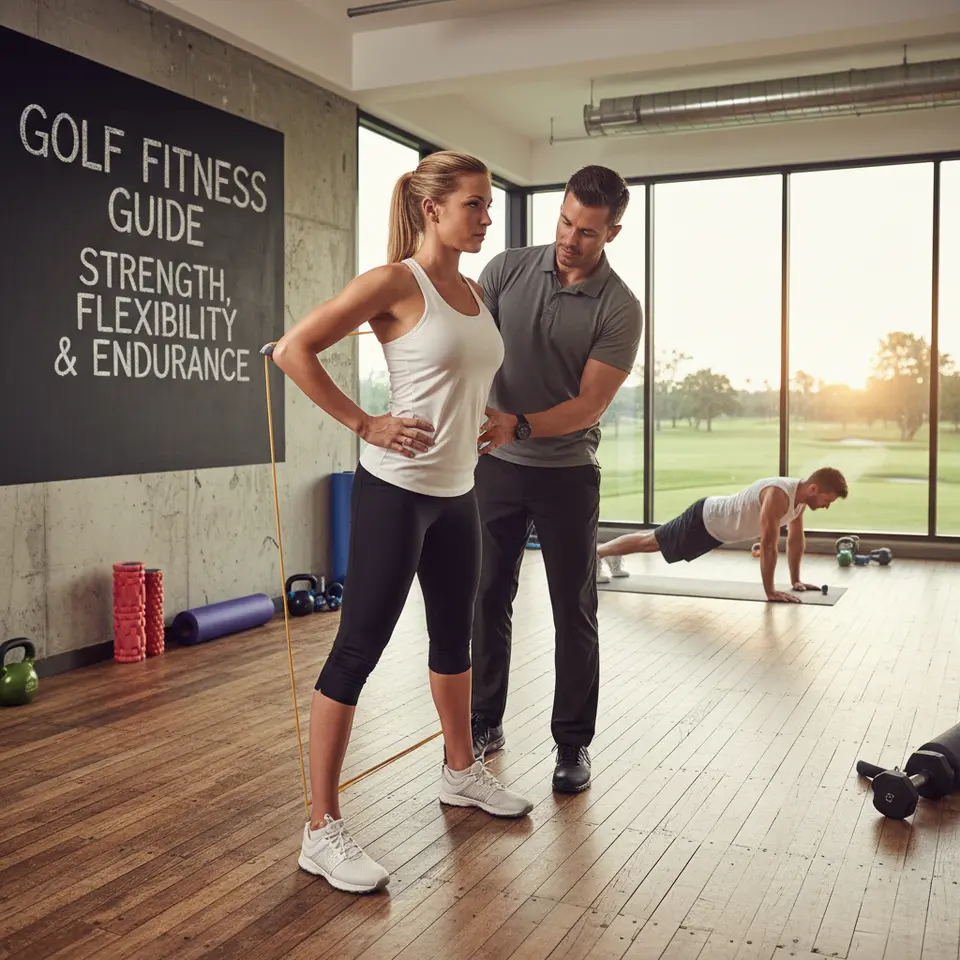
In today’s competitive golfing environment, mastering the fundamentals of swing mechanics is just one piece of the puzzle. An increasing number of players discover that targeted golf fitness training is essential to unlock greater distance, maintain consistency, and reduce the chance of injury over a full 18-hole round. While traditional practice sessions hone technical skills, integrating strength work, mobility drills, and endurance routines addresses the physical demands of modern golf in today’s digital landscape. This year (2026), coaches and athletes emphasize a holistic approach that bridges the gap between swing theory and physical capacity.
Developing a structured fitness routine tailored specifically for the golf swing can translate to higher clubhead speeds, improved stability through each phase of motion, and sustained energy levels from tee-off to the final putt. Whether you’re walking a hilly course or competing in a local tournament, a comprehensive plan ensures your muscles, joints, and cardiovascular system work in harmony. Throughout this guide, the focus keyword appears naturally to highlight the importance of golf fitness in enhancing overall performance.
By breaking down essential components—from warm-up protocols to advanced training tools—you’ll have the blueprint to build a resilient body capable of powering drives, refining your short game, and safeguarding against overuse injuries. Read on to explore expert insights and actionable strategies that can transform your personal approach and help you score lower today.
Recent research from institutions like the National Institutes of Health underscores the link between functional movement patterns and swinging efficiency. By aligning evidence-based practices with real-world drills, this post delivers science-backed recommendations to elevate your game and support longevity in the sport through proven golf fitness methods.
Why Golf Fitness Matters for Every Player

In competitive golf, purely technical training often overlooks the physical influences that underpin a consistent swing. Player fatigue, muscle imbalances, and limited joint mobility can manifest as erratic shot patterns, especially during back nine pressure tests. Golf fitness addresses these deficiencies by enhancing the body’s capacity to produce and control force throughout the swing cycle. Today, athletes and recreational golfers alike integrate movement screening and conditioning protocols into weekly schedules, underscoring how foundational strength and mobility work underlie superior shot quality.
Central to an efficient golf swing is the ability to generate clubhead speed in a repeatable manner. Research indicates that lower-body strength contributes significantly to drive velocity, with powerful hip extension transferring energy through the core to the club. By focusing on targeted exercises such as weighted squats, hip thrusts, and rotational lifts, golfers can cultivate functional power that manifests in longer drives. Additionally, upper-body conditioning ensures the arms and shoulders can maintain a stable swing path, reducing the risk of compensation that leads to slices or hooks.
Equally important is maintaining a full range of motion, particularly in the hips, thoracic spine, and shoulders. Restricted flexibility may force players into awkward positions that compromise swing plane and lead to inconsistent ball striking. A dedicated golf fitness regimen employs dynamic stretching and mobility drills—such as thoracic rotations, band-assisted shoulder openings, and hip-flexor releases—to preserve joint health. Enhanced mobility empowers golfers to execute a deeper coil at address, translating to more stored elastic energy and smoother transitions through impact.
Stamina is another critical factor often underestimated in casual play. Walking 18 holes, navigating undulating terrain, and enduring hours of concentration place a sustained demand on the cardiovascular system. Incorporating aerobic sessions such as brisk walking, interval cycling, or even hill repeats builds the endurance needed to remain sharp from the first tee to the clubhouse. A consistent conditioning approach also aids in mental resilience, helping players stay focused under pressure and reduce emotional swings that can derail a round.
Finally, injury prevention forms a cornerstone of any long-term performance plan. Golf-specific fitness emphasizes balanced muscle development to avoid overuse syndromes in the lower back, shoulders, and wrists. Stabilization drills, proprioceptive exercises, and cross-training movements work together to reinforce weak links and protect vulnerable joints. By integrating prehab strategies from sources like the National Institutes of Health (https://www.nih.gov/) and reputable physical therapy guidelines, you can safeguard your body against common swing-related injuries and ensure many seasons of enjoyable play ahead.
The Five Pillars of Effective Golf Fitness
Strength
Strength training provides the foundation for explosive power in your golf swing. By focusing on compound movements, golfers reinforce kinetic chains that span from the ground up. Exercises like barbell squats, deadlifts, and lunges target the quadriceps, hamstrings, and gluteal muscles to create a solid base for hip extension. Meanwhile, core exercises—such as cable woodchoppers and Pallof presses—stabilize the torso during rotation, preventing energy loss. Upper-body lifts, including push-ups and dumbbell rows, ensure that the shoulders and arms remain strong enough to control the club, resulting in a more reliable swing path and reduced shot dispersion.
Flexibility
Maintaining healthy range of motion in the hips, spine, and shoulders is critical for a full, unrestricted turn. Flexibility work consists of a combination of static stretches and active flexibility drills that prioritize joint health. Incorporating hamstring stretches, hip-flexor releases, and shoulder dislocations helps counteract the typical tightness from prolonged sitting or repetitive practice swings. Regular mobility sessions—ideally informed by guidelines from experts at institutions like the Mayo Clinic (https://www.mayoclinic.org/)—will aid in preventing compensatory movements that can compromise performance or lead to injury.
Endurance
Golf courses often span several miles and demand hours of focused effort. Cardiovascular conditioning enables players to maintain steady energy levels and mental clarity throughout their round. Steady-state cardio sessions, whether brisk walking, cycling, or light jogging, enhance overall stamina. For those seeking more efficiency, interval training routines—alternating high-intensity bursts with recovery phases—boost both aerobic and anaerobic capacity. Building this base endurance ensures that late-round fatigue does not dictate sweep mechanics or decision-making.
Balance & Stability
A consistent swing relies on a stable foundation and precise weight transfer. Balance and stability training involves exercises that challenge proprioception and core control under varying conditions. Single-leg Romanian deadlifts, Bosu ball squats, and wobble-board drills mimic the unilateral demands of a golf swing, reinforcing the neuromuscular connections that keep you centered during transition and impact. Over time, these drills improve your ability to maintain posture, resist sway, and hit more square strikes.
Mobility
Mobility lies at the intersection of strength and flexibility, enabling dynamic movement patterns that replicate the golf swing. Rotational mobility drills, such as banded thoracic rotations and hip CARs (controlled articular rotations), train joints to move fluidly through multi-planar ranges. Incorporating yoga-inspired sequences or Pilates flows amplifies these benefits by reinforcing breath control and movement sequencing. Prioritizing mobility tasks ensures your body can consistently produce powerful, coordinated swings without restriction or discomfort.
Dynamic Warm-Up and Recovery Strategies
Beginning any training session or round with an effective warm-up is vital to prime your muscles, lubricate your joints, and activate the neuromuscular pathways required for an efficient golf swing. Rather than spending endless minutes on the driving range before moving to the course, integrating a structured series of dynamic movements can accelerate readiness and reduce injury risk. Dynamic warm-up routines focus on controlled mobility drills that elevate core temperature, stimulate blood flow, and awaken stabilizing muscles.
Start with leg swings—performed front-to-back and side-to-side for 10–12 repetitions per leg—to mobilize the hip flexors and hamstrings. Next, torso rotations involve standing with feet shoulder-width apart and holding a club across the shoulders while gently rotating the torso 10 times to each side. This movement enhances thoracic spine mobility essential for a full coil. Follow that with arm circles—moving from small to large circles in both forward and backward directions, 15 reps each—to warm the deltoids and rotator cuff.
Complement these exercises with lunges accompanied by torso twists to stretch hip flexors and engage core musculature. Holding each lunge position for 20 seconds reinforces hip stability while preparing the lower back. A few bodyweight squats and walking lunges add a functional component that mimics the ground-reaction forces experienced during the swing. By the time you finish this sequence, your body will be primed to deliver consistent swings and drive performance on the course.
After completing practice sessions or an entire round, recovery remains equally important to maintain longevity and prevent lingering soreness. Static stretching and myofascial release techniques help reduce muscle tightness, improve relaxation, and facilitate tissue repair. Incorporating stretches such as hamstring and quad holds (30 seconds per side) and hip-flexor lengthening (with a gentle lunge) can alleviate tension accumulated throughout play.
Utilize foam rolling to address common problem areas like the iliotibial band, glutes, and latissimus dorsi. Slowly moving over these regions for 60 seconds each can alleviate trigger points and enhance circulation, aiding recovery. Child’s pose and cobra stretches for the lower back also promote spinal extension and reduce stiffness when held for 20–30 seconds each. For deeper release, consider investing in a massage gun or scheduling periodic sessions with a licensed therapist to complement your at-home routine.
Implementing these warm-up and recovery protocols as part of your golf fitness regimen supports consistent performance and accelerates adaptation to training stress. By respecting the balance between preparation and restoration, you’ll maintain a resilient body capable of thriving under the demands of competitive play.
Building Your Personalized Golf Fitness Plan & Advanced Tools
Cultivating an effective golf fitness program requires more than random workouts; it demands a strategic framework that aligns with your individual goals, schedule, and current fitness level. Begin by conducting a basic movement and posture assessment—either under the guidance of a certified coach or by using tools provided by reputable organizations such as the American College of Sports Medicine (https://www.acsm.org/). This initial evaluation identifies strength imbalances and mobility restrictions that will inform your training priorities.
Next, structure a weekly schedule that balances key components: strength, endurance, flexibility, stability, and mobility. For example, a balanced plan might include lower-body and core strength sessions on Monday, moderate-intensity cardio on Tuesday, flexibility and mobility work on Wednesday (such as a yoga or Pilates class), upper-body and stability exercises on Thursday, high-intensity interval training on Friday, skill practice combined with dynamic drills on Saturday, and active recovery on Sunday. This approach ensures each pillar receives dedicated attention without overloading any single system.
As you progress, apply principles of periodization to adjust training volume and intensity. During periods of increased competition, you may reduce total workout duration while maintaining quality through focused sessions. Off-season phases can accommodate heavier strength loads and greater conditioning volume. By cycling through mesocycles that emphasize power, hypertrophy, or endurance, you maintain continuous improvement while minimizing burnout.
Tracking progress is essential for accountability and motivation. Maintain a training journal or leverage digital fitness apps to log exercises, loads, repetitions, and mobility measurements. Set specific, measurable goals—such as improving hip rotation by 10 degrees or increasing deadlift weight by 15 pounds—and revisit these targets monthly. Recording subjective notes on energy levels, sleep quality, and soreness levels also provides insights into recovery status and potential overtraining.
Nutrition plays a pivotal role in supporting your golf fitness efforts. Aim for a balanced diet rich in lean proteins, complex carbohydrates, and healthy fats. A daily protein intake of 1.2–1.7 grams per kilogram of bodyweight aids muscle repair, while carbohydrates from whole grains, fruits, and vegetables supply sustained energy. Staying well-hydrated—drinking half your bodyweight in ounces of water daily—and replenishing electrolytes during longer workouts maintain optimal performance and cognitive function.
Prioritizing rest and recovery is equally important. Incorporate at least one full rest day per week and ensure you receive 7–9 hours of quality sleep each night. Active recovery techniques, such as light stretching or foam rolling, assist in flushing out metabolic byproducts. By crafting a personalized plan that blends structured workouts with adequate recovery and sound nutrition, you’ll develop a resilient body that delivers peak performance in every round.
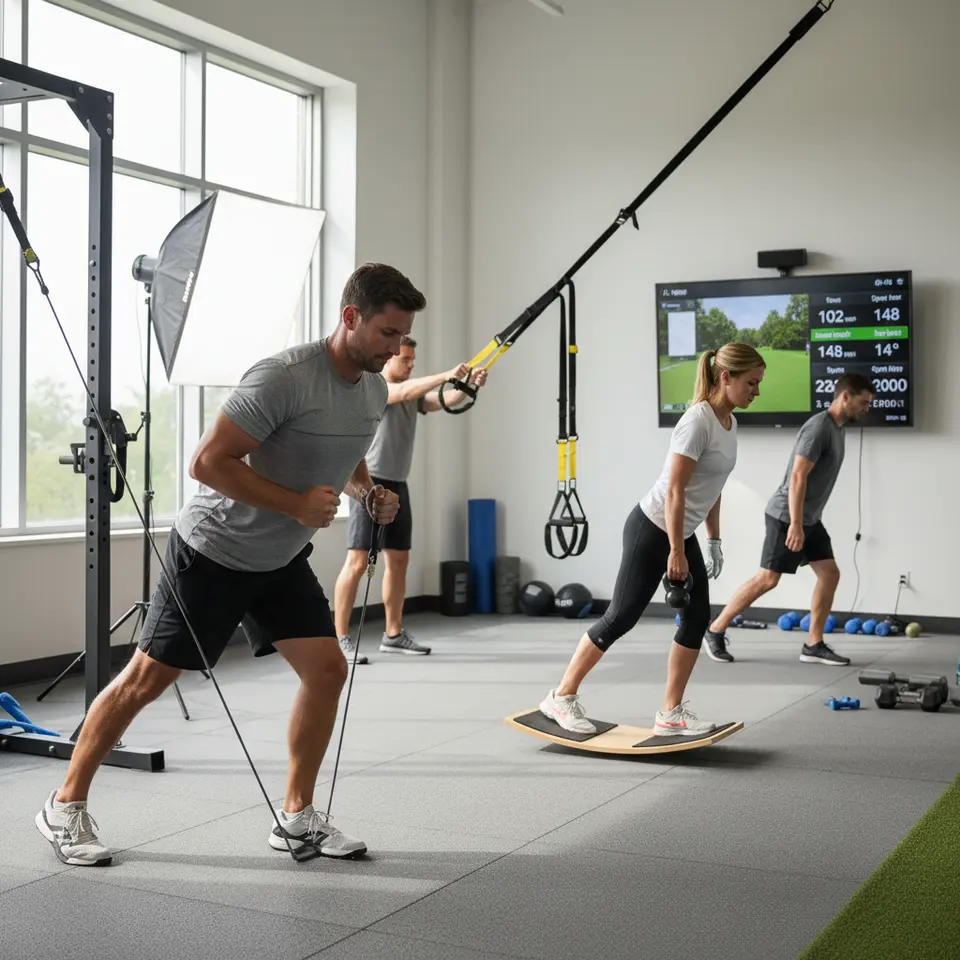
Once foundational elements of golf fitness are established, incorporating specialized equipment and cutting-edge methods can accelerate performance gains. Advanced tools like resistance bands, suspension trainers, stability platforms, and wearable sensors offer targeted stimuli that mirror the unique demands of the golf swing. Embracing these resources enhances proprioception, refines movement patterns, and provides real-time feedback that keeps you accountable.
Resistance bands and tubing serve as versatile, portable options for building both strength and mobility. Performing band-assisted rotations and anti-rotation presses challenges core stability while reinforcing proper sequencing. Bands also hack into smaller stabilizing muscles often overlooked by traditional machines, making them invaluable for shoulder integrity and rotational power. Incorporate mini-band walks to activate hip external rotators, which play a crucial role in maintaining posture through transition.
Balance platforms and wobble boards heighten the challenge of stability training by introducing an unstable surface. Executing partial-range swings or single-leg Romanian deadlifts on these tools forces micro-adjustments that translate to a steadier stance over the ball. Similarly, TRX suspension trainers allow you to vary angles and tension to target end-range strength for shoulders and core. These devices are particularly effective at simulating golf-specific demands under conditions that stimulate joint stabilizers.
Technological advancements have also revolutionized golf fitness. Launch monitors and ball-flight analysis systems enable data-driven insights into how physical improvements affect real swing metrics. Wearable sensors, such as inertial measurement units (IMUs), track swing speed, rotation angles, and tempo, allowing you to correlate training adaptations with on-course results. Mobile apps and fitness trackers provide additional analytics for heart rate variability and recovery status, ensuring your body is truly prepared before teeing off.
For practitioners seeking a cross-disciplinary approach, integrating yoga, Pilates reformer sessions, or barre classes offers unique benefits. These modalities focus on breath control, precise muscle engagement, and length-tension relationships critical to a smooth, powerful coil. Equipment like Pilates rings and stability balls can deepen core activation patterns and improve spinal alignment, further supporting a fluid motion sequence.
Lastly, mental conditioning tools—such as guided visualization apps, biofeedback devices, or even virtual reality swing simulations—strengthen focus, resilience, and course management strategies. By training the mind-body connection, golfers learn to execute under pressure with consistent mechanics and composure. Combining these advanced techniques with a solid foundation of strength, flexibility, and endurance transforms your golf fitness regimen into a comprehensive system for sustainable excellence.
Frequently Asked Questions
What is golf fitness and why is it important?
Golf fitness refers to a targeted training approach that develops strength, flexibility, endurance, stability, and mobility specifically for the demands of the golf swing. It is important because it enhances performance, increases clubhead speed, improves consistency, and reduces the risk of injury over the course of a round or season.
How often should I incorporate fitness training into my golf routine?
Most golfers benefit from training 3–5 times per week, balancing strength, cardio, and mobility sessions. Beginners might start with two to three sessions and progressively increase frequency and volume as their fitness and comfort level improve.
Can beginners benefit from golf-specific fitness programs?
Absolutely. Beginners can build a strong physical foundation by focusing on basic movement patterns, joint mobility, and core stability. Starting with fundamental exercises and gradually introducing golf-specific drills helps prevent injury and supports long-term progress.
What equipment do I need for golf fitness?
Basic equipment includes resistance bands, a set of dumbbells or kettlebells, a stability ball, and a foam roller. As you advance, tools like suspension trainers, wobble boards, and wearable sensors can enhance your training variety and feedback.
Conclusion
Investing in a comprehensive approach to golf fitness yields tangible rewards every time you set foot on the course. By blending strength development, flexibility enhancement, cardiovascular conditioning, stability drills, and mobility training, golfers create a resilient, high-performing body capable of delivering consistent, powerful swings from tee to green. In today’s demanding competitive environment, physical preparation is no longer optional; it is an essential complement to technical skill.
Throughout this guide, strategies such as dynamic warm-ups, structured weekly plans, and advanced tools have been explored to help you craft a roadmap that aligns with your personal goals. Drawing on insights from leading institutions and leveraging modern technology ensures your training is both scientifically grounded and tailored to the specific demands of your swing.
Now is the perfect time to implement these golf fitness principles into your routine. Start with a basic assessment, gradually integrate new exercises, and monitor progress through measurable benchmarks. With commitment and consistency, you’ll notice improved power, enhanced endurance, and greater mental focus, ultimately translating to lower scores and more enjoyment on the course.
Embrace the journey today and witness how a dedicated golf fitness regimen can elevate your performance, reduce injury risk, and enrich your overall experience this year (2026). Your body is the ultimate club—tune it well, and watch your game soar.
